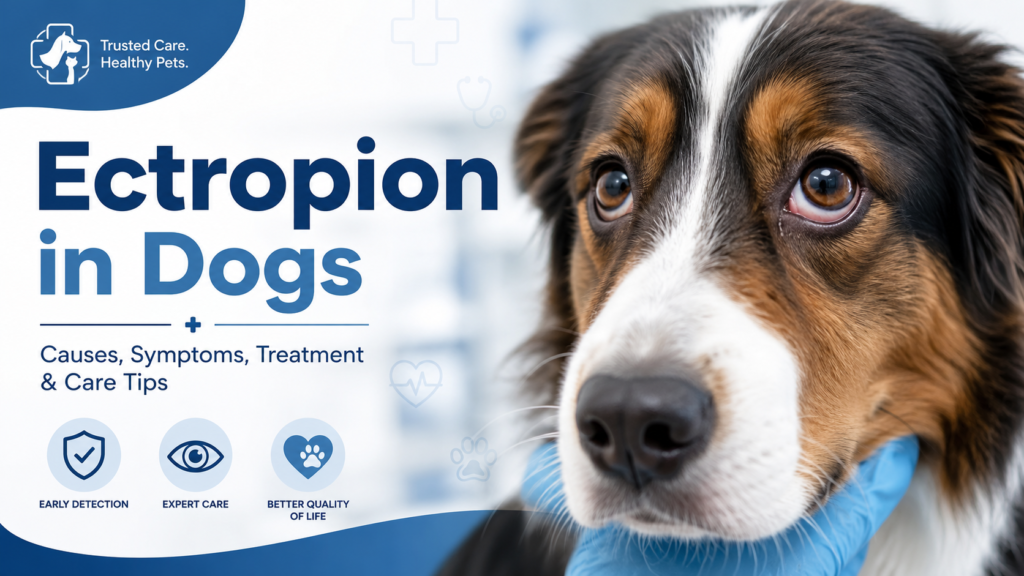
IntroductionEctropion in dogs is a condition in which the eyelid, usually the lower eyelid, rolls outward or sags away from the eye, exposing the delicate inner eyelid lining. This creates the appearance of a droopy eyelid in dogs and can make the eye more vulnerable to irritation, dryness, and infection. While some dogs naturally have loose, drooping eyelids due to their breed, others develop ectropion because of injury, aging, nerve problems, or scarring. Understanding what causes ectropion, recognizing its symptoms, and knowing when treatment is needed can help protect your dog’s long-term eye health and comfort.
Eye problems in dogs can range from mild eyelid abnormalities to more serious vision-related conditions such as signs of blindness in dogs, making early recognition important.
Quick Summary
- Ectropion is an outward-rolling eyelid that causes a droopy-eye appearance in dogs.
- The condition may be inherited or develop after injury, scarring, aging, or nerve damage.
- Mild cases may require monitoring only, while severe cases can lead to chronic irritation and infection.
- Common symptoms include eye redness, discharge, and visible pink eyelid tissue.
- Surgical eyelid reconstruction is the primary treatment for dogs with significant symptoms.
What Is Ectropion in Dogs?
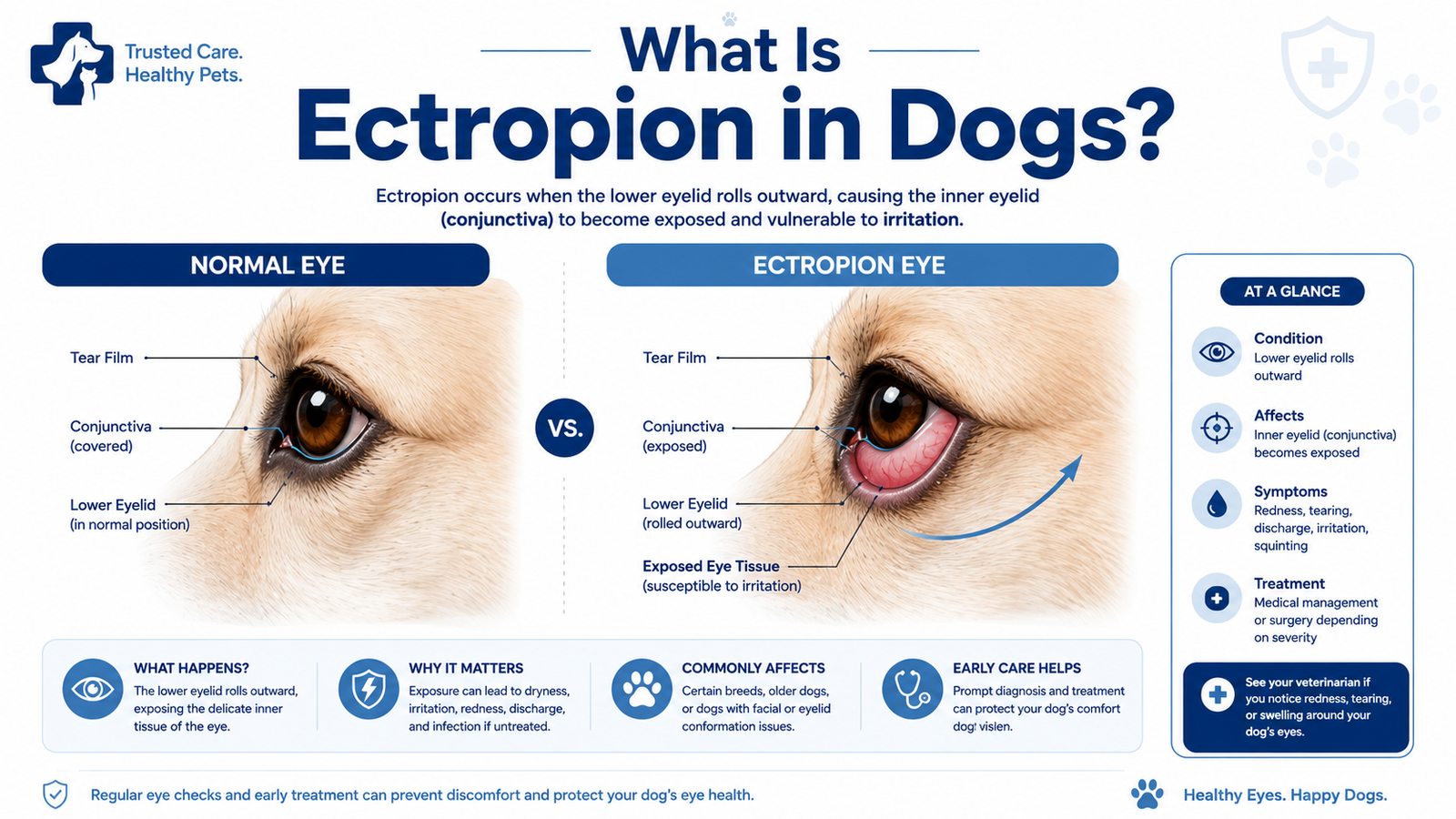 Ectropion in dogs is an eyelid condition where the lower eyelid rolls outward or hangs away from the eye, exposing the conjunctiva—the pink tissue lining the inside of the eyelid. This abnormal position disrupts normal tear distribution and reduces the eye’s natural protection against dust, debris, and environmental irritants.The condition often creates the classic appearance of a dog with droopy eyes. In some breeds, mild eyelid drooping is considered part of normal anatomy and may never cause problems. However, excessive sagging can expose sensitive eye tissues and increase the risk of inflammation and infection.Dogs with droopy eyes such as Bloodhounds and Basset Hounds frequently display some degree of eyelid looseness. The key distinction is whether the eyelid structure causes medical issues or simply reflects normal breed characteristics.
Ectropion vs. Entropion — What’s the Difference?
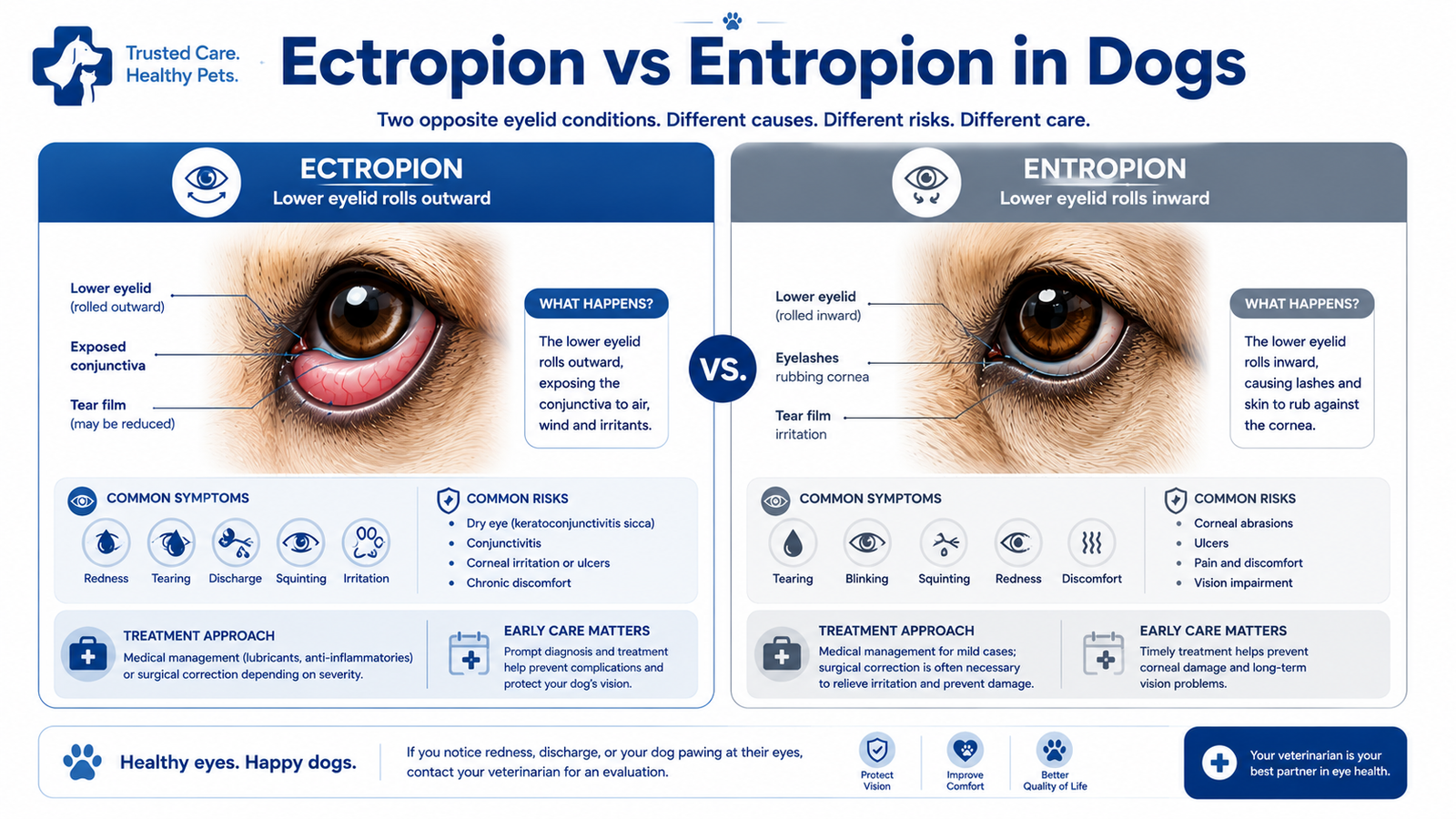 Ectropion and entropion are commonly confused eyelid disorders, but they affect the eye in opposite ways. Ectropion causes the eyelid to roll outward, while entropion in dogs causes the eyelid to roll inward toward the eye.When entropion occurs, eyelashes and eyelid hair rub against the cornea, creating irritation and potential injury. In contrast, ectropion exposes the eye surface and can lead to dryness and conjunctival inflammation.
For a detailed overview of eyelid anatomy and disorders affecting the eyelids, see this resource on eyelid anatomy.
| Feature | Ectropion | Entropion |
| Eyelid direction | Rolls outward | Rolls inward |
| Appearance | Droopy, sagging lid | Lid tucked in, squinty |
| Common cause | Genetics, injury, nerve issue | Genetics, often breed-related |
| Risk | Dry eye, conjunctivitis | Corneal scratches, ulcers |
Understanding the difference between entropion vs ectropion in dogs is important because treatment approaches and potential complications differ significantly.
Causes of Ectropion in Dogs
Several factors can contribute to ectropion, ranging from inherited traits to acquired medical conditions.The most common cause is genetic predisposition. Breeds with loose facial skin and heavy eyelids often develop varying degrees of ectropion as part of their natural appearance.Age-related changes may also contribute. As dogs age, facial muscles and supporting tissues can lose tone, allowing the eyelids to sag more noticeably.Nerve damage can affect the muscles responsible for normal eyelid positioning. Certain neurological conditions may alter facial muscle function and contribute to eyelid drooping.Trauma is another potential cause. Injuries affecting the eyelids or surrounding tissues may permanently alter eyelid structure.Scarring from previous wounds, infections, or surgery can pull the eyelid outward and create acquired ectropion.Current veterinary recommendations emphasize identifying the underlying cause because treatment decisions often depend on whether the condition is inherited, age-related, neurological, or trauma-induced.
Breeds Prone to Ectropion
Certain breeds are more likely to develop ectropion because of their facial structure and loose skin.Commonly affected breeds include:
- Bloodhound
- Saint Bernard
- Basset Hound
- Cocker Spaniel
- Mastiff breeds
- Newfoundland
- Great Dane
- Bernese Mountain Dog
A droopy eyelid on a dog from one of these breeds does not automatically indicate disease. Mild eyelid drooping is often part of normal breed conformation.However, excessive eyelid sagging that leads to chronic irritation, discharge, or recurrent infections should be evaluated by a veterinarian regardless of breed.
Symptoms and Signs of Ectropion
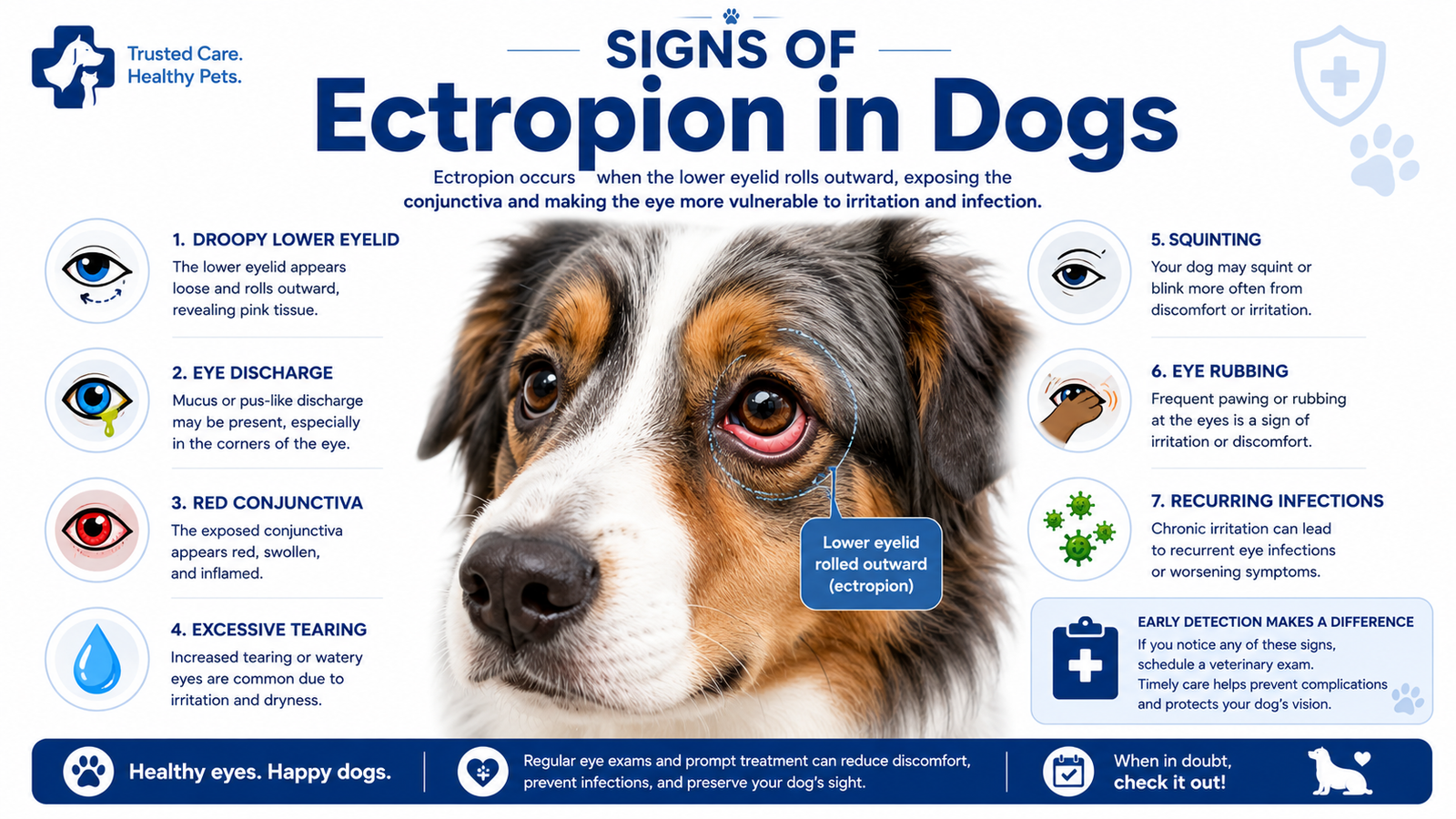 The symptoms of ectropion vary depending on severity. Mild cases may be largely cosmetic, while severe cases can affect eye health and comfort.Common signs include:
- Outward-rolled, sagging lower eyelid
- Excess tear staining or discharge
- Red, irritated conjunctiva
- Squinting or pawing at the eye
- Recurring eye infections
Persistent redness and irritation may resemble other ocular issues, so understanding why is my cat’s eye red and similar eye inflammation patterns can help pet owners recognize abnormal symptoms.
Additional symptoms may include:
- Increased sensitivity to wind or dust
- Frequent blinking
- Watery eyes
- Mucus accumulation around the eyelids
- Chronic conjunctivitis
Many pet owners notice the condition first because the pink inner eyelid becomes more visible than normal.
Is Ectropion Painful or Dangerous for Dogs?
Ectropion can be painless in mild cases, but severe cases may cause significant discomfort and long-term eye complications.The level of risk depends largely on how much of the conjunctiva and eye surface is exposed. Dogs with minor eyelid drooping may live comfortably without treatment. In contrast, dogs with extensive eyelid eversion may experience chronic irritation and repeated infections.Potential complications include:
- Chronic conjunctivitis
- Excessive tearing
- Recurrent bacterial infections
- Dry eye-related irritation
- Corneal exposure damage
- Corneal ulcers in severe cases
Chronic eye irritation can sometimes occur alongside other health concerns, and recognizing broader dog health problems helps owners identify when veterinary care is needed.
Many pet owners notice worsening symptoms during windy weather, allergy seasons, or periods of low humidity.
You should seek veterinary evaluation if your dog develops persistent redness, increased discharge, squinting, visible pain, or recurring infections.
How Is Ectropion Diagnosed?
Ectropion is usually diagnosed through a comprehensive veterinary eye examination.The veterinarian evaluates eyelid conformation, facial anatomy, and the position of the eyelids relative to the eye surface. This assessment helps determine whether the drooping is a normal breed trait or a medical concern.Diagnostic procedures may include:
- Physical examination of the eyelids
- Evaluation of conjunctival exposure
- Assessment of tear distribution
- Corneal examination
- Schirmer tear test to measure tear production
- Fluorescein staining if corneal injury is suspected
Veterinarians often perform a complete health evaluation because eye abnormalities can occasionally appear alongside conditions such as anemia in puppies, neurological disorders, or systemic illness.
Veterinarians also investigate potential underlying causes such as facial nerve dysfunction, previous trauma, or scar formation.
Differentiating Ectropion from Other Eye Conditions
Several eye conditions can resemble ectropion or create a similar droopy-eye appearance.Cherry EyeCherry eye in dogs occurs when the gland of the third eyelid prolapses and becomes visible as a red or pink mass in the inner corner of the eye. Cherry eye bulldog cases are especially common because of breed anatomy. Unlike ectropion, cherry eye does not involve the lower eyelid rolling outward.
If your dog develops a visible eye abnormality, it is important to distinguish it from infections, injuries, and other conditions that share symptoms with cat eye infection treatment cases.
Horner’s Syndrome
Horner’s syndrome in dogs is a neurological disorder that affects facial nerves. Signs often include a drooping eyelid, sunken eye, constricted pupil, and protrusion of the third eyelid. Because it frequently affects only one side, it can sometimes resemble acquired ectropion.
Veterinarians evaluating Horner syndrome dog treatment options focus on identifying and addressing the underlying neurological cause rather than correcting eyelid structure.
Although these conditions may share a droopy-eye appearance, they are distinct disorders requiring different diagnostic and treatment approaches.
Treatment Options for Ectropion in Dogs
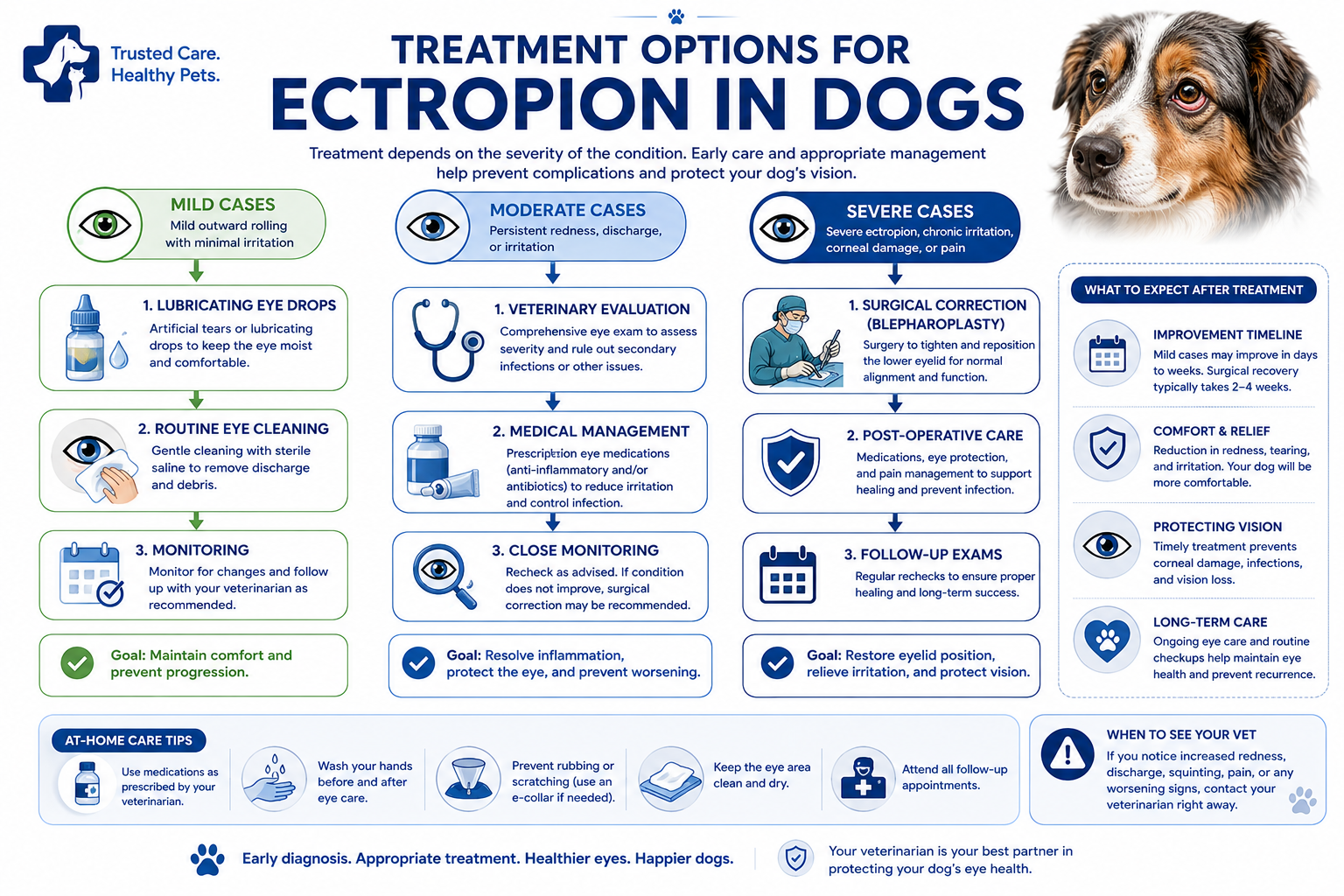 Treatment depends on symptom severity and the underlying cause.Mild ectropion often requires only monitoring and supportive care. Dogs without irritation, infection, or corneal problems may not need surgical intervention.For symptomatic cases, treatment may include:
- Lubricating eye drops
- Artificial tears
- Routine eyelid cleaning
- Treatment of secondary infections
- Environmental management
- Surgical correction when necessary
Veterinarians base treatment recommendations on the dog’s comfort level, eye health, and risk of future complications.
At-Home Eye Care for Dogs with Ectropion
Many dogs benefit from consistent home care, especially when symptoms are mild.Recommended care steps include:
- Daily gentle cleaning of the eye area
- Using vet-recommended lubricating drops
- Monitoring for redness or discharge changes
- Preventing irritants such as dust and wind exposure
In our experience caring for dogs with chronic eye conditions, consistent daily maintenance often helps reduce irritation and supports overall eye comfort.Owners should never use human eye medications unless specifically directed by a veterinarian.
Surgical Correction (Eyelid Reconstruction)
Surgical correction is generally recommended when ectropion causes chronic irritation, recurrent infections, excessive exposure, or ongoing discomfort.The procedure, commonly called eyelid reconstruction or blepharoplasty, reshapes the eyelid to restore normal positioning and improve eye protection.The surgery typically involves removing a small section of tissue and tightening the eyelid to reduce sagging.Recovery generally includes:
- Temporary use of an Elizabethan collar
- Prescription eye medications
- Follow-up examinations
- Activity restriction during healing
Most dogs recover well, and surgical success rates are generally favorable when performed by an experienced veterinarian or veterinary ophthalmologist.
Common Owner Mistakes With Ectropion
Several misconceptions can delay proper treatment or monitoring.A common mistake is assuming all droopy-eyed breeds need surgery. Many dogs naturally have loose eyelids without developing medical problems.Another frequent error is ignoring chronic eye discharge because it seems normal for the breed. Persistent discharge can indicate ongoing irritation or infection.Some owners delay veterinary visits until symptoms become severe. Early evaluation can help prevent complications.Self-diagnosis is also problematic. Ectropion is often confused with cherry eye, entropion, allergies, or other eye disorders.Furry Care Hub recommends scheduling a veterinary eye examination whenever eyelid appearance changes suddenly or symptoms worsen over time.
A common mistake is ignoring subtle symptoms, similar to how owners may overlook early dog bladder infection symptoms until complications develop.
Living With a Dog That Has Ectropion
Most dogs with ectropion can enjoy a comfortable, healthy life when their condition is appropriately managed.Environmental factors often influence symptom severity. Wind, dust, smoke, and airborne allergens can increase irritation and inflammation.Seasonal considerations include:
- Dry winter air may increase eye dryness.
- Spring pollen can worsen irritation.
- Windy conditions may increase discharge and redness.
- Dusty environments may trigger inflammation.
Age-related changes can also affect management. As dogs grow older, muscle tone naturally decreases, potentially making eyelid sagging more noticeable.Many pet owners notice that routine cleaning, regular veterinary monitoring, and prompt treatment of infections help maintain long-term comfort.Current animal welfare guidance suggests monitoring eye health closely in breeds predisposed to eyelid disorders and seeking veterinary care whenever symptoms change significantly.
Senior dogs may experience worsening eyelid laxity over time, making routine monitoring and a senior profile for dogs especially valuable for long-term health management.
Conclusion
Ectropion in dogs is an outward-rolling eyelid condition that ranges from a harmless breed characteristic to a medical issue requiring treatment. While many dogs with naturally droopy eyes experience few problems, others may develop chronic irritation, discharge, infections, or corneal complications due to excessive eyelid sagging. Recognizing the signs early and working with a veterinarian can help prevent long-term eye damage. Whether treatment involves simple eye care management or surgical correction, the goal is to protect the eye and maintain comfort. If your dog shows persistent redness, discharge, or irritation, a veterinary examination can determine whether intervention is needed.
Because ectropion can be part of broader wellness concerns, pet owners should stay informed about common dog health problems and schedule regular veterinary examinations to support lifelong eye health.
Frequently Asked Questions
- What does ectropion look like in dogs?
Ectropion appears as an outward-rolled or sagging lower eyelid that exposes the pink inner eyelid lining. Affected dogs often have a droopy-eye appearance, visible conjunctiva, excessive tearing, or chronic eye discharge.
- Is ectropion in dogs serious?
Ectropion can range from mild to serious. Mild cases may be primarily cosmetic, while severe cases can lead to chronic irritation, infections, dry eye problems, and corneal damage if left untreated.
- Can ectropion in dogs be fixed without surgery?
Mild cases can often be managed without surgery using lubricating eye drops, routine cleaning, and regular veterinary monitoring. However, moderate-to-severe cases that cause ongoing discomfort or complications may require surgical correction.
- Which dog breeds are most prone to ectropion?
Breeds commonly associated with ectropion include Bloodhounds, Basset Hounds, Saint Bernards, Mastiffs, Newfoundlands, Great Danes, Bernese Mountain Dogs, and Cocker Spaniels due to their loose facial skin and eyelid structure.
- How is ectropion different from entropion in dogs?
Ectropion causes the eyelid to roll outward and expose the eye, while entropion causes the eyelid to roll inward, allowing eyelashes and hair to rub against the cornea. Both conditions affect eyelid position but create different complications.
- Does ectropion cause pain or discomfort in dogs?
Mild ectropion may cause little or no discomfort. More severe cases can lead to irritation, redness, excessive tearing, infections, and chronic inflammation that may become painful without appropriate treatment.