

IntroductionNaturally introduce the main keyword in the opening sentence. Define what a bladder infection (UTI) is in dogs in plain, accessible language. Clarify that it is a urinary tract infection affecting the bladder, urethra, or kidneys. Set reader expectations: this article covers symptoms, causes, treatment, home remedies, and when to see a vet. Align tone with concerned, first-time dog owners seeking answers.
Quick Summary Block
- Bladder infections in dogs are caused by bacteria entering the urinary tract and are treatable with antibiotics prescribed by a vet.
- Key signs include frequent urination, straining, cloudy or bloody urine, and licking of the genital area.
- Female dogs are more susceptible than male dogs due to their shorter urethra.
- Home remedies can support recovery but do not replace veterinary diagnosis and antibiotic treatment.
What Is a Bladder Infection in Dogs?
A bladder infection is a type of urinary tract infection (UTI) — a condition well-documented in both humans and animals, as explained in this overview of urinary tract infections on Wikipedia.
Expansion Notes:
- Define bladder infection vs. urinary tract infection — clarify these terms are often used interchangeably but UTI can refer to infections anywhere in the urinary system.
- Explain the anatomy briefly: bladder, urethra, kidneys, and how bacteria travel upward.
- Mention that UTIs in dogs are bacterial infections in the majority of cases.
- Contextual keywords: dog urinary tract infection, urinary infection in dogs, dog urine infection
Signs of Bladder Infection in Dogs
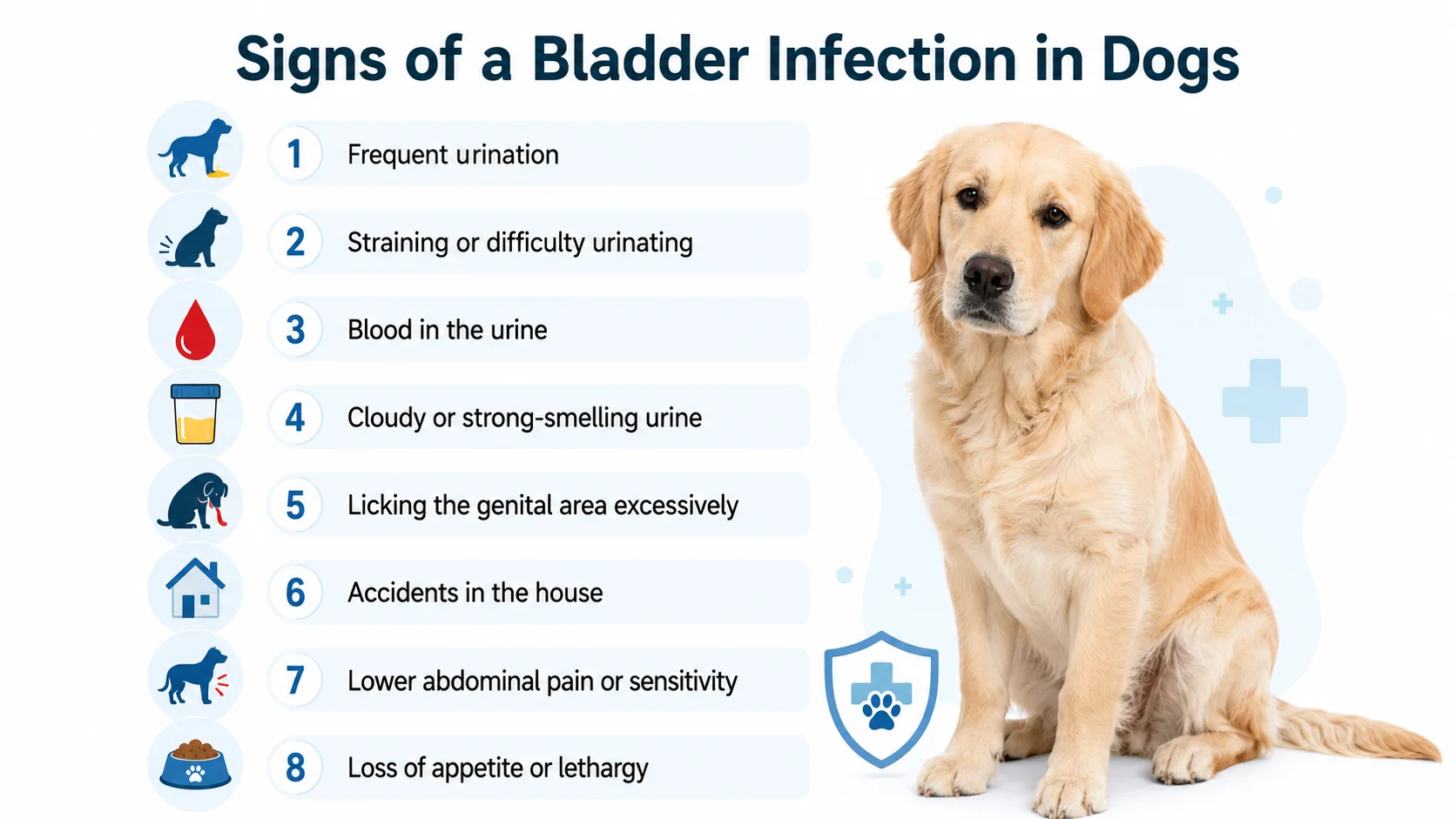
For a deeper look at every warning sign, read our detailed guide on the signs of bladder infection in dogs to help you catch it early.
Expansion Notes:
- This section directly answers “how do I know if my dog has a UTI” — a high-volume voice search query.
- Organize symptoms into a scannable bullet list for AI extraction.
- Mention both behavioral and physical signs.
Common Symptoms of a UTI in Dogs
You can also review our complete breakdown of dog bladder infection symptoms to better understand how signs differ between male and female dogs.
- Frequent urination or attempting to urinate with little output
- Straining or crying while urinating
- Cloudy, dark, or foul-smelling urine
- Blood in urine
- Licking of the genital or urethral area
- Urinating in unusual places (house accidents)
- Lethargy or signs of discomfort
- Increased water consumption
Symptoms of UTI in Female Dogs vs. Male Dogs
Expansion Notes:
- Explain why female dogs are more prone to bladder infections (shorter, wider urethra).
- Describe how symptoms may present slightly differently: female dogs may show more visible straining; male dogs may show more blockage-related signs.
- Mention spayed female dogs and their increased risk.
- Contextual keywords: female dog uti symptoms, uti in female dogs symptoms, spayed female dog uti symptoms, dog uti symptoms female, uti in male dogs, signs of uti in female dog
What Causes Bladder Infections in Dogs?
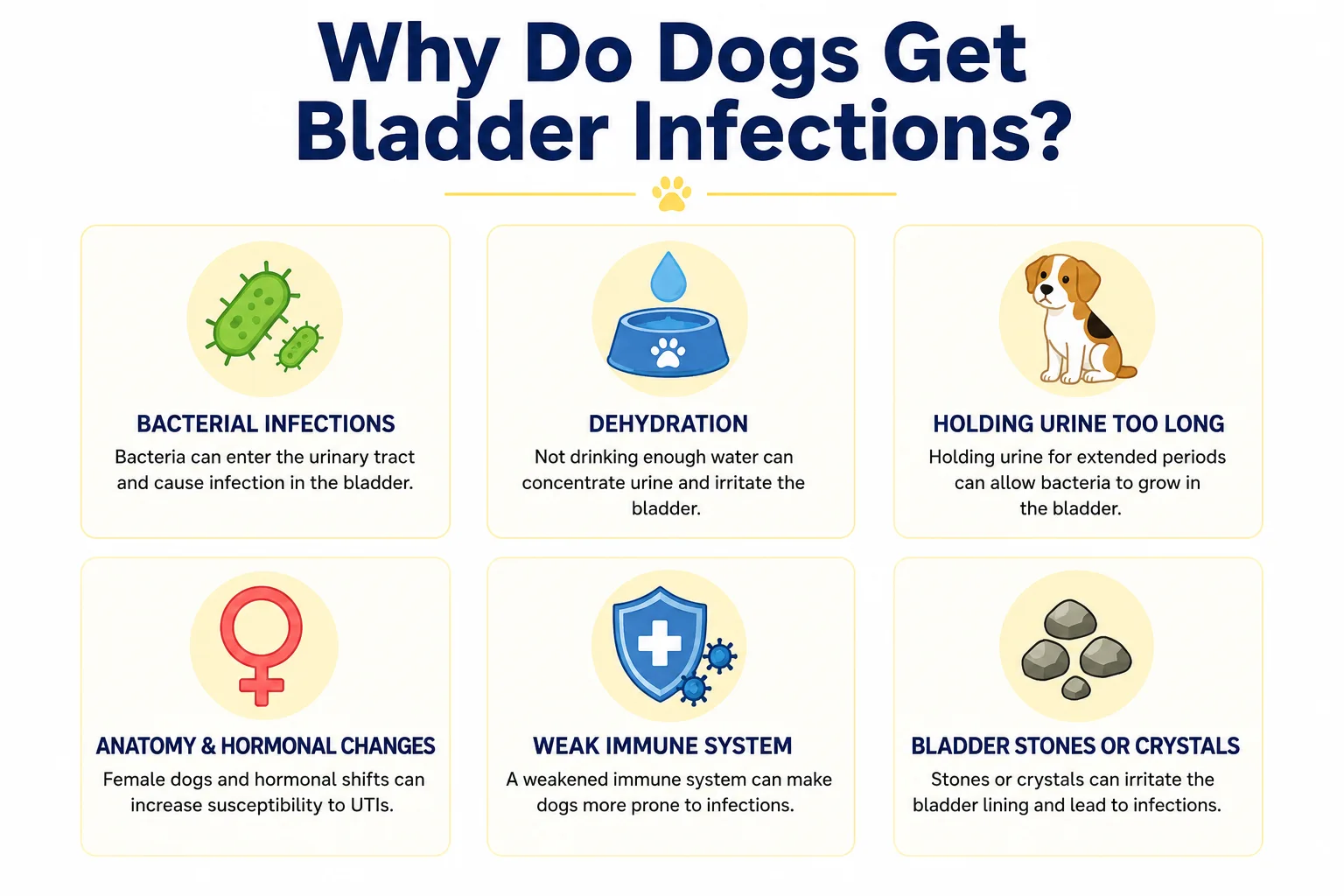
Dogs with digestive issues or weakened immunity may also show overlapping discomfort signals — learn more about the signs of upset stomach in dogs to tell the difference.
Expansion Notes:
- Explain the primary cause: bacterial invasion (most commonly E. coli).
- Cover contributing risk factors in a structured list.
- Mention underlying conditions that predispose dogs to recurrent UTIs.
Common Causes and Risk Factors
| Risk Factor | Why It Increases UTI Risk |
| Female anatomy | Shorter urethra allows bacteria easier access |
| Spayed females | Hormonal changes affect urinary tract lining |
| Diabetes | High glucose in urine feeds bacteria |
| Bladder stones | Create environment for bacterial growth |
| Weakened immune system | Reduces ability to fight infection |
| Poor hygiene or grooming | Bacteria accumulate near urethra |
| Infrequent urination | Bacteria not flushed from bladder |
How to Treat Bladder Infection in Dogs
Expansion Notes:
- This is the primary section answering the main keyword directly.
- Lead with the most important message: veterinary diagnosis is required for proper treatment.
- Cover the standard treatment protocol clearly.
Veterinary Diagnosis and Antibiotic Treatment
Expansion Notes:
- Explain what a vet will do: urinalysis, urine culture, physical exam.
- Describe standard antibiotic treatment (without naming specific prescription drugs in a medical recommendation context — keep it general).
- Explain typical treatment duration (7–14 days is commonly cited).
- Stress the importance of completing the full antibiotic course.
- Contextual keywords: bladder infection treatment for dogs, dog bladder infection treatment, dog uti treatment, urinary tract infection in dogs treatment
What Happens If a Dog UTI Is Left Untreated?
Expansion Notes:
- Explain how an untreated UTI can progress to kidney infection (pyelonephritis).
- Describe signs that indicate a worsening infection: fever, vomiting, back pain, lethargy.
- Reinforce urgency of veterinary care.
Home Remedies for Dog Bladder Infections
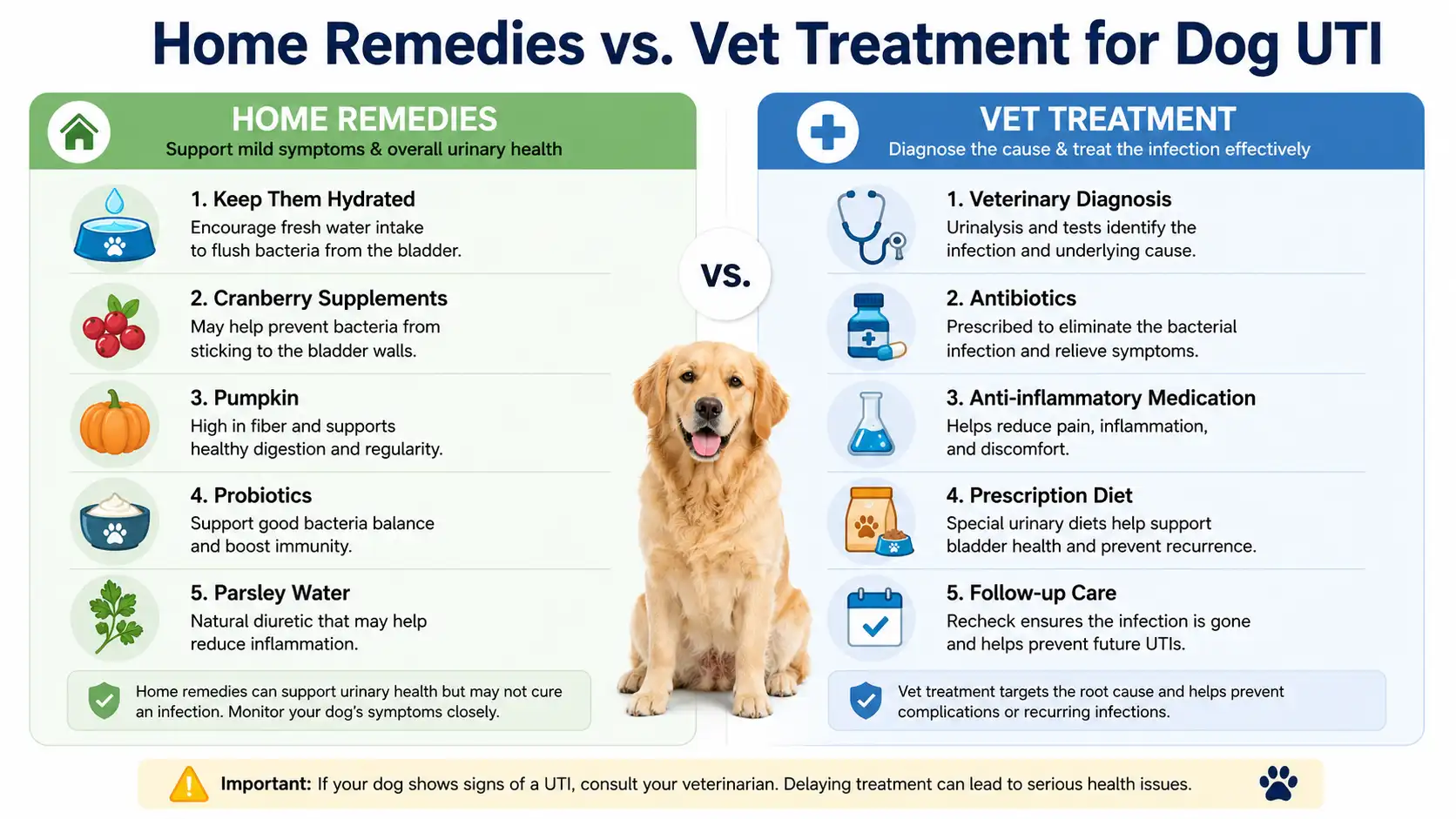 Expansion Notes:
- Clarify upfront: home remedies support recovery and may ease discomfort but do not cure bacterial infections on their own.
- Frame this section as complementary care, not a replacement for antibiotics.
- Use bullet points and short explanations for each remedy.
Safe Home Remedies That May Help
Expansion Notes:
- Increased fresh water intake to flush bacteria
- Unsweetened cranberry (limited evidence — explain the research cautiously)
- D-Mannose supplements (explain mechanism: prevents bacteria from adhering to bladder walls)
- Probiotics to support gut and immune health
- Maintaining clean genital area
- Encouraging frequent bathroom breaks
How to Treat Dog UTI at Home Without Antibiotics — What You Need to Know
Expansion Notes:
- Directly address this popular query with an honest, balanced answer.
- Explain that mild cases in otherwise healthy dogs may improve with supportive care, but this is not reliable.
- Emphasize that attempting to treat without antibiotics risks worsening infection.
- Recommend always consulting a vet before attempting home-only treatment.
- Contextual keywords: how to treat dog uti at home without antibiotics, how to cure a dog uti at home, at home dog uti treatment, how can i treat my dogs uti at home, urinary tract infection in dogs treatment at home
Blood in Dog Urine — When Is It an Emergency?
Expansion Notes:
- Address the alarming symptom of hematuria (blood in urine) directly.
- Explain that blood in urine is a sign that requires prompt veterinary attention.
- Differentiate between blood caused by a simple UTI vs. more serious conditions (bladder stones, tumors, trauma).
- Mention home observation tips before reaching the vet.
- Contextual keywords: blood in dog urine home remedies (address why this query exists and reframe toward veterinary care)
Bladder Infections in Female Dogs — Special Considerations
Expansion Notes:
- Dedicate a focused section to female dogs given the higher prevalence.
- Cover: anatomy-related susceptibility, hormonal factors post-spay, recurring infections.
- Discuss signs unique to or more common in female dogs.
- Contextual keywords: female dog bladder infection, female dog urethra infection, signs of uti in female dog, spayed female dog uti symptoms, uti in female dogs symptoms
Comparison — Bladder Infection vs. Bladder Stones vs. Kidney Infection in Dogs
Expansion Notes:
- Use a structured table comparing the three conditions across: symptoms, causes, diagnosis, and treatment.
- Help owners differentiate between similar-presenting conditions.
- Clarify that bladder stones can cause UTIs and vice versa.
| Condition | Key Symptoms | Diagnosis | Treatment |
| Bladder Infection (UTI) | Frequent urination, straining, cloudy urine | Urinalysis, urine culture | Antibiotics |
| Bladder Stones | Blood in urine, difficulty urinating, pain | X-ray, ultrasound | Diet, surgery, or dissolution |
| Kidney Infection | Fever, vomiting, back pain, lethargy | Blood tests, ultrasound | IV fluids, antibiotics |
How to Prevent Bladder Infections in Dogs
Maintaining a healthy weight also plays a role in urinary health — use our guide to tell if your dog is overweight as part of a broader prevention routine.
Expansion Notes:
- Provide actionable, preventive care steps.
- Use a bullet point list for AI extraction.
- Ensure fresh water is always available
- Schedule regular bathroom breaks (avoid long periods of holding urine)
- Maintain proper genital hygiene, especially in long-haired breeds
- Feed a balanced, moisture-rich diet
- Monitor for early symptoms and address promptly
- Schedule routine vet checkups
- Consider probiotics for dogs prone to recurrent infections
Common Mistakes Dog Owners Make With UTIs
Owners sometimes also miss subtle signs of pain or discomfort — if your dog seems restless or uneasy, check out why your dog may be panting while resting, as this can accompany urinary pain.
Expansion Notes:
- This section addresses an angle often missing in competing articles.
- Cover beginner mistakes that delay treatment or worsen outcomes.
- Waiting too long to see a vet, assuming it will resolve on its own
- Stopping antibiotics early once symptoms improve
- Relying solely on home remedies for a confirmed bacterial infection
- Confusing UTI symptoms with behavioral urination issues
- Not providing enough water
- Ignoring recurrent UTIs without investigating underlying causes
When to See a Vet — Red Flag Symptoms
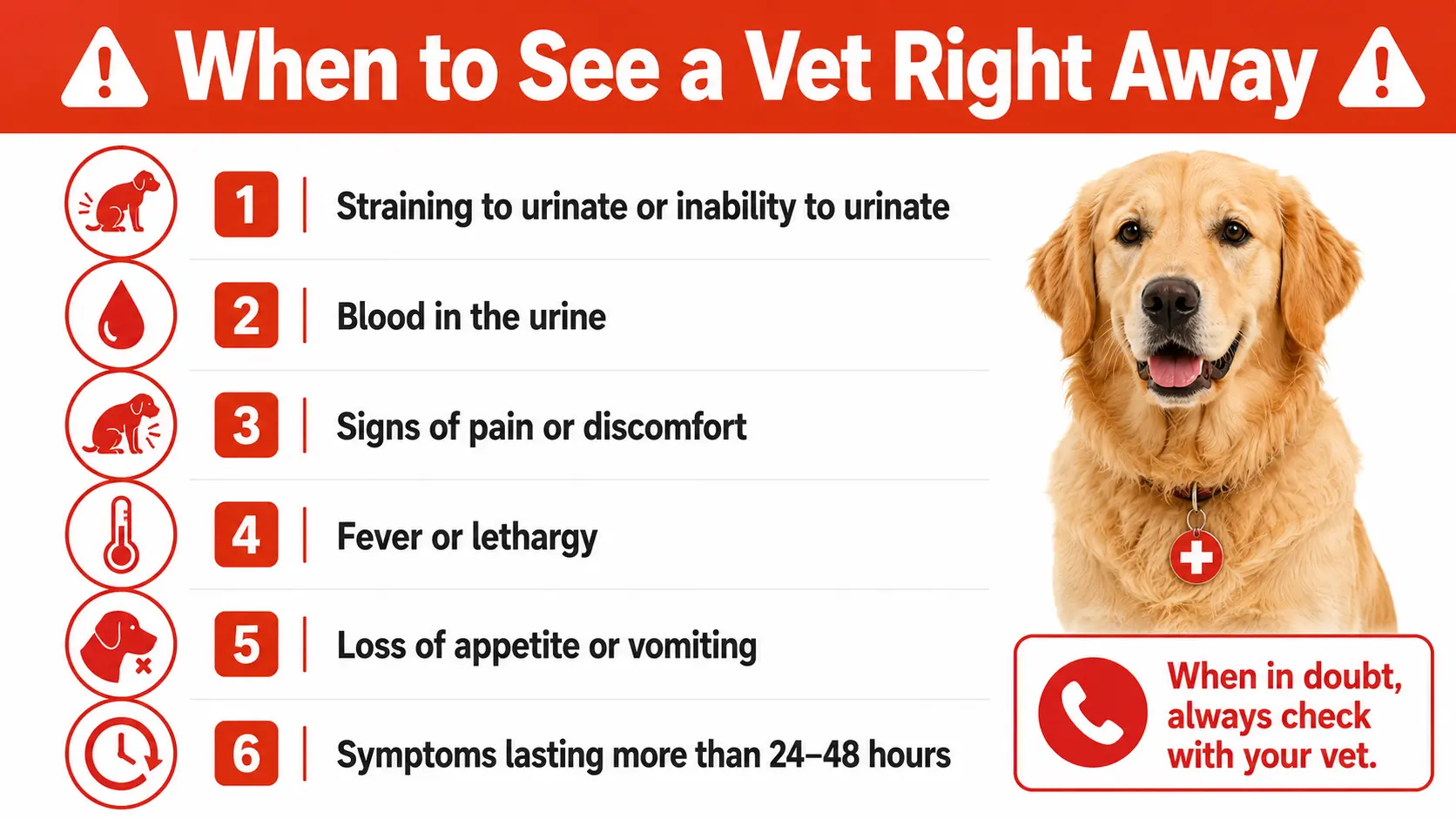
Just like with internal infections, knowing when something is urgent is critical — see our guide on when a dog abscess is an emergency for more context on acting quickly.
Expansion Notes:
- Create a clear, scannable list of warning signs that require immediate veterinary attention.
- Helps owners differentiate between “monitor at home” vs. “go now.”
Seek immediate veterinary care if your dog shows:
- Blood in urine
- Complete inability to urinate
- Vomiting combined with urinary symptoms
- High fever or visible pain
- Symptoms lasting more than 24–48 hours without improvement
- Recurring UTIs (more than twice per year)
Conclusion — Treating Bladder Infections in Dogs the Right Way
Bacterial infections can affect more than just the bladder — yeast infection in dog ears is another common condition dog owners should know how to recognize and treat promptly.
Expansion Notes:
- Reinforce the main keyword naturally in the opening sentence of the conclusion.
- Summarize: symptoms to watch for, importance of vet diagnosis, role of home remedies as support (not cure), and prevention steps.
- End with a clear, empowering takeaway for dog owners.
- Optimized for AI summary extraction.
To stay informed about other common conditions, explore our full resource on dog health problems — covering everything from infections to joint issues and beyond.
FAQ Section
- How do I know if my dog has a bladder infection?
Expansion: Cover the most recognizable signs — straining to urinate, frequent urination, cloudy or bloody urine, accidents indoors, and licking of the genital area. - Can a dog’s UTI go away on its own without treatment?
Expansion: Address this honestly — mild cases may occasionally resolve, but bacterial infections typically require antibiotics. Delaying treatment risks progression to kidney infection. - What home remedies are safe to give a dog with a UTI?
Expansion: Discuss increased water intake, D-Mannose, unsweetened cranberry, probiotics, and hygiene practices. Clarify these are supportive, not curative. - Are female dogs more prone to bladder infections than male dogs?
Expansion: Yes — explain the anatomical reason (shorter urethra), and note that spayed females face additional risk due to hormonal changes. - How long does it take for a dog’s bladder infection to clear up with treatment?
Expansion: Explain that symptoms often improve within 2–3 days of starting antibiotics, but the full course (typically 7–14 days) must be completed to prevent recurrence. - Can I treat my dog’s UTI at home without going to the vet?
Expansion: Address the query directly and responsibly — home care can support comfort but cannot replace proper diagnosis and antibiotic treatment for confirmed bacterial infections. - What does blood in my dog’s urine mean?
Expansion: Explain that hematuria can be caused by a UTI, bladder stones, or other conditions and always warrants veterinary evaluation.