
Introduction: Why Is My Dog Losing Weight and Has Itchy Skin?
Dog losing weight and itchy skin treatment starts with understanding that these symptoms are often connected. When a dog develops unexplained weight loss while also scratching, biting, licking, or chewing at the skin, the problem is frequently caused by an underlying health condition rather than two separate issues.
Food allergies, intestinal parasites, hormonal disorders, digestive diseases, and chronic skin infections can affect both the skin and the body’s ability to maintain healthy weight. While mild itching can sometimes be managed at home, weight loss is a more significant warning sign that should not be ignored. Identifying the root cause is essential because successful treatment usually requires addressing both the skin symptoms and the underlying condition responsible for the weight loss.
Quick Summary
- Dog losing weight and itchy skin together often indicate allergies, parasites, infections, digestive disorders, or hormonal imbalances.
- Many dogs experience both symptoms from a single underlying cause rather than unrelated problems.
- Home remedies may provide temporary itch relief but do not address serious causes of weight loss.
- Dietary changes can help dogs with food allergies and chronic skin irritation.
- Veterinary evaluation is recommended whenever weight loss accompanies persistent itching.
What Does It Mean When a Dog Is Losing Weight and Has Itchy Skin at the Same Time?
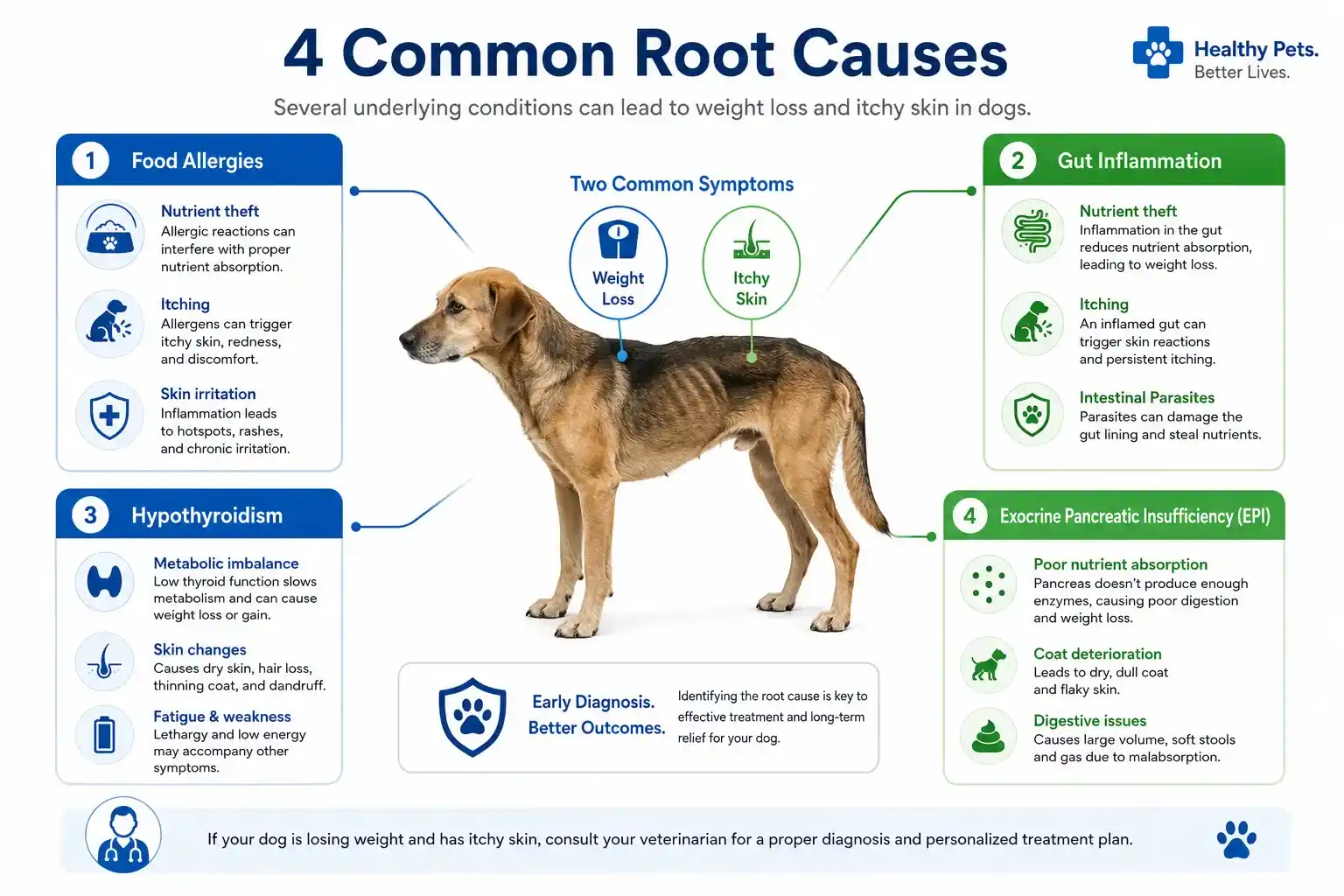
When a dog is losing weight and has itchy skin at the same time, both symptoms often share a common underlying cause. This combination is diagnostically important because it suggests a systemic condition affecting multiple body systems. Chronic infections can sometimes accompany other health issues, and recognizing early signs of bladder infection in dogs may help identify broader underlying conditions affecting overall health. Dogs suffering from chronic skin inflammation may also develop secondary ear problems such as a yeast infection in a dog ear, which often occurs alongside allergies.
One important but less common cause of weight loss and skin deterioration is Exocrine Pancreatic Insufficiency (EPI), a digestive disorder that prevents proper nutrient absorption.
Several conditions commonly cause both dog itchy skin and weight loss:
Food Allergies
Food allergies occur when the immune system reacts to specific ingredients. Chronic inflammation can affect digestion and nutrient absorption while simultaneously causing itchy skin, ear infections, and excessive scratching.
Intestinal Parasites
Parasites such as hookworms, roundworms, and whipworms consume nutrients intended for the dog. This can result in weight loss even when appetite remains normal. Some parasites also contribute to skin irritation and allergic reactions.
Hypothyroidism
Hypothyroidism affects metabolism and skin health. Dogs may develop dry skin, hair thinning, recurrent infections, and changes in body weight. Skin problems often become one of the first noticeable signs.
Exocrine Pancreatic Insufficiency (EPI)
EPI develops when the pancreas fails to produce enough digestive enzymes. Dogs cannot properly digest nutrients, leading to significant weight loss, poor coat quality, and skin deterioration.
Chronic Skin Infections
Long-term bacterial or yeast infections can increase inflammation throughout the body. Chronic discomfort may reduce appetite, contribute to weight changes, and worsen skin damage.
Causes Comparison Table
| Symptom Pattern | Likely Cause | Additional Signs | Urgency Level |
| Weight loss + itching + digestive upset | Food allergy | Diarrhea, ear infections | Moderate |
| Weight loss + itching + worms visible | Intestinal parasites | Pot-bellied appearance, diarrhea | High |
| Weight loss + skin changes | EPI | Large stools, poor coat | High |
| Itching + hair loss + infections | Hypothyroidism | Lethargy, dry skin | Moderate |
| Persistent itching + odor | Skin infection | Redness, discharge | Moderate to High |
Common Reasons Dogs Scratch, Bite, and Lose Weight
Dogs scratch, bite, and lose weight for several reasons, but allergies, parasites, infections, and metabolic disorders are among the most common. Identifying the cause helps determine whether home care is appropriate or veterinary treatment is needed. In some cases, itching and weight loss may occur alongside digestive problems, so owners should also watch for signs of upset stomach in dogs. For pet owners who want a single, organized reference covering every cause listed above, this complete dog itchy skin and weight loss reference guide breaks down each condition with symptom checklists and severity notes. It’s a useful companion to bookmark alongside this article for quick symptom cross-checking.
My Dog Is Constantly Scratching and Biting Himself — When to Worry
A dog that constantly scratches and bites himself should be evaluated when symptoms become frequent, widespread, or severe. Occasional scratching is normal, but persistent itching usually indicates an underlying problem.
Signs that require attention include:
- Scratching throughout the day and night
- Bleeding or damaged skin
- Hot spots
- Hair loss
- Foul skin odor
- Weight loss
- Reduced appetite
- Changes in behavior
A dog that keeps biting himself but has no fleas may have food allergies, environmental allergies, mites, yeast infections, or skin disease.
Puppies That Constantly Scratch and Bite — Special Considerations
Puppies that constantly scratch and bite themselves often have different causes than adult dogs.
Common puppy-specific causes include:
- Mites
- Flea allergy dermatitis
- Environmental irritants
- Early food sensitivities
- Skin infections
- Teething-related chewing behaviors
Because puppies have developing immune systems, persistent scratching should be monitored carefully. Early diagnosis helps prevent chronic skin problems later in life.
Dog Losing Weight and Itchy Skin Treatment: Home Remedies That Actually Work
Home remedies can help reduce itching, support skin healing, and improve comfort. However, they work best for mild cases and should not replace professional diagnosis when weight loss is present. Before relying entirely on home care, it’s important to understand common dog health problems that can cause persistent itching and unexplained weight changes.
What Can I Put on My Dog to Relieve Itching? (Topical Home Remedies)
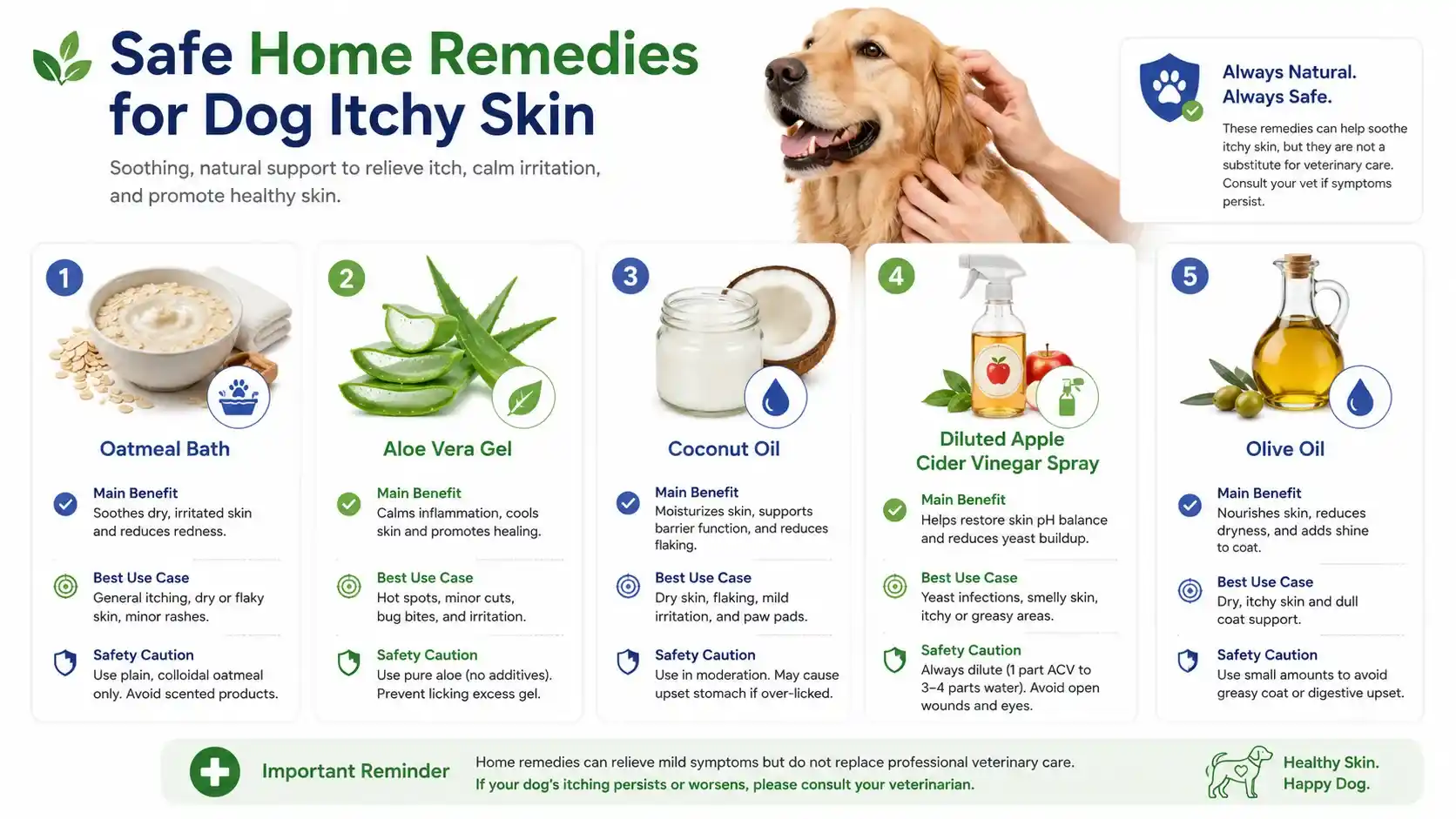
Several dog itchy skin home remedy options can provide temporary relief.
Oatmeal Baths
- Soothes inflamed skin
- Reduces itching
- Apply once or twice weekly
- Avoid if open wounds are present
Apple Cider Vinegar Spray
- Mix equal parts water and apple cider vinegar
- May help reduce yeast growth
- Avoid broken or irritated skin
Aloe Vera Gel
- Provides cooling relief
- Use pure gel only
- Avoid products containing latex
Coconut Oil
- Moisturizes dry skin
- May reduce irritation
- Apply lightly to affected areas
Olive Oil
- Supports skin hydration
- Use sparingly
- Excessive use may make skin greasy
Before trying any remedy below, it can help to consult this master reference database for dog weight loss and itchy skin, which organizes remedies by severity and safety notes in one searchable Notion page. It’s especially useful for cross-referencing which home treatments are safe to combine.
Olive Oil for Dog Itchy Skin — Does It Really Help?
Yes, olive oil can help some dogs with mild dry skin, but it is not a cure for allergies or underlying disease.
Benefits of olive oil include:
- Supports skin barrier function
- Contains beneficial fatty acids
- Helps improve skin moisture
Topical use:
- Apply a small amount to dry areas
- Avoid excessive application
Oral use:
- Small amounts may be added to food
- Overuse can contribute to digestive upset and excess calories
Olive oil is safe for most healthy dogs when used appropriately, but dogs with pancreatitis or certain digestive conditions may require veterinary guidance.
What Can I Give My Dog Orally for Itchy Skin?
Several oral supplements may support skin health.
Fish Oil
- Rich in omega-3 fatty acids
- Helps reduce inflammation
- Often recommended for allergy-prone dogs
Coconut Oil
- Provides fatty acids
- Should be used in moderation
Probiotics
- Support digestive health
- May improve the gut-skin connection
Quercetin
- Sometimes called a natural antihistamine
- May help reduce allergy-related itching
Always introduce supplements gradually and consult a veterinarian if symptoms are severe.
Dog Losing Weight and Itchy Skin Treatment at Home — Ointments and Sprays
Common over-the-counter options include:
- Hydrocortisone 1% creams
- Veterinary itch-relief sprays
- Moisturizing skin balms
- Anti-itch shampoos
Guidelines:
- Use only on small affected areas
- Avoid prolonged use without veterinary supervision
- Stop use if irritation worsens
Prescription treatments may be necessary if symptoms persist.
Homemade Dog Anti-Itch Spray: Recipes That Are Safe and Effective
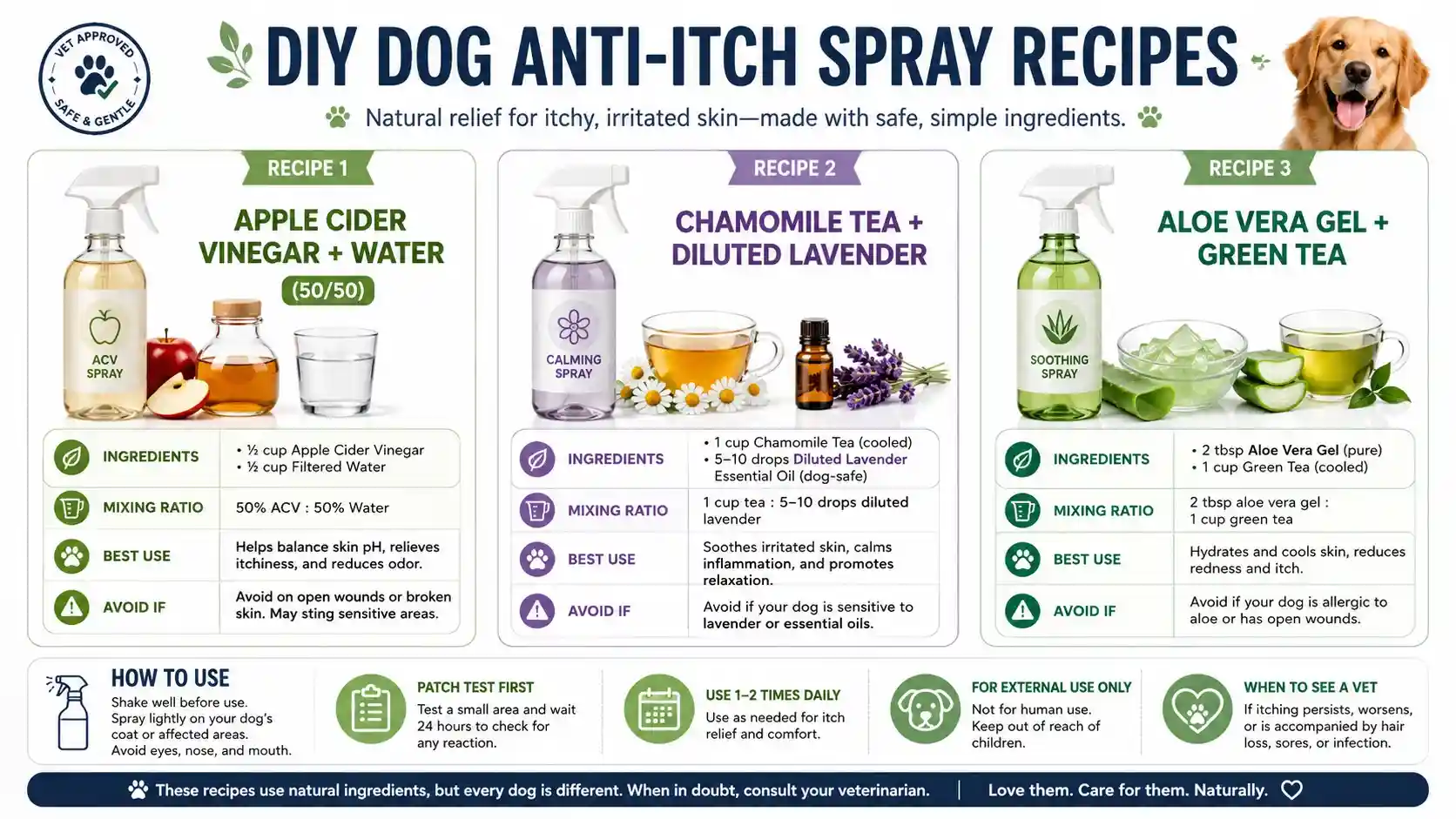
Homemade anti-itch sprays can provide temporary relief for mild skin irritation.
Apple Cider Vinegar Spray
Ingredients:
- 50% water
- 50% apple cider vinegar
Best for:
- Mild yeast-related irritation
- General itch relief
Avoid if:
- Skin is broken or bleeding
Chamomile Tea and Lavender Spray
Ingredients:
- Cooled chamomile tea
- Very small amount of diluted lavender essential oil
Best for:
- Mild inflammation
- Stress-related licking
Avoid if:
- Skin is highly sensitive
Aloe Vera and Green Tea Spray
Ingredients:
- Pure aloe vera gel
- Brewed green tea
Best for:
- Red irritated skin
- Mild inflammation
Spray Comparison Table
| Recipe | Best For | Avoid If | Shelf Life |
| Vinegar + Water | Mild yeast issues | Open wounds | 1–2 weeks |
| Chamomile + Lavender | Irritated skin | Essential oil sensitivity | 1 week |
| Aloe + Green Tea | Red inflamed skin | Aloe allergy | 5–7 days |
How to Treat Dog Skin Infections at Home Naturally
Skin infections often develop after prolonged scratching. This itch-scratch cycle damages the skin barrier and allows bacteria or yeast to multiply.
Home treatment may help manage mild infections, but moderate and severe infections often require veterinary care.
Bacterial Skin Infections in Dogs — Home Remedies and Limits
Supportive options include:
Chlorhexidine Wash
- Helps reduce bacterial growth
- Frequently recommended for canine skin infections
Diluted Apple Cider Vinegar
- May reduce microbial growth
- Avoid open wounds
Manuka Honey
- Supports wound healing
- Apply only to localized areas
Home remedies are supportive measures. Moderate or severe bacterial infections usually require prescription antibiotics.
How to Treat Dog Skin Allergies at Home
Managing allergies often requires reducing exposure to triggers.
Helpful strategies include:
- Frequent bathing with hypoallergenic shampoo
- Washing bedding regularly
- Reducing dust and mold exposure
- Controlling flea infestations
- Following elimination diet trials
- Using veterinarian-approved antihistamines when appropriate
Consistency is essential because allergy management often requires long-term care. Dogs with severe allergy-related scratching sometimes develop ear trauma, and an aural hematoma in dogs is one potential complication of chronic head shaking and irritation.
What to Feed a Dog With Itchy Skin and Weight Loss
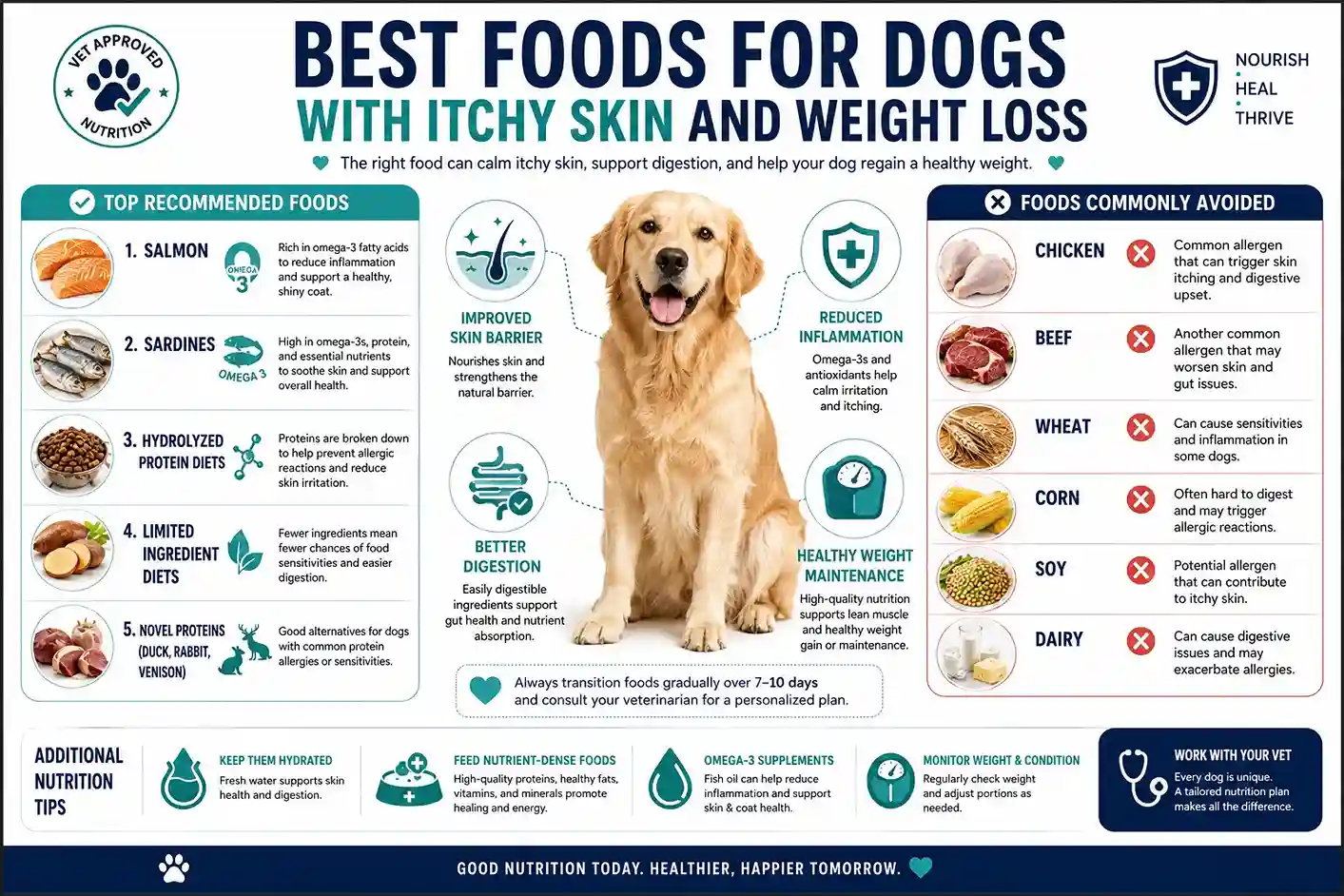
Nutrition plays a major role in both skin health and body condition. Dogs with itchy skin and weight loss may benefit from dietary adjustments that reduce inflammation and improve nutrient absorption. Nutritional management is important because poor diet can contribute to obesity as well as skin issues; learn how to tell if a dog is overweight when evaluating your dog’s overall body condition.
Limited Ingredient Diets (LID)
These diets contain fewer ingredients, making it easier to identify food triggers.
Novel Protein Sources
Options include:
- Venison
- Duck
- Rabbit
- Kangaroo
Novel proteins help reduce exposure to common allergens.
Omega-3 Rich Foods
Examples include:
- Salmon
- Sardines
- Fish oil
- Flaxseed
Omega-3 fatty acids support skin health and help reduce inflammation.
Foods Commonly Avoided
Some dogs react to:
- Chicken
- Beef
- Wheat
- Corn
- Soy
- Dairy
Hydrolyzed Protein Diets
These diets contain proteins broken into smaller components that are less likely to trigger allergic reactions.
Probiotics and the Gut-Skin Axis
Healthy gut bacteria may influence immune responses and skin health. Probiotics can support digestive balance and may benefit dogs with food sensitivities.
Food Comparison Table
| Food Type | Benefit for Itchy Skin | Suitable for Weight Loss Cases | Notes |
| Novel Protein | Reduces allergen exposure | Yes | Useful during elimination trials |
| Hydrolyzed Protein | Helps food allergies | Yes | Often veterinarian recommended |
| Salmon-Based Diet | Rich in omega-3s | Yes | Supports skin health |
| Limited Ingredient Diet | Simplifies allergy detection | Yes | Good diagnostic tool |
| Probiotic Supplements | Supports gut health | Yes | May improve digestion |
For a downloadable, printable version of this feeding comparison, this dog weight loss and itchy skin diet tracking spreadsheet lets you log daily food intake and skin symptoms side by side. Many owners find this helpful when preparing notes for a vet visit.
Hair Loss in Dogs With Itchy Skin: Home Remedies and When It Signals Something Serious
Hair loss in dogs with itchy skin can result from repeated scratching, underlying disease, or nutritional deficiencies. Determining the cause helps guide treatment. Chronic scratching damages hair follicles through repeated trauma. Over time, affected areas may become thin, patchy, or completely bald. Certain fungal diseases can cause both itching and hair loss, so it helps to know what ringworm in dogs looks like when evaluating skin lesions.
Common nutritional factors include:
- Zinc deficiency
- Biotin deficiency
- Omega-3 deficiency
- Poor protein intake
Supportive home care may include:
- Coconut oil supplementation
- Balanced nutrition
- Omega-3 fatty acids
- Regular skin care
Red flags that require veterinary evaluation include:
- Circular patches of hair loss
- Symmetrical hair loss
- Rapidly progressing bald areas
- Persistent weight loss
- Severe skin odor
- Full-body coat thinning
These patterns may indicate ringworm, hormonal disease, EPI, or other systemic disorders. Some pet owners confuse allergies with fungal disease, making it useful to understand what a fungal infection looks like on a dog before beginning treatment.
Key Takeaways: Treating a Dog With Weight Loss and Itchy Skin
Dog losing weight and itchy skin treatment requires identifying the underlying cause rather than treating symptoms alone. Allergies, parasites, digestive disorders, hormonal conditions, and skin infections can all contribute to both symptoms.
Home remedies such as oatmeal baths, fish oil, coconut oil, olive oil, anti-itch sprays, and dietary adjustments may help reduce discomfort. However, when weight loss is present, veterinary evaluation becomes especially important because systemic illness may be involved.
A practical approach is simple:
- Mild itching only: Home remedies may be appropriate initially.
- Persistent itching: Investigate allergies, parasites, and infections.
- Itching plus weight loss: Schedule a veterinary examination promptly.
Addressing both the skin condition and the underlying cause offers the best chance for long-term improvement.
Frequently Asked Questions
Q1: What does it mean when a dog is losing weight and has itchy skin at the same time?
It often indicates an underlying condition affecting multiple body systems. Common causes include food allergies, intestinal parasites, skin infections, hypothyroidism, and digestive disorders such as EPI.
Q2: What can I put on my dog to relieve itching using home remedies?
Common options include oatmeal baths, diluted apple cider vinegar sprays, pure aloe vera gel, coconut oil, and small amounts of olive oil. Avoid applying products to broken or infected skin.
Q3: Is olive oil safe to put on or give to a dog with itchy skin?
Yes, olive oil is generally safe when used in moderation. It may help moisturize dry skin and support the skin barrier, but it does not treat allergies, infections, or underlying diseases.
Q4: What foods should I feed a dog with itchy skin and weight loss?
Limited ingredient diets, hydrolyzed protein diets, novel protein diets, omega-3-rich foods, and veterinarian-recommended allergy diets are often beneficial. Dietary selection should be based on the suspected cause.
Q5: How do I make a homemade anti-itch spray for my dog?
A simple recipe combines equal parts water and apple cider vinegar. Spray lightly on intact skin. Other options include chamomile tea sprays and aloe vera plus green tea mixtures.
Q6: When should I take my dog to the vet for itching and weight loss instead of using home remedies?
Seek veterinary care whenever itching is accompanied by unexplained weight loss, hair loss, recurrent infections, bleeding skin, severe discomfort, reduced appetite, or worsening symptoms despite home treatment.




One Response