
Introduction
A kitten vaccination schedule is the sequence of shots given at specific ages to protect a kitten against common, often fatal, feline diseases. In general, kittens begin their vaccine series between 6 and 8 weeks old, with follow-up boosters continuing every 3 to 4 weeks until around 16 weeks of age. This article covers the full age-by-age schedule, what vaccines are actually required, indoor-specific vaccination concerns, and what to expect before, during, and after each appointment.
Quick Summary
- Kittens typically start their vaccine series around 6–8 weeks old, with boosters every 3–4 weeks until roughly 16 weeks.
- Core vaccines (FVRCP) protect against panleukopenia, calicivirus, and herpesvirus; rabies is added once the kitten is old enough, per local law.
- Indoor-only kittens still need vaccines, airborne and indirect exposure risks don’t disappear indoors.
- The right schedule depends on the kitten’s health, environment, and vet’s judgment, not a single fixed date.
What Is Kitten Vaccination and Why Does Timing Matter?
Kitten vaccinations work by exposing the immune system to a weakened or inactivated form of a pathogen so the body can build lasting protection without developing the actual disease. Timing matters because newborn kittens receive temporary protection from their mother’s milk in the form of maternal antibodies. These antibodies decline gradually over the first two months of life, but the exact rate varies by kitten. These antibodies decline gradually over the first two months of life, but the exact rate varies by kitten — a phenomenon well documented in veterinary literature on maternal antibodies.
This creates what veterinarians call a “window of susceptibility”: a period when maternal antibodies are too weak to protect the kitten but still strong enough to interfere with a vaccine’s effectiveness. This is why kitten vaccines are not given on a single date but as a series, repeated doses increase the likelihood that at least one dose is given after maternal antibodies have dropped low enough for the vaccine to work. Timing in a kitten vaccination schedule is a medical calculation, not an arbitrary date on a calendar.
When Should You Get Your Kitten Vaccinated?
Kittens should get their first vaccine at 6 to 8 weeks old, with boosters continuing every 3 to 4 weeks until they reach approximately 16 weeks of age. This starting point aligns with when maternal antibody protection typically begins to fade, leaving the kitten vulnerable to disease without vaccine-induced protection stepping in.
Why Vaccination Age Isn’t One-Size-Fits-All
The exact starting age and interval between boosters can shift based on several factors:
- Litter and maternal history: Kittens from vaccinated mothers may retain maternal antibodies longer than those from unvaccinated mothers.
- Health status: A kitten recovering from illness, malnutrition, or parasites may need a delayed or adjusted schedule.
- Veterinary exam findings: A vet’s physical exam, including weight and general condition, informs whether a kitten is ready for a given dose.
Furry Care Hub recommends treating the standard schedule as a reliable starting framework, then letting a veterinarian confirm the specifics for each individual kitten.
The Full Kitten Vaccine Schedule by Age
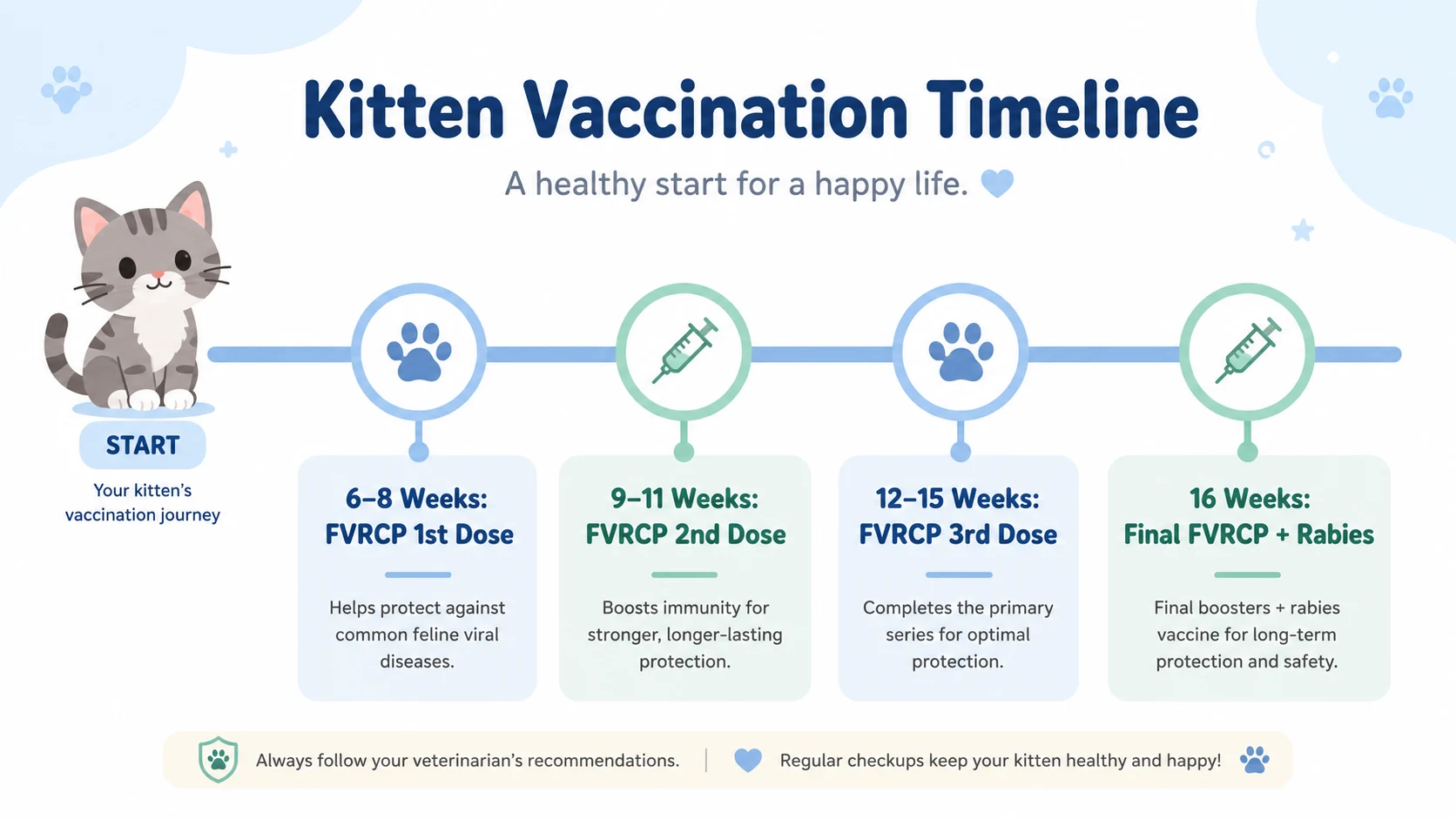
| Age Range | Vaccine(s) Given | Purpose | Notes |
| 6–8 weeks | FVRCP (1st dose) | Protects against panleukopenia, calicivirus, herpesvirus | First dose in the core series |
| 9–11 weeks | FVRCP (2nd dose) | Reinforces immunity as maternal antibodies decline | Non-core vaccines (e.g., FeLV) may begin here if recommended |
| 12–15 weeks | FVRCP (3rd dose) | Continues building protective immunity | Rabies vaccine often introduced in this window |
| 16 weeks | FVRCP (final dose) + Rabies | Completes core immunity; legally required rabies protection | Marks the end of the primary kitten series |
First Round of Shots (6–8 Weeks)
A kitten’s first shots typically consist of the initial FVRCP dose, administered once the kitten reaches 6 to 8 weeks of age. This first vaccine does not provide full protection on its own, it begins the immune priming process that subsequent boosters complete. Veterinarians also use this visit to assess overall health, weight, and parasite status. Veterinarians also use this visit to assess overall health, weight, and parasite status — and it’s a good time to mention if you’ve noticed your kitten’s eyes watering and sneezing, since early URI symptoms can affect the vaccination timeline. This first visit is also a good opportunity to ask your vet about identification options, including what a microchip does for a cat, since many clinics offer microchipping alongside early vaccinations.
Booster Shots (9–16 Weeks)
Kittens generally need three to four rounds of FVRCP vaccine, spaced 3 to 4 weeks apart, to complete the core series. Each booster reduces the chance that residual maternal antibodies will block the vaccine’s effectiveness. Skipping or excessively delaying a booster can leave a gap in protection, which is why consistent spacing matters more than the exact calendar date.
Rabies Vaccine Timing
Rabies vaccines are typically given later than FVRCP, usually starting between 12 and 16 weeks of age, depending on local and regional law. This delay exists because rabies vaccine protocols are regulated separately from core feline vaccines, and manufacturers set minimum age requirements based on clinical trial data. A young kitten under 4 weeks old is not considered a meaningful rabies transmission risk under normal circumstances, since exposure typically requires contact with an infected animal, which is highly unlikely for kittens still with their mother. This does not mean rabies vaccination can be skipped, it means the vaccine is timed for when it is both effective and legally appropriate.
What Shots Do Kittens Need?
Kittens need a combination of core vaccines, which are recommended for essentially all kittens, and non-core vaccines, which depend on individual lifestyle and exposure risk.
Core Vaccines (FVRCP)
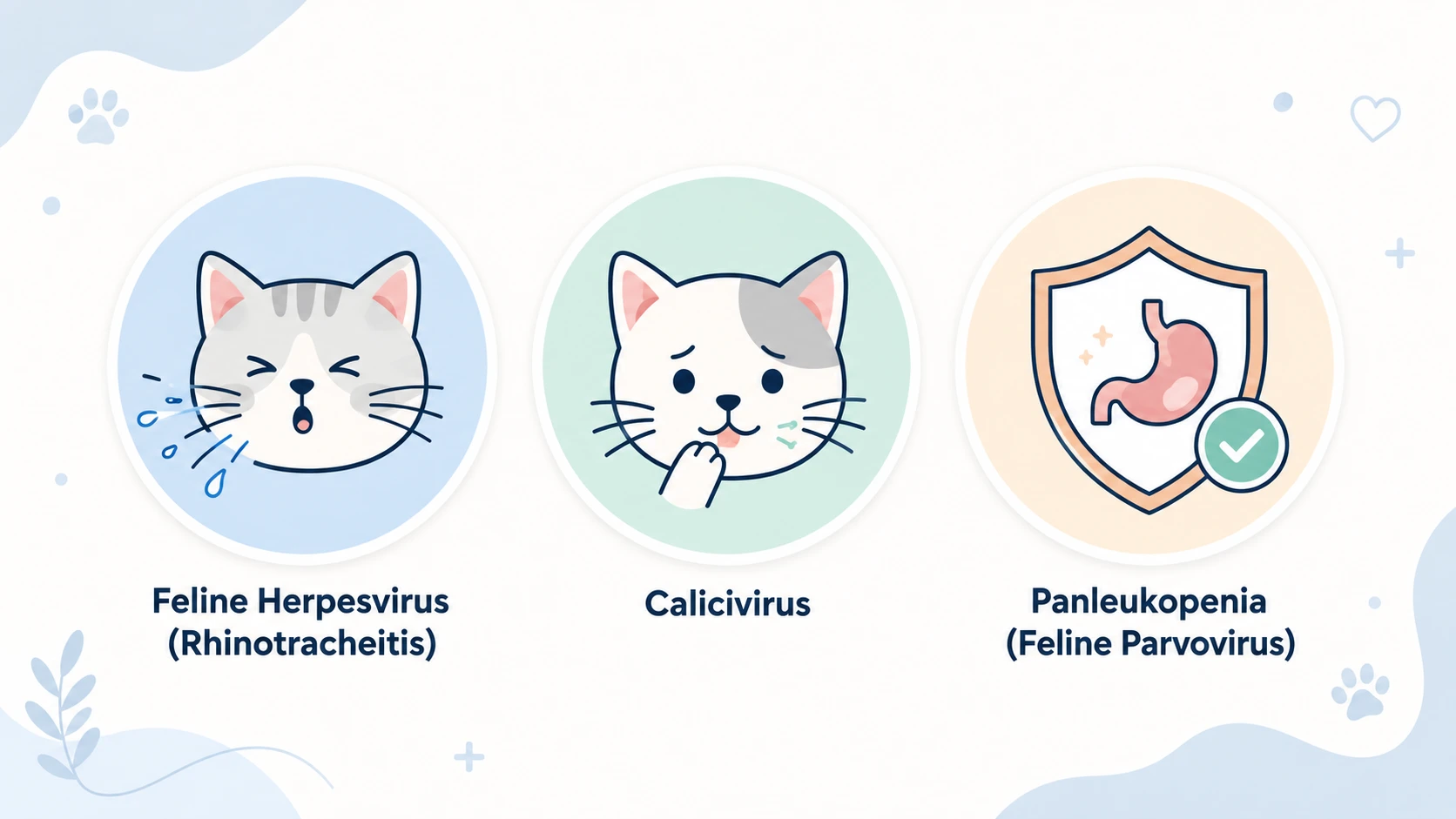 FVRCP is a combination vaccine that protects against three viral diseases:
- Feline viral rhinotracheitis (feline herpesvirus-1): causes upper respiratory infection and eye inflammation. Feline viral rhinotracheitis (feline herpesvirus-1) — causes upper respiratory infection and eye inflammation, which is one of the most common reasons kittens get eye infections even after vaccination begins.
- Calicivirus: another major cause of upper respiratory disease, sometimes with oral ulcers.
- Panleukopenia (feline parvovirus): a severe, often fatal disease affecting the gastrointestinal and immune systems.
Rabies is also considered core in most regions due to public health law, even though it is administered on a separate timeline from FVRCP. Panleukopenia (feline parvovirus) — a severe, often fatal disease affecting the gastrointestinal and immune systems. Many owners are surprised to learn that cats can get parvo too, since it’s often thought of as a dog-only illness.
Non-Core / Optional Vaccines
Non-core vaccines are recommended based on a kitten’s specific lifestyle and risk factors rather than given universally. The most common example is the feline leukemia virus (FeLV) vaccine, typically recommended for kittens with any potential outdoor access, exposure to other cats of unknown vaccination status, or households with multiple cats. A veterinarian determines whether a non-core vaccine is appropriate after assessing the kitten’s environment and risk level. A veterinarian determines whether a non-core vaccine is appropriate after assessing the kitten’s environment and risk level, including exposure risks like whether cats can get leptospirosis from outdoor water sources or wildlife contact.
Do Indoor Kittens Need Vaccines Too?
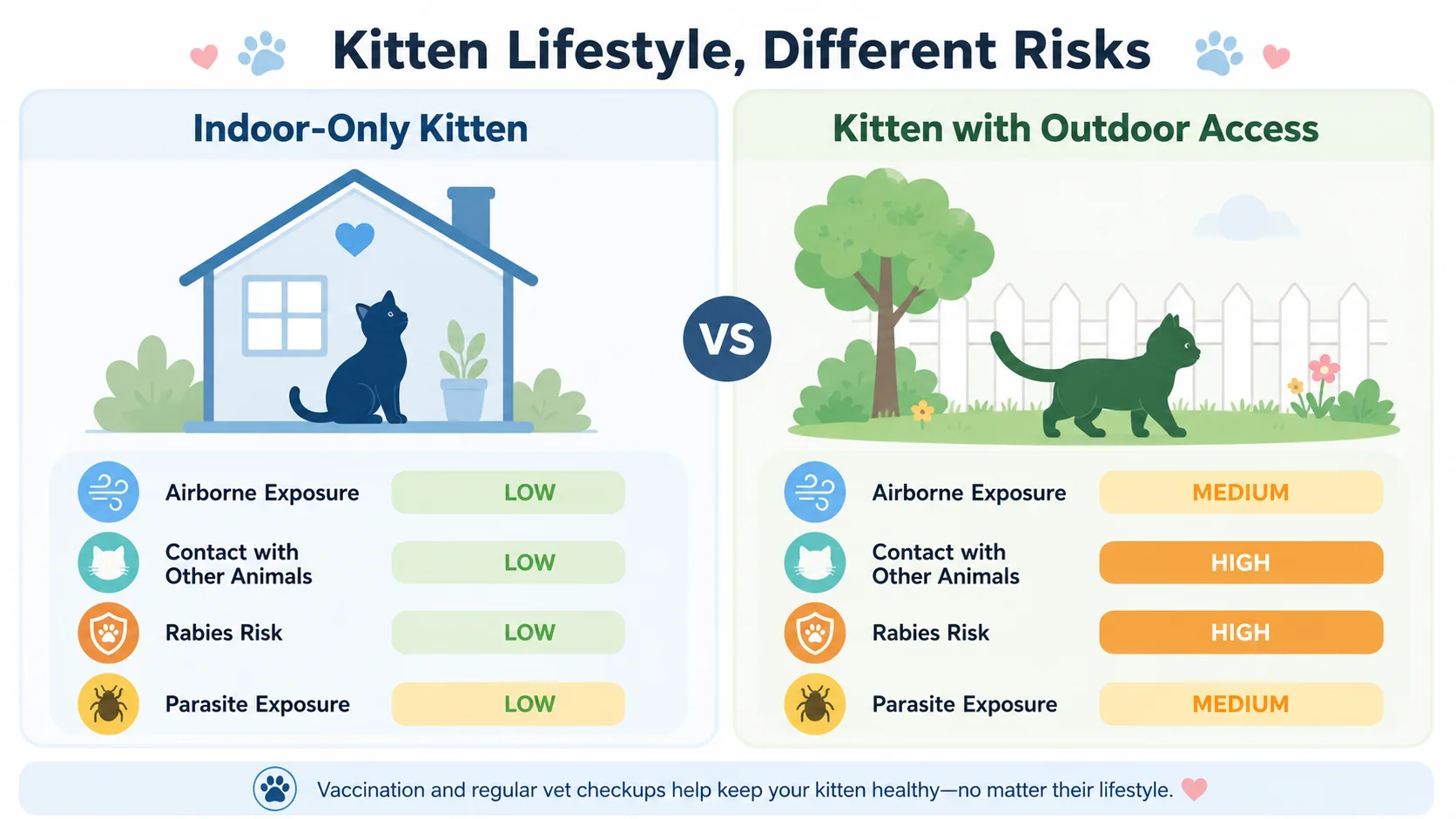
Yes, indoor kittens still need the full core vaccination series. Indoor housing reduces certain risks but does not eliminate exposure to core feline pathogens, which can travel indirectly on clothing, shoes, and other pets, or through open windows and doors.
| Risk Factor | Indoor-Only Kitten | Kitten with Outdoor Access |
| Direct contact with other animals | Low, but possible via household pets or visiting animals | Higher, due to contact with unknown or stray animals |
| Airborne/indirect pathogen exposure | Present, via people, shoes, other pets | Present, plus direct outdoor exposure |
| Rabies exposure risk | Lower, but not zero (bats, escaped exposure) | Higher, due to wildlife contact |
| Parasite exposure | Lower | Higher |
| Recommended core vaccines | Still required | Still required, often plus non-core vaccines |
Panleukopenia virus, in particular, can survive on surfaces for extended periods and does not require direct animal-to-animal contact to spread. A kitten that never sets foot outside can still be exposed through a contaminated shoe, another pet, or a multi-cat household. The belief that “indoor equals fully protected” is a common misconception; indoor status lowers risk exposure but does not remove the medical rationale for a complete kitten vaccination schedule.
What Happens If You Delay, Skip, or Miss a Vaccine?
Missed a scheduled shot: This usually happens due to scheduling conflicts or an owner underestimating how time-sensitive the booster series is. The solution is to contact the veterinary clinic as soon as possible rather than waiting for the next “official” appointment, most clinics can resume the series without restarting it entirely. To prevent recurrence, set calendar reminders aligned with the clinic’s recommended interval rather than relying on memory.
Never vaccinated at all: An unvaccinated kitten is not considered safe, even if it appears healthy, because diseases like panleukopenia can be fatal and highly contagious before visible symptoms appear. The solution is to schedule an initial veterinary exam immediately, regardless of the kitten’s current age, so a catch-up schedule can begin. Ongoing prevention means treating vaccination as a required part of kitten care, not an optional add-on.
Starting late: There is no fixed age at which vaccination becomes ineffective, a veterinarian can design a catch-up protocol for kittens or even adult cats with no vaccination history. The solution is an initial veterinary visit to assess current health and immune status before beginning an adjusted schedule. Prevention going forward involves following the standard 6–8 week starting window for future pets to avoid the need for catch-up protocols.
Exposure risk from other animals: Kittens that have not completed their core series should avoid direct contact with cats of unknown vaccination status, since this increases exposure risk during the most vulnerable period. The solution is to limit interaction with unfamiliar animals until the FVRCP series is complete. Prevention includes informing anyone who interacts with the kitten, including pet sitters, of its current vaccination status.
What to Expect Before and After a Vaccine Appointment
Before the Appointment
Kittens do not need to fast before a vaccination appointment, and feeding on a normal schedule beforehand is generally recommended, since vaccines do not typically cause nausea the way sedation or surgery might. A light meal a few hours prior is usually appropriate, though owners should follow any specific pre-visit guidance from their veterinary clinic.
Common Side Effects
Most kittens tolerate vaccines well, with only mild, short-term reactions. Typical side effects include:
- Mild lethargy or reduced appetite for 24–48 hours
- Slight swelling or tenderness at the injection site
- Low-grade fever
Rare but urgent symptoms that warrant immediate veterinary attention include:
- Facial swelling or hives
- Difficulty breathing
- Repeated vomiting or diarrhea
- Collapse or extreme weakness
Many pet owners notice mild drowsiness after a vaccine visit, which typically resolves within a day. Symptoms beyond mild and short-lived should always be evaluated by a veterinarian promptly, as true allergic reactions, while uncommon, can escalate quickly. Symptoms beyond mild and short-lived should always be evaluated by a veterinarian promptly, as true allergic reactions, while uncommon, can escalate quickly — this is also worth discussing alongside broader questions like what cats are allergic to in food, since some kittens have pre-existing sensitivities.
Common Mistakes Kitten Owners Make with Vaccination Timing
A few recurring mistakes account for most vaccination gaps:
- Assuming one shot equals full protection. A single FVRCP dose does not provide complete immunity; the full booster series is what builds lasting protection.
- Spacing boosters too far apart. Waiting significantly longer than the recommended 3–4 week interval can extend the window of vulnerability unnecessarily.
- Skipping vaccines because the kitten “seems healthy.” Many core feline diseases are contagious before visible symptoms appear, so apparent health is not a reliable indicator of immune status.
- Waiting too long to start. Delaying the initial visit pushes back the entire series. A common mistake is also attempting to vaccinate a kitten at home using over-the-counter products; this is discouraged because proper storage, dosing, and administration require veterinary training, and rabies vaccination in particular is legally restricted to licensed veterinarians in most regions.
Do Adult Cats Need Vaccines Every Year?
Adult cats generally do not need every vaccine repeated annually, the frequency depends on the specific vaccine and the cat’s lifestyle.
| Factor | Kitten Series | Adult Booster Schedule |
| Purpose | Builds initial immunity | Maintains existing immunity |
| Frequency | Every 3–4 weeks until ~16 weeks | Typically every 1–3 years, vaccine-dependent |
| FVRCP timing | Multiple doses required | Booster often given 1 year after kitten series, then every 1–3 years |
| Rabies timing | Single initial dose after 12 weeks | Booster interval set by vaccine type and local law |
Current veterinary guidance generally supports a booster roughly one year after the kitten series concludes, followed by boosters every one to three years depending on the specific vaccine and product used. Indoor-only adult cats may qualify for extended intervals for some non-core vaccines, but this determination should be made by a veterinarian based on the individual cat’s risk profile, not assumed by the owner. Indoor-only adult cats may qualify for extended intervals for some non-core vaccines, but this determination should be made by a veterinarian — this becomes especially relevant as cats age, since senior cats often have different immune and health considerations.
Conclusion
A kitten vaccination schedule generally begins at 6 to 8 weeks of age and continues with boosters every 3 to 4 weeks until around 16 weeks, with rabies added once the kitten reaches the appropriate legal age. This timing is driven by the biology of maternal antibody decline, not convenience, and applies to indoor and outdoor kittens alike. The general framework outlined here provides a reliable starting point, but a licensed veterinarian should always confirm the exact schedule based on the individual kitten’s health, history, and environment. A licensed veterinarian should always confirm the exact schedule based on the individual kitten’s health, history, and environment — and for broader guidance on raising a healthy cat beyond vaccinations, check out our full cat care guide.
FAQs
What age should a kitten get their first vaccine?
Kittens should receive their first vaccine, typically the initial FVRCP dose, at 6 to 8 weeks of age.
How many rounds of vaccines does a kitten need in total?
Most kittens need three to four rounds of FVRCP vaccine, spaced 3 to 4 weeks apart, plus a separate rabies vaccine once they reach the appropriate age.
Do indoor kittens really need to be vaccinated?
Yes. Indoor kittens can still be exposed to core feline diseases through indirect contact, such as other pets, visitors, or contaminated surfaces, so the full vaccine series is still recommended.
What age can kittens get the rabies vaccine?
Kittens can typically receive the rabies vaccine starting between 12 and 16 weeks of age, depending on local law and the specific vaccine product used.
Is it safe to skip vaccines if my kitten never goes outside?
No. Indoor status lowers certain exposure risks but does not eliminate them, and core diseases like panleukopenia can spread through indirect contact, so skipping vaccines is not recommended.
What are normal side effects after a kitten’s first shot?
Normal side effects include mild lethargy, reduced appetite, and slight injection-site tenderness for 24 to 48 hours; symptoms like facial swelling, difficulty breathing, or collapse are rare but require immediate veterinary attention.