
IntroductionDogs bad breath is a common concern among pet owners and can range from a mild odor after eating to a sign of a more serious health problem. Known medically as halitosis, dog bad breath is usually caused by bacteria in the mouth, plaque buildup, diet, or underlying medical conditions. While occasional unpleasant breath may not be unusual, persistent or worsening odor should not be ignored. In many cases, the problem is preventable and treatable with proper dental care and veterinary attention. This guide explains the most common causes of dog bad breath, effective remedies, prevention strategies, and the warning signs that indicate a veterinary visit may be necessary.
Many cases of bad breath are linked to broader health concerns, so understanding common dog health problems can help owners recognize when oral odor may signal a more serious condition.
Quick Summary
- Dog bad breath is most often caused by plaque, tartar buildup, or periodontal disease.
- Diet, chewing habits, and hydration levels can significantly affect breath odor.
- Daily tooth brushing, dental chews, and water additives can help improve breath.
- Persistent, severe, or sudden bad breath may indicate an underlying health condition.
- Early dental care and routine veterinary checkups are the best preventive measures.
Why Does My Dog Have Bad Breath?
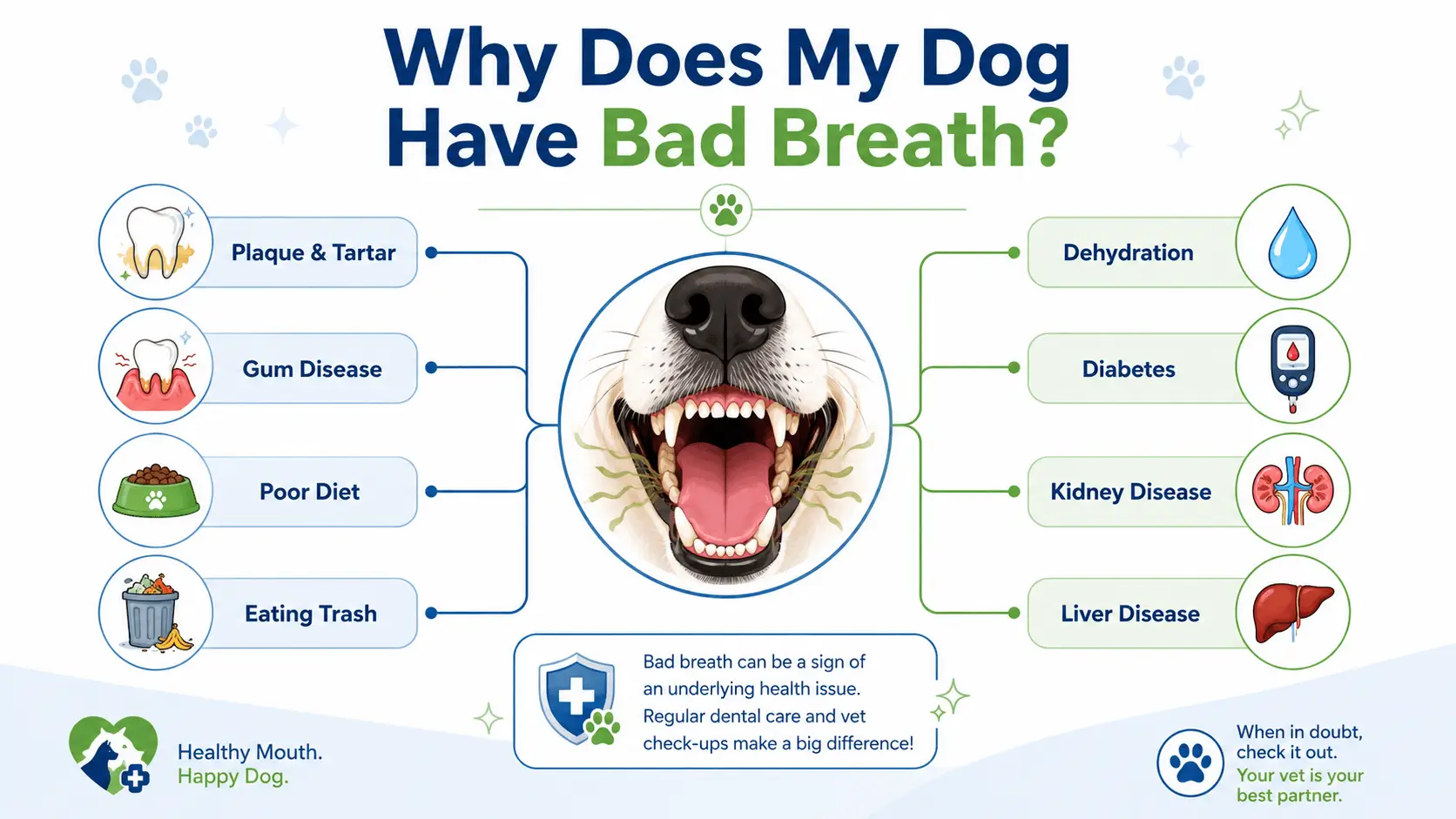 Bad breath in dogs usually develops when bacteria accumulate inside the mouth and break down food particles, producing unpleasant-smelling compounds. However, some cases are linked to medical conditions affecting organs such as the kidneys, liver, or pancreas.
If your dog develops a sudden change in breath odor along with excessive thirst or urinary symptoms, review the common signs of bladder infection in dogs and consult your veterinarian.
Dental Causes (Plaque, Tartar, Gum Disease)
Dental disease is the leading cause of bad breath in dogs. After eating, food particles mix with bacteria and saliva to form plaque on the teeth. If plaque is not removed through brushing or chewing, it hardens into tartar.
Black or dark discoloration on the teeth often accompanies tartar buildup, and understanding the causes of black on dogs teeth can help identify early dental disease.
Over time, tartar irritates the gums and can lead to gingivitis, an early stage of gum disease. Without treatment, gingivitis may progress to periodontal disease, a painful condition that damages the tissues supporting the teeth.
Advanced gum disease, known as periodontal disease, can damage the tissues supporting a dog’s teeth and may eventually lead to tooth loss if left untreated.
Common signs of dental-related bad breath include:
- Yellow or brown tartar on teeth
- Red or swollen gums
- Bleeding during chewing or brushing
- Excessive drooling
- Difficulty eating
- Persistent foul odor
In our experience caring for dogs, many owners assume bad breath is normal with age. However, persistent odor is often an early sign of dental disease that requires attention.
Non-Dental Causes (Diet, Diabetes, Kidney/Liver Issues)
Not all bad breath originates in the mouth. Certain health conditions can create distinctive odors that may help identify when veterinary evaluation is needed.Examples include:
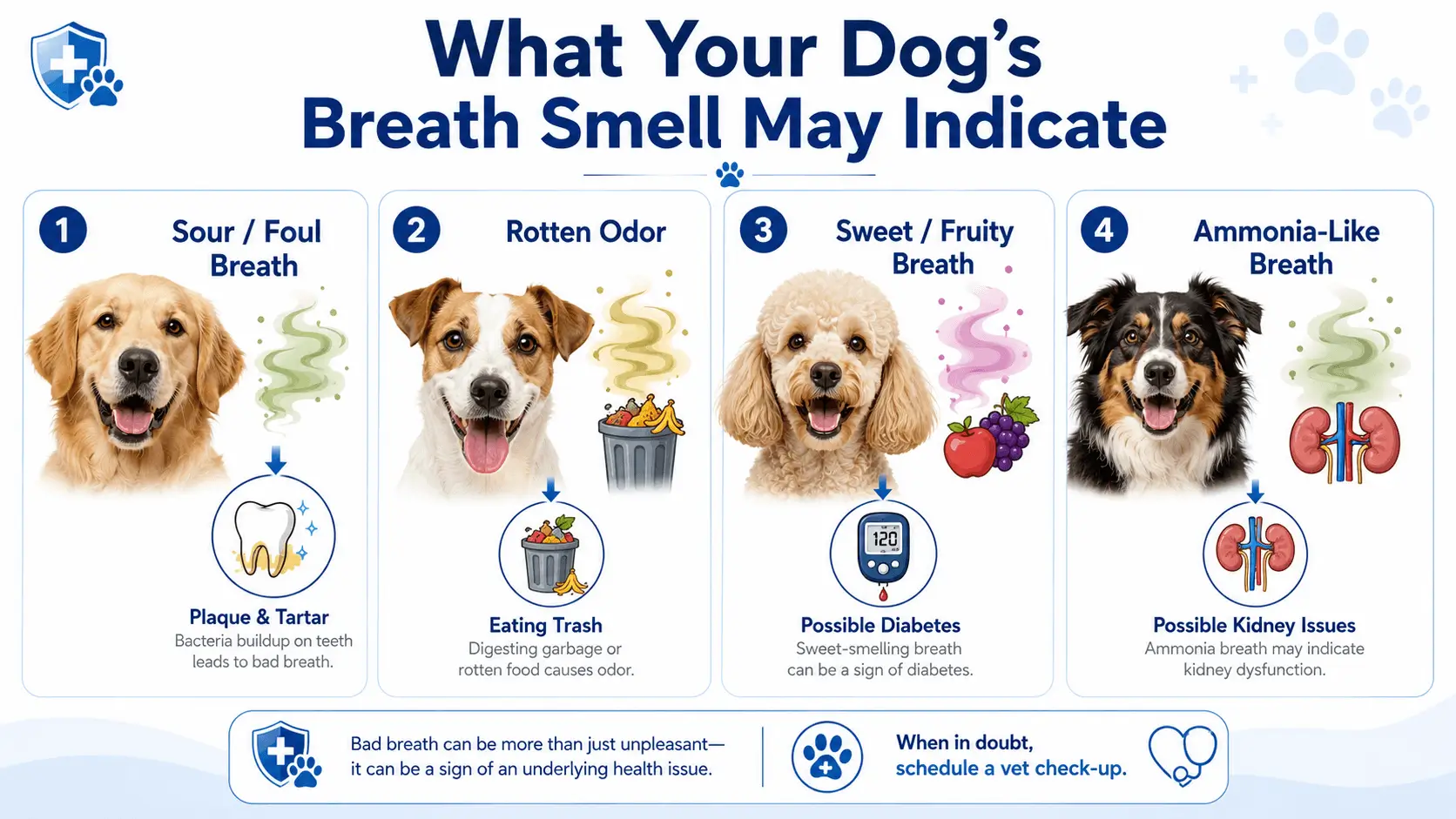
- Sweet or fruity breath: May be associated with diabetes mellitus.
- Ammonia-like or urine-smelling breath: Can occur with kidney disease.
- Foul or metallic odor: May be linked to oral infections, bleeding gums, or liver disorders.
- Rotten odor after scavenging: Often caused by eating spoiled food, garbage, or animal waste.
While breath odor alone cannot diagnose a condition, unusual or persistent smells should be evaluated by a veterinarian, especially if accompanied by changes in appetite, drinking habits, weight, or behavior.
Common Causes of Stinky Dog Breath
| Cause | Description | Breath Characteristic | Typical Fix |
| Plaque and tartar buildup | Bacterial accumulation on teeth | Sour, foul odor | Daily brushing and dental cleaning |
| Periodontal disease | Advanced gum infection affecting tooth structures | Strong, persistent odor | Professional veterinary treatment |
| Diet or poor-quality food | Food residue and low-quality ingredients contribute to odor | Food-related smell | Improve diet quality |
| Eating non-food items | Trash, feces, or spoiled material causes temporary odor | Rotten or unusually strong smell | Prevent access and monitor behavior |
| Dehydration | Reduced saliva allows bacteria to multiply | Dry, stale breath | Increase water intake |
| Underlying illness | Diabetes, kidney disease, liver disease, infections | Fruity, ammonia-like, or metallic smell | Veterinary diagnosis and treatment |
This comparison helps explain why dog breath stinks and highlights the importance of identifying the root cause rather than simply masking the odor.
How to Fix a Dog’s Bad Breath
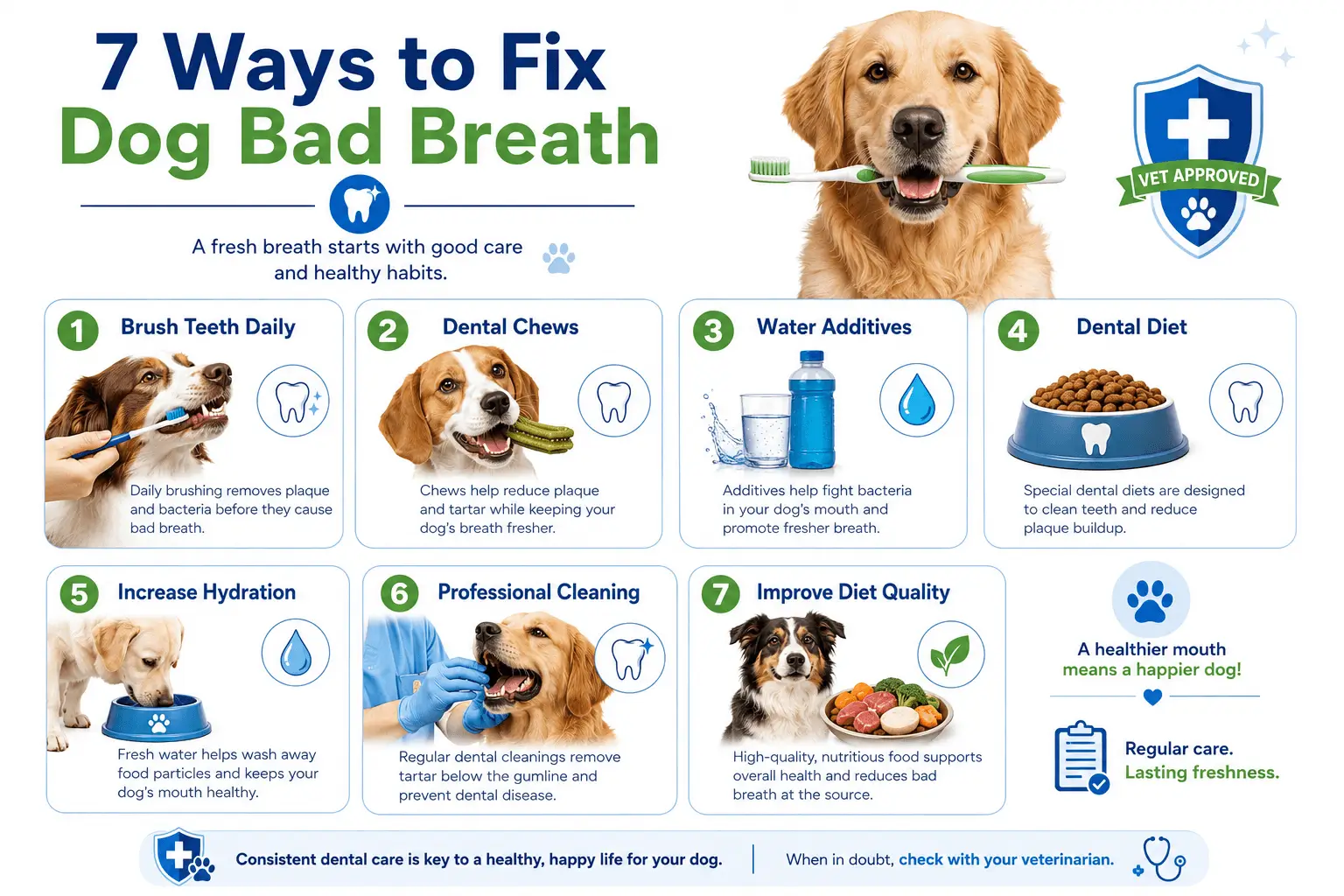 The best way to fix a dog’s bad breath is to address the underlying cause. Most cases improve significantly with consistent dental care and proper veterinary management.
One of the most effective long-term solutions is routine dental care, and knowing how often dogs should get their teeth cleaned can help prevent recurring bad breath.
Recommended steps include:
Many veterinarians also recommend a high-quality best dental chew for dogs as part of a daily oral hygiene routine.
1. Brush Your Dog’s Teeth Regularly
Daily brushing is considered the gold standard for preventing plaque buildup.Tips:
- Use dog-specific toothpaste.
- Choose a soft-bristled pet toothbrush.
- Start gradually and reward calm behavior.
- Aim for daily brushing whenever possible.
Current veterinary recommendations emphasize daily brushing as the most effective home-care strategy.
2. Use Vet-Approved Dental Chews or Treats
Dental chews help reduce plaque accumulation through mechanical cleaning.Look for:
- Veterinary-approved products
- Appropriate size for your dog’s breed
- Products designed specifically for oral health
3. Add Water Additives or Dental Rinses
Water additives and dental rinses may help reduce bacterial growth and improve breath freshness.These products should complement brushing rather than replace it.
4. Consider Dental-Formula Food or Safe Chewing Options
Some dental diets are specially formulated to reduce plaque buildup.Safe chewing options may also help remove debris from teeth.A common mistake is offering hard bones or objects that can fracture teeth. Always choose veterinarian-recommended products.
5. Increase Hydration
Adequate water intake supports saliva production, which naturally helps control oral bacteria.Furry Care Hub recommends:
- Providing fresh water daily
- Cleaning water bowls regularly
- Encouraging drinking during hot weather
6. Schedule Professional Dental Cleaning
Professional cleanings remove tartar that brushing cannot eliminate.Veterinarians may recommend dental cleanings based on:
- Age
- Breed
- Existing dental disease
- Oral examination findings
7. Improve Diet Quality and Prevent Scavenging
High-quality nutrition supports oral health and overall wellness.Prevent access to:
- Garbage
- Spoiled food
- Animal feces
- Sugary human foods
Home Remedies vs. Veterinary Treatments
| Home Care | Professional Veterinary Care |
| Tooth brushing | Dental scaling under anesthesia |
| Dental chews | Tooth extractions when necessary |
| Water additives | Treatment of infections |
| Dental diets | Diagnosis of underlying disease |
| Fresh water support | Bloodwork and medical testing |
| Plaque prevention | Advanced periodontal treatment |
Home care is highly effective for prevention and mild cases. Veterinary treatment becomes essential when tartar, gum disease, infection, or systemic illness is present.
Professional cleanings involve specialized techniques, and understanding how do vets clean dogs teeth can help owners know what to expect during the procedure.
How to Make Your Dog’s Breath Smell Better (Daily & Long-Term Tips)
The best way to make your dog’s breath smell better is through consistent prevention rather than occasional treatment.Daily habits include:
- Brush teeth every day.
- Offer dental-friendly treats.
- Provide safe chew toys.
- Keep water fresh and accessible.
- Feed a balanced, high-quality diet.
Long-term prevention includes:
- Annual veterinary examinations
- Routine dental assessments
- Monitoring changes in eating habits
- Addressing dental problems early
Many pet owners notice substantial improvement in breath odor within a few weeks of establishing a consistent oral care routine.
Dog Dental Care Guide
Preventive dental care becomes even more important because untreated dental disease in dogs can affect overall health and quality of life.
A comprehensive dental care plan helps reduce bad breath and lowers the risk of periodontal disease.
Feeding Requirements
Choose:
- Balanced commercial diets
- Dental-formula foods when recommended
- Healthy dental treats
Limit:
- Sugary table scraps
- Sticky foods
- Frequent treats without dental benefits
Exercise and Chewing Needs
Chewing can support oral health by helping remove surface debris.Recommended options:
- Veterinary-approved chew toys
- Dental chews
- Durable rubber toys
Avoid excessively hard objects that may damage teeth.
Grooming Needs
Dental grooming should include:
- Daily tooth brushing
- Weekly oral inspections
- Monitoring for tartar buildup
- Checking gum health
Useful tools include:
- Dog toothbrushes
- Finger brushes
- Veterinary toothpaste
Veterinary Care
Preventive veterinary care remains essential.Most dogs benefit from:
- Annual wellness exams
- Oral health assessments
- Professional cleanings as recommended
Environmental Considerations
Reduce exposure to factors that worsen breath:
- Secure trash containers
- Prevent access to spoiled food
- Avoid sugary table scraps
- Monitor outdoor scavenging behavior
Common Owner Mistakes That Worsen Dog Breath
Several common mistakes can make bad breath worse over time.
Skipping Brushing Entirely
Plaque begins accumulating quickly. Without brushing, bacterial populations increase significantly.
Relying Only on Breath Fresheners
Fresheners may temporarily mask odor but do not address dental disease.
Ignoring Early Gum Disease Signs
Red gums, mild bleeding, and tartar buildup often worsen if untreated.
Feeding Low-Quality or Sugary Treats
Poor nutrition can contribute to oral bacteria growth and plaque accumulation.
Not Scheduling Regular Dental Checkups
Routine dental evaluations help identify problems before they become severe and costly.
When Bad Breath Is a Warning Sign (Health Red Flags)
Severe dental infections can sometimes progress into abscesses, making it important to know whether a dog abscess is an emergency situation.
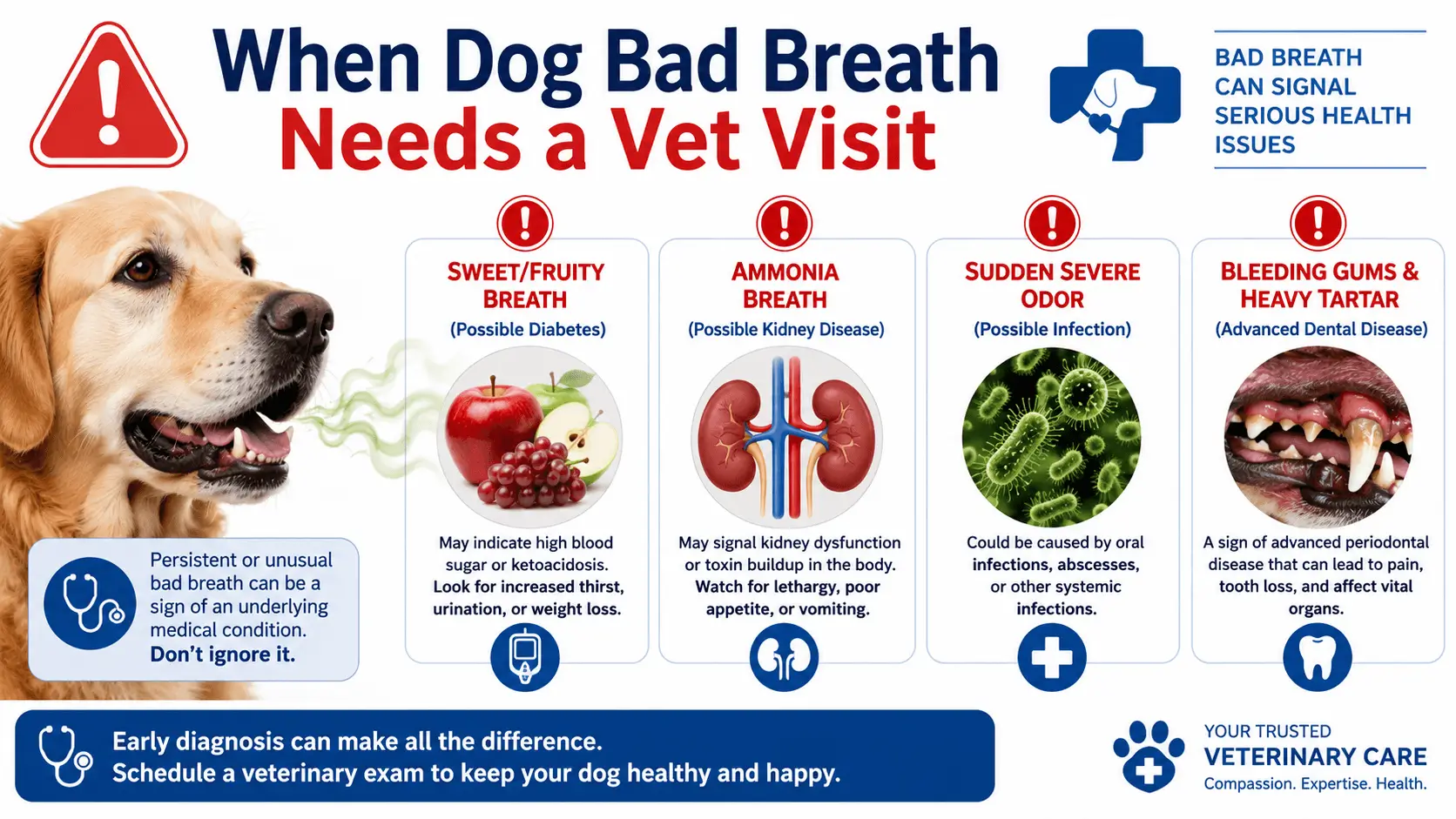
Bad breath sometimes indicates a serious health concern requiring prompt veterinary attention.
A strong foul odor accompanied by swelling or pain may indicate infection, and learning the symptoms of dog tooth infection can help determine when urgent treatment is needed.
Sweet or Fruity Breath
This odor may occur in dogs with diabetes mellitus.Additional signs can include:
- Increased thirst
- Increased urination
- Weight loss
Prompt veterinary evaluation is recommended.
Ammonia or Urine-Like Breath
This smell may suggest kidney dysfunction.Additional warning signs include:
- Reduced appetite
- Vomiting
- Lethargy
Kidney disease requires professional diagnosis and management.
Sudden, Severe Odor
A rapid change in breath odor may indicate:
- Oral infection
- Dental abscess
- Foreign object in the mouth
- Oral tumor or mass
Immediate veterinary assessment is advisable.
Bleeding Gums or Visible Tartar
These signs commonly indicate advanced periodontal disease.Without treatment, dental disease can lead to pain, tooth loss, and systemic complications.
Age-Specific and Seasonal Considerations
Puppy Breath vs. Adult Dog Breath
Puppy breath is often described as mildly sweet and is generally considered normal.During teething, puppies may experience temporary changes in breath odor as baby teeth loosen and permanent teeth erupt.Adult dogs with persistent bad breath are more likely to have dental disease or another underlying cause requiring evaluation.
Senior Dogs and Dental Health
Senior dogs face a higher risk of periodontal disease due to years of plaque accumulation.As dogs age, veterinarians often recommend:
- More frequent oral examinations
- Earlier dental interventions
- Monitoring for systemic diseases that affect breath odor
Regular preventive care becomes increasingly important in older dogs.
Conclusion
Dog bad breath is usually caused by plaque buildup, tartar accumulation, or periodontal disease, but it can sometimes indicate a more serious medical condition. Understanding why your dog’s breath smells unpleasant is the first step toward effective treatment. Daily brushing, proper nutrition, dental chews, adequate hydration, and routine veterinary care can significantly improve oral health and breath quality. If bad breath develops suddenly, becomes severe, or is accompanied by other symptoms, veterinary evaluation is essential. With consistent preventive care, most cases of dog bad breath can be successfully managed and often prevented altogether.
Frequently Asked Questions
Why does my dog’s breath stink all of a sudden?
Sudden bad breath may result from eating spoiled food, getting into garbage, dental infection, oral injury, or an underlying medical condition. If the odor appears suddenly and persists, a veterinary examination is recommended.
What can I do at home for my dog’s bad breath?
You can brush your dog’s teeth daily, provide veterinary-approved dental chews, use dental water additives, encourage hydration, and feed a high-quality diet. These measures help reduce plaque and bacterial buildup.
Is dog bad breath always a sign of a health problem?
No. Temporary bad breath can occur after eating certain foods or during puppy teething. However, persistent or worsening bad breath is often associated with dental disease and should not be ignored.
How often should I brush my dog’s teeth to prevent bad breath?
Daily brushing is ideal. Consistent daily brushing removes plaque before it hardens into tartar and remains the most effective home-care method for preventing bad breath.
Can diet alone fix my dog’s bad breath?
Diet improvements can help reduce odor, but diet alone may not resolve existing dental disease. Most dogs benefit from a combination of proper nutrition, oral hygiene, and veterinary care.
When should I take my dog to the vet for bad breath?
You should schedule a veterinary visit if bad breath is persistent, severe, suddenly worsens, is accompanied by bleeding gums, difficulty eating, excessive drooling, weight loss, increased thirst, or other concerning symptoms.