
IntroductionFHO surgery in dogs, also called a femoral head ostectomy, is a surgical procedure used to relieve severe hip pain caused by conditions such as hip dysplasia, traumatic injuries, fractures, or advanced arthritis. During the procedure, the ball portion of the hip joint is removed so painful bone-on-bone contact can no longer occur. Although the procedure changes the anatomy of the hip joint, most dogs can regain comfortable mobility through the formation of a functional false joint and proper rehabilitation. Dog owners often encounter this recommendation when other treatment options are unlikely to provide sufficient long-term relief.
Dogs requiring FHO often have underlying orthopedic conditions, making it helpful for owners to understand broader dog health problems that can affect mobility and quality of life.
Quick Summary
- FHO (femoral head ostectomy) is a surgical procedure in which the ball of the hip joint is removed to eliminate bone-on-bone pain.
- It is commonly recommended for dogs with hip dysplasia, fractures, or severe arthritis when other treatments have failed.
- Recovery takes several weeks, but most dogs—especially small to medium breeds—regain excellent mobility.
- It is generally considered a more affordable alternative to total hip replacement.
- Consistent rehabilitation plays a major role in long-term success.
What Is FHO Surgery in Dogs?
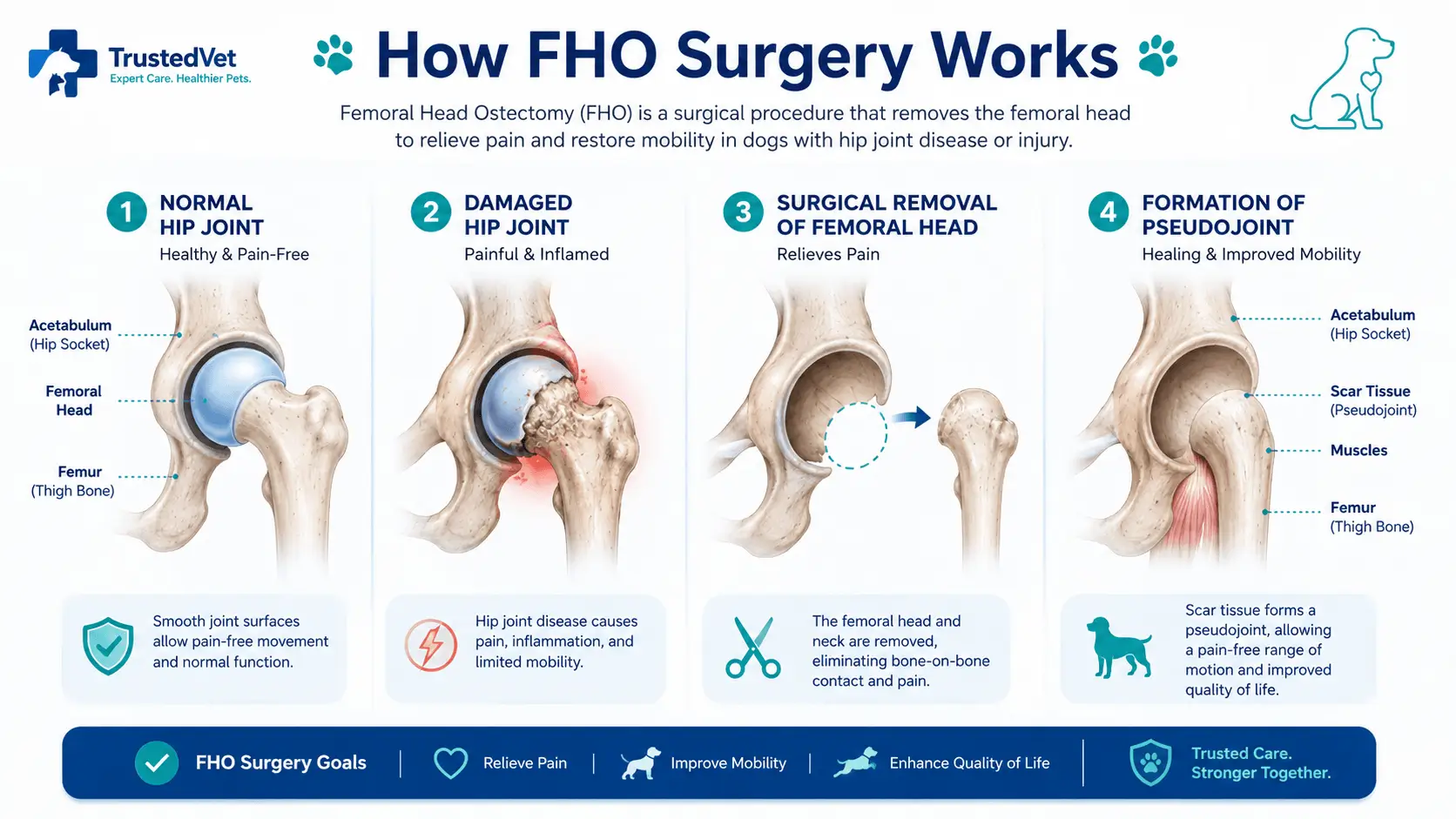 FHO surgery in dogs is a procedure that removes the femoral head, which is the ball portion of the hip joint. The goal is to eliminate painful joint contact and allow the body to create a functional pseudojoint that supports movement with reduced discomfort.
What Does Femoral Head Ostectomy Mean?
The hip joint consists of the femur (thigh bone) and the acetabulum, which forms the socket portion of the pelvis. The rounded top of the femur is known as the femoral head.An ostectomy is the surgical removal of bone. Therefore, a femoral head ostectomy means surgically removing the femoral head and usually part of the femoral neck.
For a detailed overview of the anatomy and function of the hip joint, readers can refer to the educational resource on Wikipedia.
In a femoral head ostectomy dog procedure, the damaged ball portion of the hip is removed when it is causing significant pain or dysfunction. This eliminates direct bone-on-bone contact that often occurs with hip dysplasia, fractures, or severe arthritis.
For owners wondering what is FHO surgery in dogs, the procedure is essentially a pain-relief surgery that sacrifices a damaged joint surface in favor of creating a comfortable, functional false joint.
How Does a False Joint Form After FHO?
After surgery, dogs do not grow a new hip socket or replacement ball joint.Instead, surrounding muscles, connective tissue, and scar tissue gradually develop around the surgical area. This creates what veterinarians call a pseudojoint or false joint.The pseudojoint allows movement without the painful friction that existed before surgery. Many owners mistakenly believe their dog will be left without a functioning hip. In reality, the body adapts remarkably well, especially when rehabilitation exercises help maintain muscle strength and range of motion.
Why Do Dogs Need FHO Surgery?
FHO is typically recommended when the hip joint is severely damaged and pain cannot be adequately controlled through conservative treatment.
One of the most common reasons veterinarians recommend FHO is severe hip fracture in dogs that cannot be repaired successfully through other surgical methods.
Conditions That Lead to FHO
Several orthopedic conditions may lead a veterinarian to recommend FHO surgery:
- Hip dysplasia in dogs
- Legg-Calvé-Perthes disease (avascular necrosis of the femoral head)
- Hip luxation or dislocation that cannot be repaired successfully
- Severe femoral neck fractures
- Chronic arthritis that does not respond to medical management
Some dogs with advanced joint instability may also show symptoms similar to those seen in signs of luxating patella in dogs, although the affected joints are different.
Hip dysplasia is one of the most common reasons for surgery. In these cases, abnormal joint development causes instability, inflammation, and progressive pain.
When Is FHO Recommended Over Other Treatments?
FHO may be recommended when:
- Pain medications no longer provide sufficient relief
- Physical therapy alone is unsuccessful
- Total hip replacement is financially impractical
- The dog is a smaller breed likely to achieve excellent results with FHO
- Existing joint damage makes other repair options unsuitable
A comparison between FHO and total hip replacement often comes down to cost, patient size, expected activity level, and the severity of joint disease.
Which Dogs Are Best Candidates for FHO Surgery?
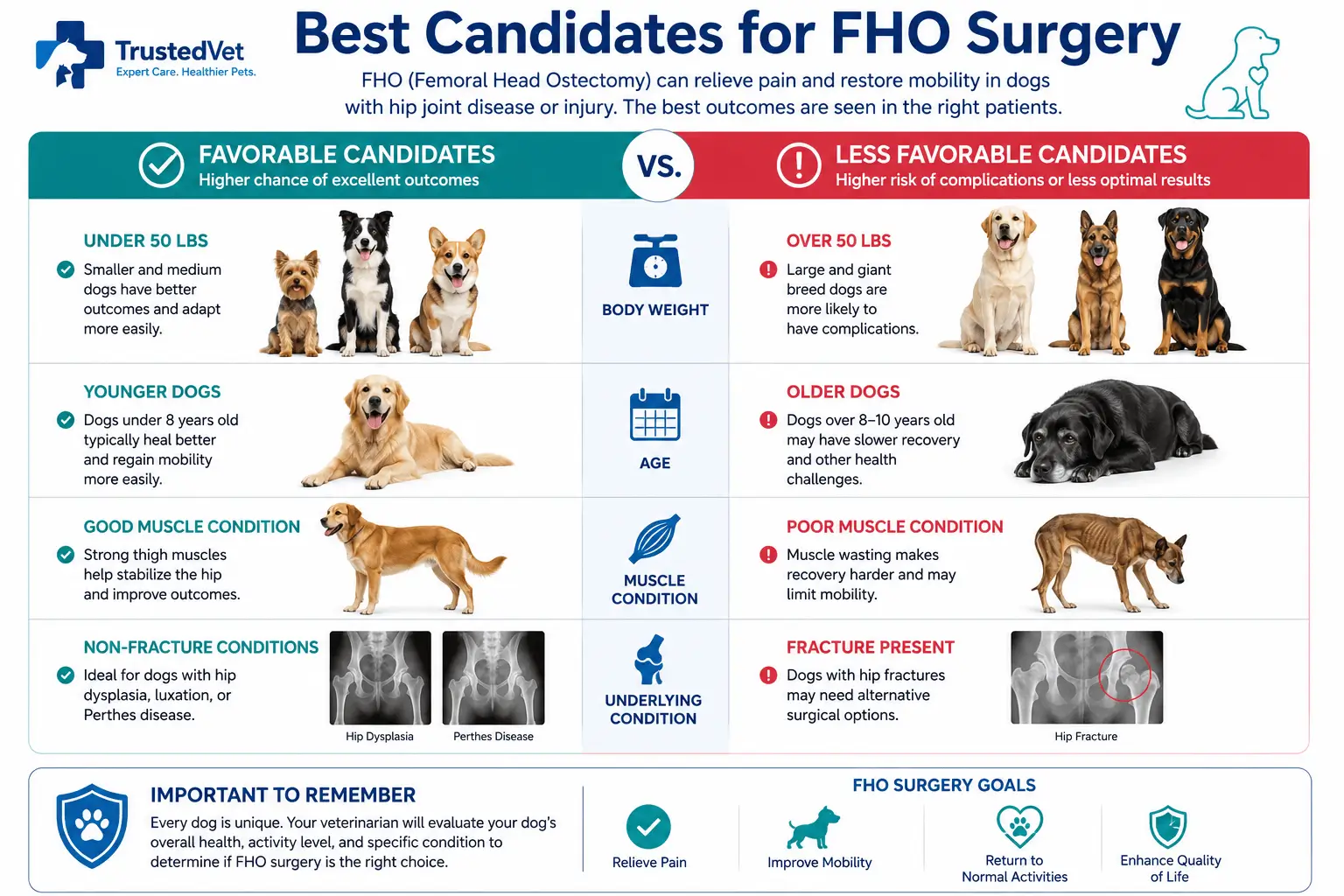 Not every dog experiences identical results after FHO. Several factors influence outcome quality.
- Body weight
- Age
- Activity level
- Underlying diagnosis
- Muscle condition
- Overall health status
Age and overall physical condition play an important role in recovery, particularly for older pets, making regular evaluation through a senior profile for dogs especially valuable.
Dogs under approximately 50 pounds generally achieve the most predictable outcomes. Younger dogs and those with good muscle mass often recover more effectively because muscles help support the newly formed pseudojoint.
Dogs undergoing surgery for fractures or Legg-Calvé-Perthes disease often experience particularly favorable results.
FHO Candidate Profile
| Factor | Favorable | Less Favorable |
| Body weight | Under 50 lbs | Over 50 lbs |
| Age | Young/middle-aged | Geriatric |
| Cause | Fracture, Perthes | Severe dysplasia |
| Muscle mass | Good | Poor/atrophied |
What Happens During FHO Surgery?
Understanding the procedure can help owners feel more comfortable when discussing treatment options with a veterinary surgeon.
Pre-Surgical Preparation
Before surgery, veterinarians typically perform:
- Comprehensive physical examination
- Bloodwork
- Diagnostic X-rays
- Anesthetic risk assessment
Dogs are generally fasted before anesthesia according to veterinary instructions.
The Surgical Procedure Step by Step
The surgery involves several key steps:
- The dog is placed under general anesthesia.
- The surgeon accesses the hip joint through a surgical incision.
- The femoral head and neck are identified.
- An osteotomy is performed to remove the damaged bone.
- The surgical site is smoothed to reduce friction.
- Soft tissues and skin are closed.
Most procedures take one to several hours depending on complexity.
What Happens Immediately After Surgery
Following surgery, dogs are closely monitored for:
- Pain control
- Heart rate and breathing
- Recovery from anesthesia
- Surgical site stability
Many dogs return home within one or two days, depending on the surgeon’s recommendations and individual recovery progress.
FHO Surgery Recovery in Dogs — Week by Week
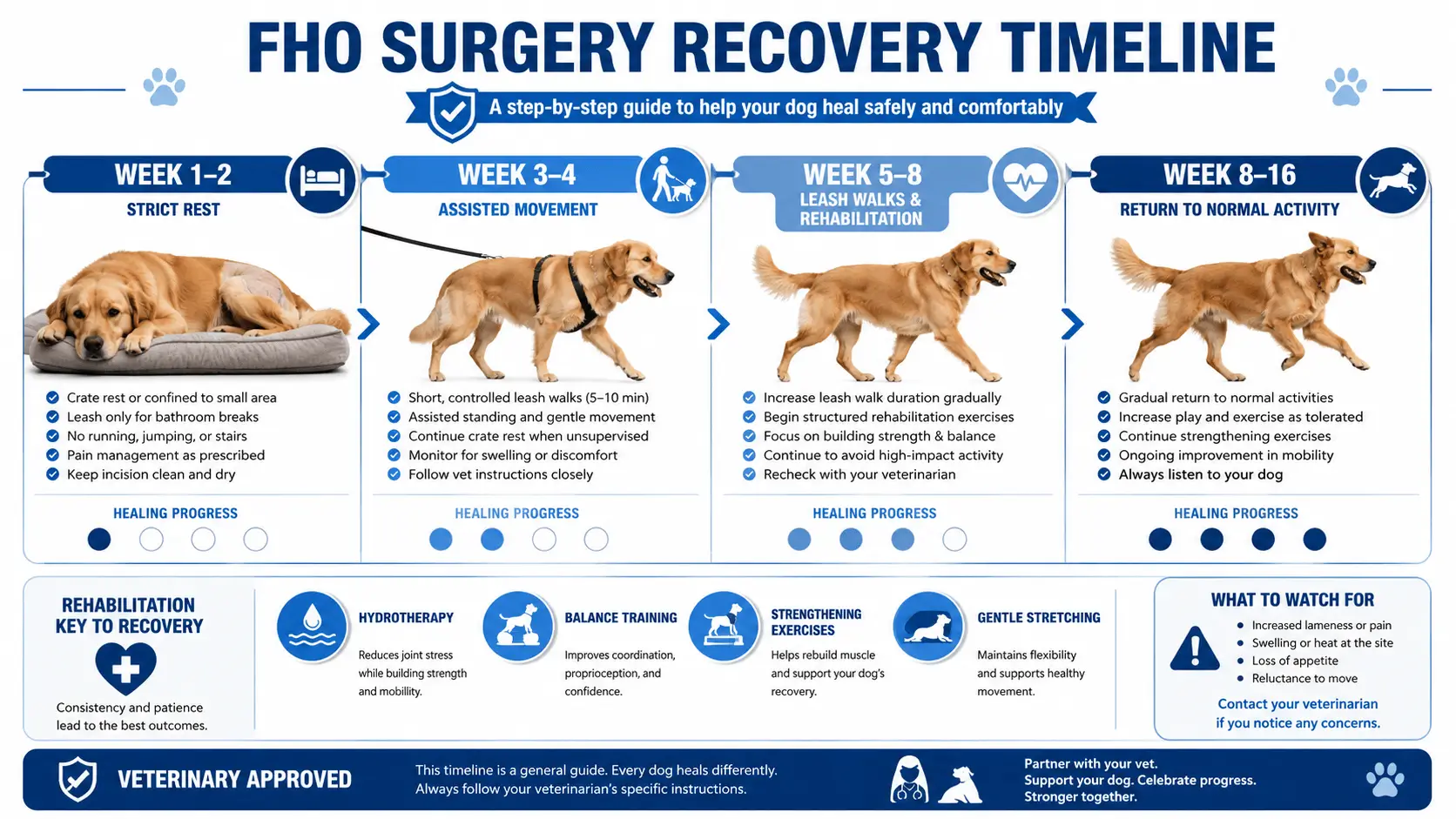 Recovery is gradual and requires patience, consistency, and rehabilitation.
Week 1–2: Immediate Post-Op Phase
During the first two weeks, owners can expect:
- Swelling around the surgical site
- Limping
- Limited mobility
- Temporary reluctance to bear weight
Many rehabilitation principles used after FHO are similar to those recommended when learning how to treat IVDD in dogs at home, including controlled activity and muscle preservation.
Pain medications should be given exactly as prescribed.
Additional care includes:
- Monitoring the incision
- Preventing licking with an e-collar
- Restricting activity
- Following all veterinary instructions
Week 3–4: Early Rehabilitation Phase
This stage focuses on gentle movement and muscle preservation.Many veterinarians recommend:
- Passive range-of-motion exercises
- Controlled standing exercises
- Short assisted walks
Mild limping remains normal during this phase. However, gradual improvement should be noticeable.
Week 5–8: Active Recovery Phase
By this stage, most dogs begin increasing limb use.Common rehabilitation activities include:
- Leash walks
- Hydrotherapy
- Underwater treadmill sessions
- Therapeutic massage
Owners should watch for signs of overexertion, including excessive fatigue, soreness, or increased limping after activity.
Week 8–16+: Return to Normal Activity
Most dogs achieve functional recovery between 8 and 16 weeks.Full recovery may include:
- Comfortable walking
- Running
- Playing
- Climbing stairs
The pseudojoint continues adapting even after apparent recovery.
FHO Recovery Timeline
| Week | Expected Activity Level | Key Milestones |
| 1–2 | Strict rest | Wound healing, pain control |
| 3–4 | Gentle assisted movement | Passive ROM exercises begin |
| 5–8 | Short leash walks | Weight-bearing improves |
| 8–16+ | Gradual return to normal | Pseudojoint forming |
Long-Term Effects of FHO Surgery in Dogs
Most dogs experience meaningful pain relief and improved quality of life.
Owners should monitor for changes in gait, posture, and comfort because mobility issues can contribute to other long-term dog health problems if left unmanaged.
What Long-Term Mobility Looks Like
Over time, scar tissue and surrounding muscles compensate for the removed joint.Many dogs eventually return to:
- Walking comfortably
- Running
- Playing
- Moderate jumping activities
Small and medium-sized dogs generally achieve the best long-term outcomes.
Potential Long-Term Complications
Possible complications include:
- Muscle atrophy
- Chronic mild lameness
- Reduced hip range of motion
- Reduced athletic performance in large dogs
A common mistake is skipping rehabilitation. In our experience caring for orthopedic recovery patients, consistent exercise programs often make a significant difference in long-term function.
Does FHO Cause Arthritis or Other Joint Problems?
FHO eliminates one major source of arthritis-related pain by removing bone-on-bone contact.However, altered movement patterns may increase stress on nearby structures over time, including:
- The stifle (knee)
- Lumbar spine
- Opposite hind limb
Current animal welfare guidance emphasizes maintaining a healthy body weight to reduce long-term orthopedic strain.
Pros and Cons of FHO Surgery in Dogs
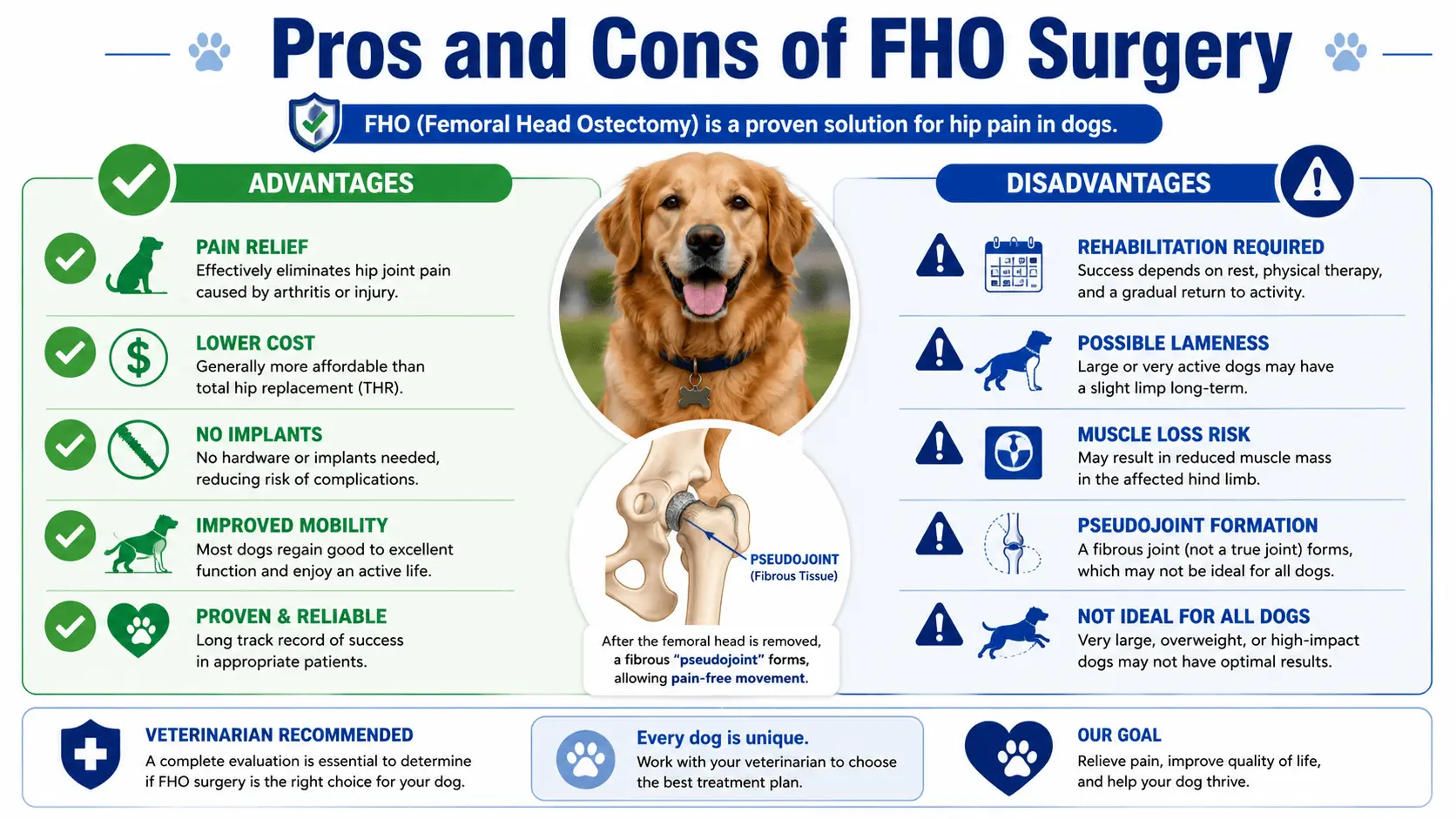
Pros
- Eliminates bone-on-bone pain permanently
- Lower cost than total hip replacement
- No implants or hardware
- Lower risk of implant-related complications
- Effective across many age groups
- Good to excellent outcomes in small and medium-sized dogs
Cons
- Does not restore a true anatomical hip joint
- Large dogs may retain mild lameness
- Requires dedicated rehabilitation
- Recovery can take several months
- Muscle atrophy can develop if rehabilitation is neglected
FHO Surgery Cost in Dogs
Costs vary significantly by region, facility, and individual patient needs.
What Factors Affect FHO Surgery Cost?
Several factors influence total expense:
- Geographic location
- Specialty versus general practice clinic
- Dog size
- Pre-surgical imaging
- Bloodwork
- Medications
- Physical therapy services
Larger dogs often require higher anesthesia dosages and longer surgical times.
How Does FHO Cost Compare to Hip Replacement?
FHO is generally significantly less expensive than total hip replacement.Many owners choose FHO because it offers substantial pain relief without the higher costs associated with implants and specialized orthopedic procedures.Pet insurance may cover part of the expense depending on policy terms and pre-existing condition exclusions.
FHO Surgery in Dogs vs. TPLO Surgery — What’s the Difference?
Although both are orthopedic procedures, they treat entirely different conditions.
What Is TPLO Surgery?
TPLO stands for tibial plateau leveling osteotomy.TPLO surgery is used to treat cranial cruciate ligament (CCL) injuries in dogs. Unlike FHO, TPLO focuses on stabilizing the knee joint rather than the hip.
FHO vs. TPLO — Side-by-Side Comparison
| Feature | FHO | TPLO |
| Joint affected | Hip | Stifle (knee) |
| Condition treated | Hip dysplasia, Perthes, fracture | CCL rupture |
| What is removed/altered | Femoral head and neck | Tibial plateau angle |
| Recovery time | 8–16 weeks | 12–16 weeks |
| Hardware used | None | Metal plate and screws |
| Outcome in large dogs | Variable | Generally excellent |
FHO Surgery in Cats vs. Dogs — Key Differences
Cats are often considered ideal FHO candidates because their lower body weight places less stress on the pseudojoint.Compared with dogs:
- Cats often recover faster
- Rehabilitation requirements may be less intensive
- Functional outcomes are frequently excellent
Cat owners commonly encounter femoral head ostectomy following hip luxation, trauma, or Legg-Calvé-Perthes disease.
Common Mistakes Dog Owners Make After FHO Surgery
Several avoidable mistakes can negatively affect recovery:
- Allowing excessive activity too early
- Skipping rehabilitation exercises
- Assuming limping means the surgery failed
- Ignoring weight management
- Missing scheduled veterinary rechecks
- Expecting a normal anatomical joint to reform
Maintaining a healthy body condition is essential because excess weight places additional strain on recovering joints; learn how to tell if a dog is overweight if you are unsure about your dog’s condition score.
Furry Care Hub recommends following the rehabilitation plan exactly as prescribed by your veterinarian or rehabilitation specialist.
Signs That FHO Surgery Recovery Is Going Well (or Badly)
Monitoring progress helps identify problems early.
Normal Signs of Healing
Positive recovery signs include:
- Gradually increasing weight-bearing
- Reduced swelling
- Improved appetite
- Better energy levels
- Increased willingness to use the limb
Post-surgical dogs may occasionally experience stress-related health concerns, so owners should remain alert for issues such as why is my dog panting while resting during recovery.
Many pet owners notice steady improvement between weeks two and six.
Warning Signs to Watch For
Contact your veterinarian promptly if you observe:
- Persistent non-weight-bearing beyond week 4–5
- Wound discharge
- Excessive redness
- Incision opening
- Fever
- Lethargy
- Sudden increase in pain
- Sudden loss of limb function
These signs may indicate infection, delayed healing, or another complication requiring medical attention.
Conclusion — Is FHO Surgery Right for Your Dog?
FHO surgery dog procedures are designed to eliminate painful bone-on-bone contact by removing the femoral head and allowing a functional pseudojoint to develop. The surgery is commonly recommended for hip dysplasia, fractures, Legg-Calvé-Perthes disease, and severe arthritis when conservative treatments are no longer effective. Small and medium-sized dogs generally achieve the best outcomes, particularly when rehabilitation is performed consistently. Compared with total hip replacement, FHO is usually more affordable and does not require implants. Recovery takes time, but patience, weight management, and structured rehabilitation significantly improve results. Always work closely with your veterinarian or veterinary surgeon to determine whether FHO is the most appropriate option for your dog’s specific condition.
FAQs
Q1: What is FHO surgery in dogs?
FHO surgery in dogs is a femoral head ostectomy procedure in which the ball portion of the hip joint is surgically removed to eliminate painful bone-on-bone contact. The body then develops a functional pseudojoint that allows movement with reduced pain.
Q2: How long does it take for a dog to recover from FHO surgery?
Most dogs require approximately 8 to 16 weeks for functional recovery. However, continued improvement in muscle strength and mobility may occur for several months after surgery.
Q3: What are the long-term effects of FHO surgery in dogs?
Most dogs experience improved comfort and mobility. Potential long-term effects may include mild lameness, reduced hip range of motion, or muscle atrophy if rehabilitation is inadequate.
Q4: Is FHO surgery painful for dogs?
Dogs are under general anesthesia during surgery and receive pain medications during recovery. While temporary post-operative discomfort is expected, the procedure is intended to reduce chronic hip pain over the long term.
Q5: What is the success rate of FHO surgery in dogs?
Success rates are generally considered good to excellent, especially in small and medium-sized dogs. Outcomes depend on body weight, rehabilitation, underlying disease, muscle condition, and overall health.
Q6: How much does FHO surgery cost for dogs?
The cost varies based on location, clinic type, diagnostics, anesthesia requirements, medications, and rehabilitation services. FHO is typically less expensive than total hip replacement.
Q7: Can large dogs have FHO surgery?
Yes. Large dogs can undergo FHO surgery, but outcomes may be less predictable than in smaller dogs. Successful recovery often depends heavily on muscle strength, rehabilitation, and overall body condition.