
IntroductionAnimal care is a broad term that includes veterinary medicine, preventive wellness, emergency treatment, behavioral support, and, in many cases, boarding or grooming services. When pet owners search for Anaheim animal care, they are often looking for information about the types of services available and how to choose the right provider for their pet’s needs. Understanding the differences between routine veterinary care, emergency treatment, boarding facilities, and wellness services can help owners make informed decisions. Whether caring for a new puppy, an adult cat, or a senior pet, knowing what animal care includes is an important part of responsible pet ownership.
Quick Summary
- A full-service animal hospital typically combines preventive wellness exams, vaccinations, dental care, diagnostics, and surgery.
- Emergency care differs from routine care in availability, equipment, and triage protocols.
- Boarding facilities and pet hotels differ mainly in medical oversight and staff-to-pet ratios.
- Choosing the right provider depends on accreditation, service range, and emergency capability, not just proximity.
- Preventive veterinary care helps detect health problems early and can reduce long-term treatment costs.
What Does “Animal Care” Actually Include?
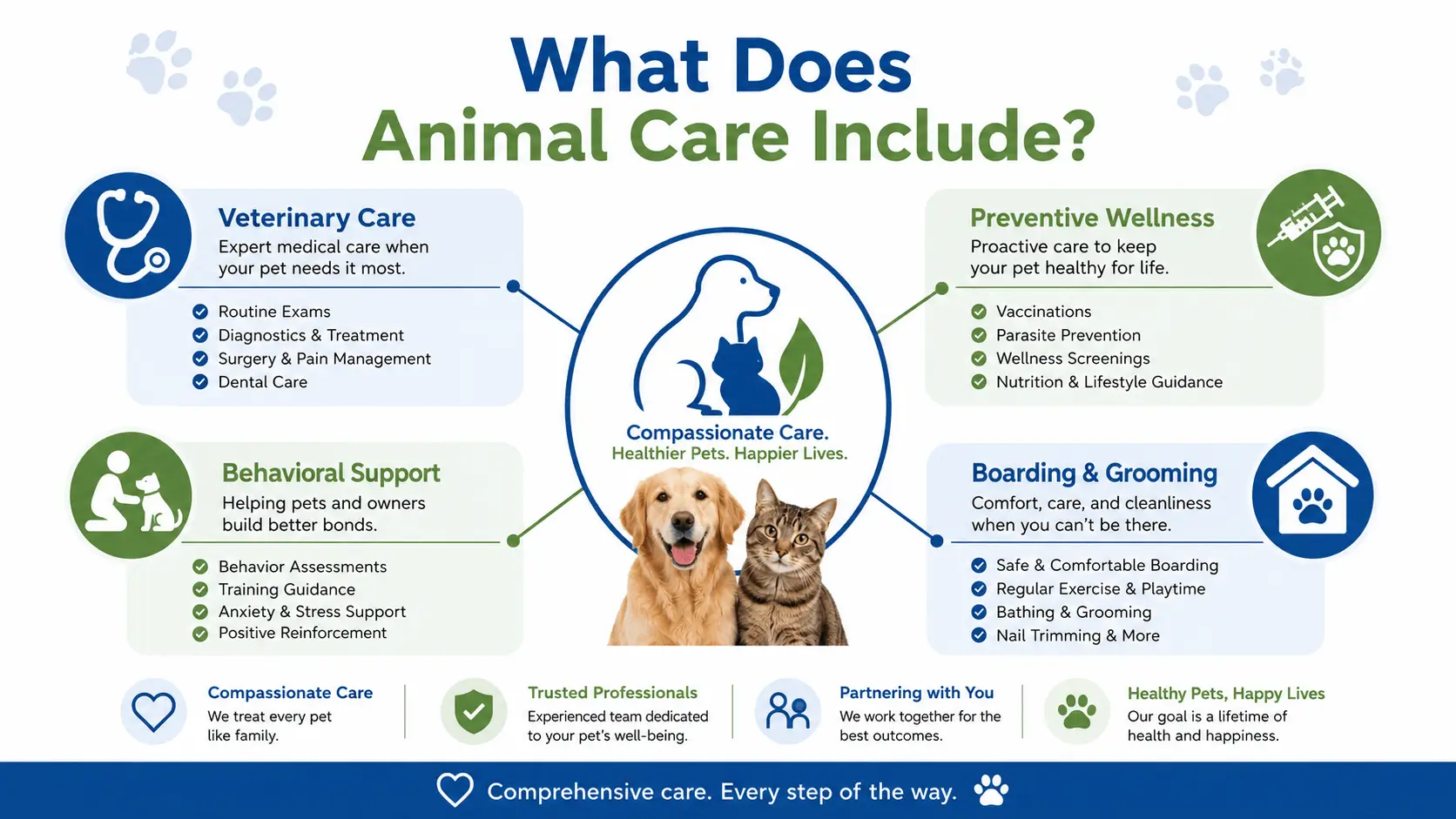 Animal care includes the services and practices that support an animal’s health, safety, behavior, and overall well-being. For companion animals such as dogs and cats (Canis lupus familiaris and Felis catus), this often involves medical care, preventive healthcare, nutrition guidance, behavioral support, grooming, and temporary housing.
Veterinary medicine is a specialized field focused on the prevention, diagnosis, and treatment of diseases affecting animals, as explained by Veterinary Medicine.
Pet owners often use terms such as veterinary hospital, wellness clinic, and boarding facility interchangeably, but they serve different functions.
- Veterinary Hospital: Provides comprehensive medical services, diagnostics, surgery, emergency treatment, and preventive care.
- Wellness Clinic: Focuses primarily on routine preventive services such as vaccinations, wellness exams, and parasite prevention.
- Boarding Facility: Offers temporary care and housing for pets while owners are away.
- Pet Hotel: Provides boarding with additional amenities and comfort-focused services.
- Behavioral Services: Address training challenges, socialization concerns, and behavior modification programs.
Understanding these distinctions helps owners choose the appropriate service based on their pet’s needs.
Core Veterinary Services Explained
Wellness Exams
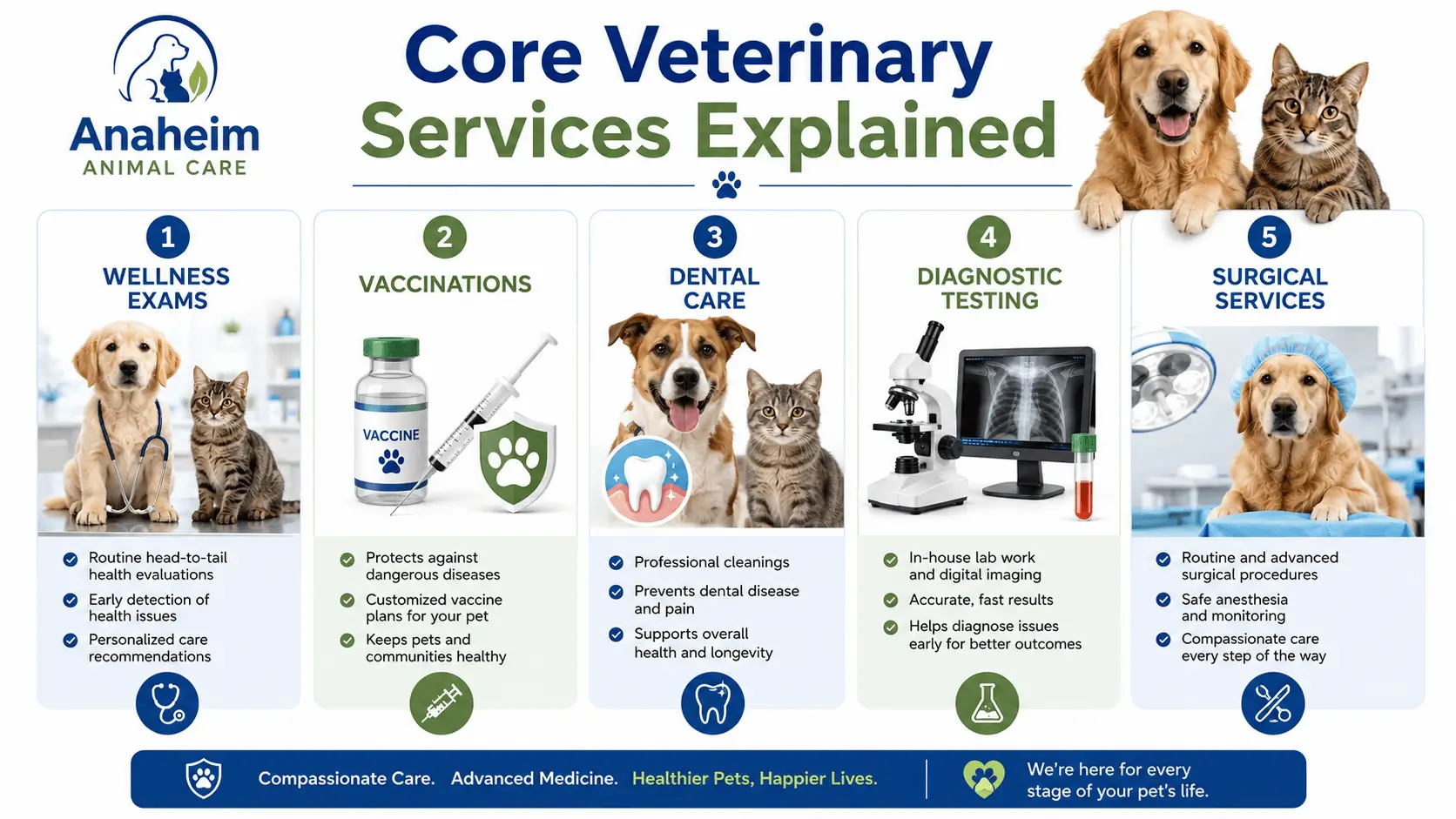
A wellness exam is a routine veterinary evaluation designed to assess a pet’s overall health before illness becomes apparent.
Pet owners interested in preventive oral health can learn more about how vets clean dogs teeth and what to expect during a professional dental procedure.
During a wellness visit, veterinarians typically:
- Perform a complete physical examination
- Check body weight and body condition score
- Evaluate eyes, ears, skin, and coat
- Assess heart and lung function
- Review diet and nutrition
- Discuss behavioral concerns
- Update preventive care plans
These visits establish health baselines and allow early detection of medical issues.
Dental evaluations are especially important because conditions such as infections, fractured teeth, and periodontal disease can worsen without treatment; understanding the symptoms of dog tooth infection can help owners seek veterinary care promptly.
Vaccinations
Vaccinations help protect pets from infectious diseases and contribute to community animal health.Typical vaccination services include:
- Core vaccines recommended for most pets
- Lifestyle-based non-core vaccines
- Booster vaccinations
- Rabies vaccination compliance
- Vaccine schedule reviews
Current veterinary recommendations emphasize maintaining individualized vaccination schedules based on age, lifestyle, travel habits, and exposure risks.
Dental Care
Dental disease is one of the most common health problems seen in companion animals.Veterinary dental care may include:
- Oral examinations
- Dental X-rays
- Professional cleanings
- Tooth extractions when necessary
- Home dental care guidance
Many pet owners notice bad breath before recognizing underlying dental disease. Routine dental evaluations can help prevent pain, infection, and systemic health complications.
Diagnostic Imaging and Bloodwork
Diagnostic testing allows veterinarians to identify health issues that may not be visible during a physical examination.Common diagnostic services include:
- Blood chemistry panels
- Complete blood counts (CBC)
- Urinalysis
- Fecal testing
- Digital radiography (X-rays)
- Ultrasound examinations
These tools support diagnosis, treatment planning, and monitoring of chronic conditions.
Surgical Services
Veterinary surgery ranges from routine procedures to more advanced operations.Common surgical services include:
- Spay and neuter procedures
- Soft tissue surgery
- Tumor removal
- Wound repair
- Dental surgery
- Emergency surgical interventions
Owners should expect pre-operative evaluations, anesthesia monitoring, pain management plans, and post-operative care instructions.
Preventive Care and Wellness Visits
Preventive care focuses on maintaining health and preventing disease before serious medical issues develop.Recommended wellness visit frequency generally varies by life stage:
| Life Stage | Recommended Wellness Visits |
| Puppy/Kitten | Every few weeks during vaccination series |
| Adult Pet | Once annually |
| Senior Pet | Every 6 months or as recommended |
Early detection is one of the most important benefits of preventive veterinary care. Conditions such as kidney disease, arthritis, diabetes, and dental disease often develop gradually and may not show obvious symptoms initially.
Preventive wellness visits often include dental assessments because dental disease in dogs is one of the most frequently diagnosed health conditions in veterinary medicine.
Furry Care Hub recommends maintaining consistent preventive care because it can:
- Detect disease earlier
- Improve long-term health outcomes
- Reduce emergency medical situations
- Support healthy aging
- Lower lifetime healthcare costs
Preventive care should also include parasite prevention, nutrition management, weight monitoring, and behavioral assessments.
Emergency Care vs. Routine Veterinary Care
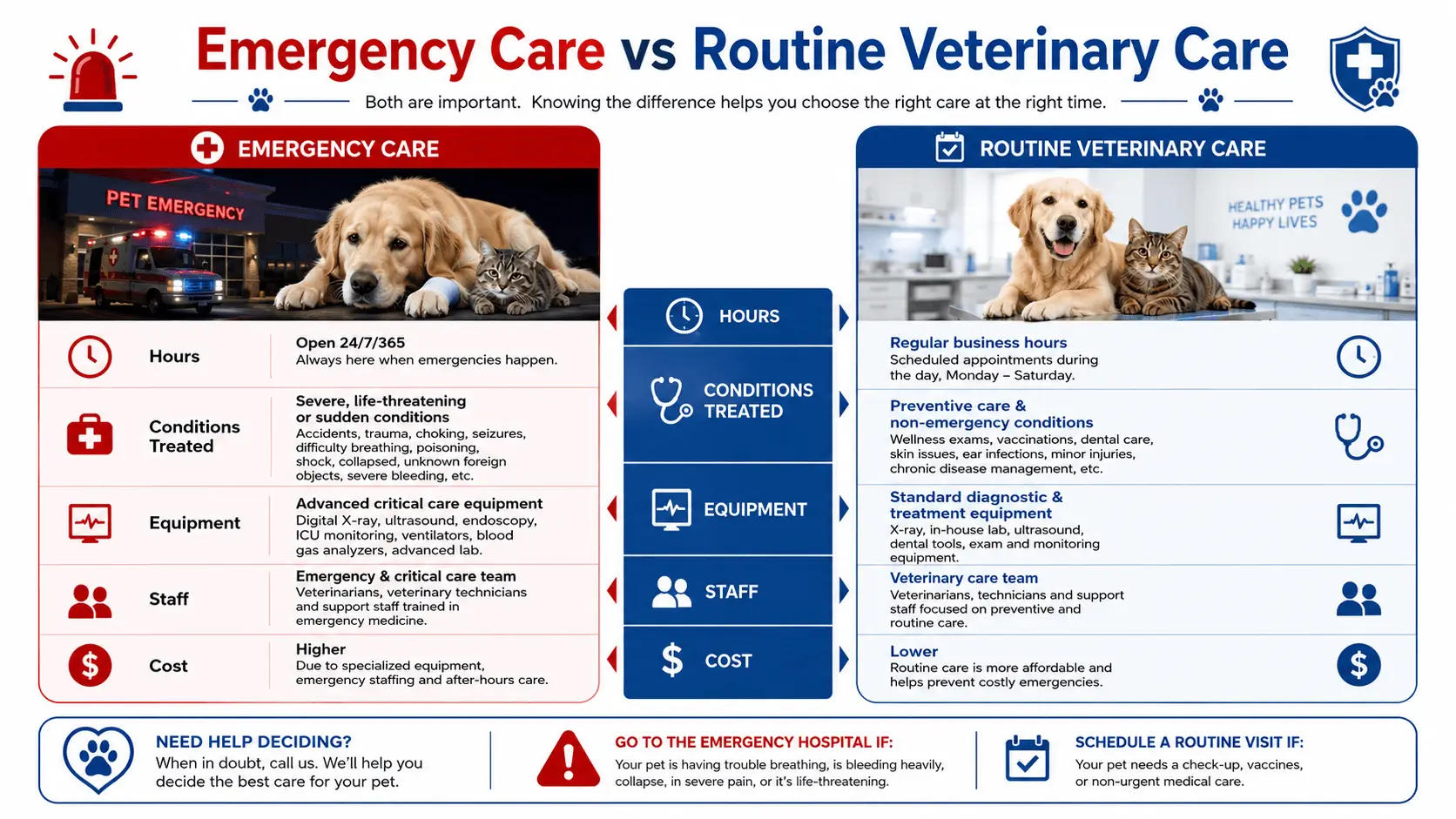 Emergency veterinary care is designed for urgent or life-threatening conditions, while routine veterinary care focuses on preventive services and non-urgent medical concerns.
| Factor | Emergency Care | Routine Veterinary Care |
| Availability | Often evenings, weekends, holidays, 24/7 | Scheduled business hours |
| Conditions Treated | Life-threatening or urgent cases | Preventive and non-urgent care |
| Equipment | Advanced emergency diagnostics and monitoring | Standard diagnostic equipment |
| Staffing | Emergency-trained personnel | General veterinary staff |
| Cost | Typically higher | Usually lower and predictable |
Situations that may require emergency care include:
- Difficulty breathing
- Severe trauma
- Suspected poisoning
- Seizures
- Uncontrolled bleeding
- Collapse or unconsciousness
For example, owners often wonder whether an abscess requires immediate treatment; knowing is a dog abscess an emergency can help determine when urgent veterinary care is necessary
Routine appointments are generally appropriate for:
- Annual wellness exams
- Vaccinations
- Mild skin issues
- Preventive screenings
- Nutrition consultations
Difficulty breathing, collapse, or severe distress should never be ignored, and symptoms such as why is my dog panting while resting may sometimes indicate an underlying medical concern requiring veterinary evaluation.
Many pet owners benefit from understanding the warning signs discussed in resources such as “Signs Your Pet Needs Emergency Care vs. a Routine Vet Visit.”
Pet Boarding vs. Pet Hotels — What’s the Difference?
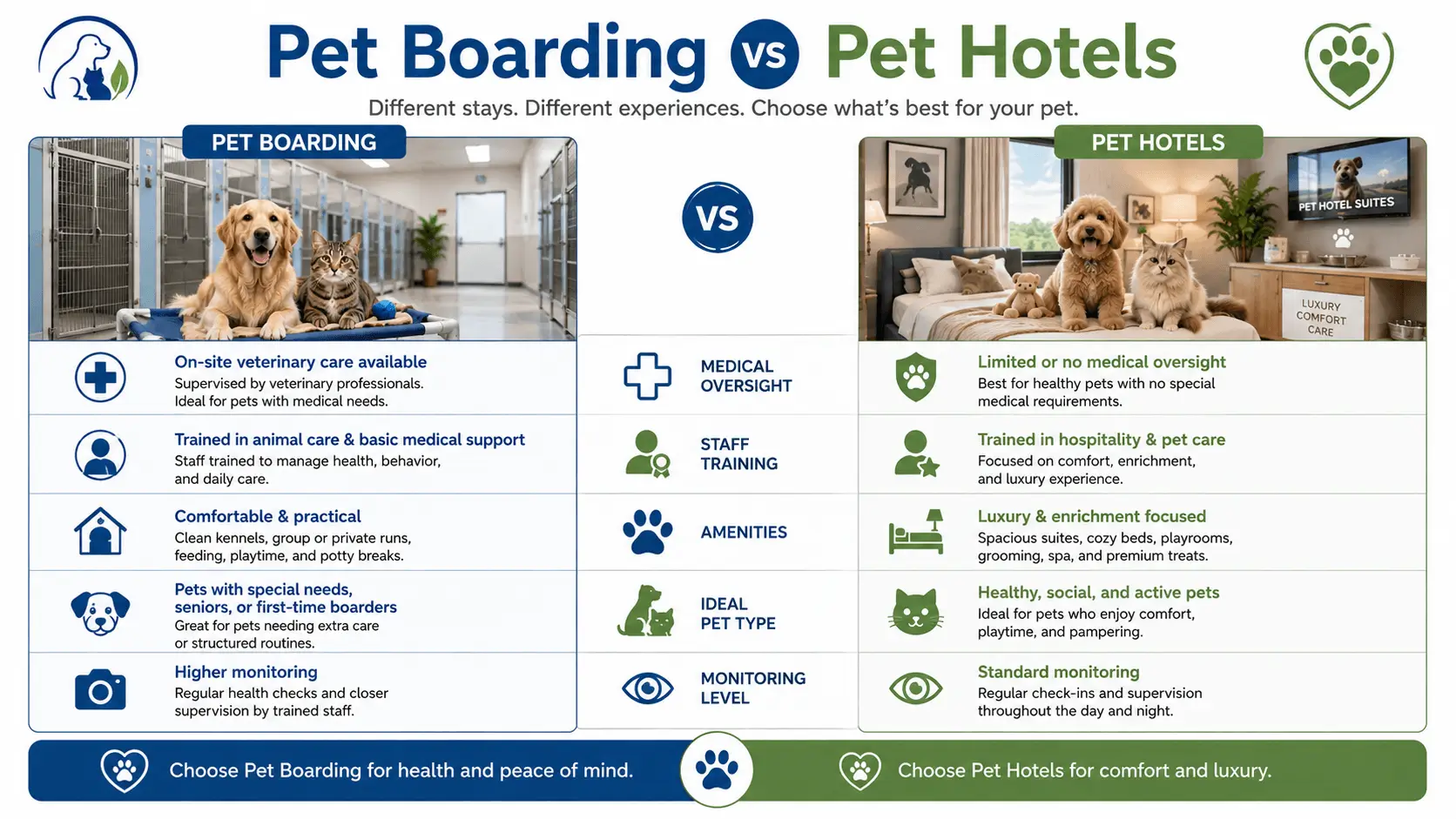 Pet boarding facilities and pet hotels both provide temporary pet accommodations, but they differ significantly in services and oversight.
| Feature | Pet Boarding Facility | Pet Hotel |
| Medical Oversight | May vary by facility | Often limited unless affiliated with a veterinary hospital |
| Staff Training | Basic animal care training | Hospitality-focused staff with animal care support |
| Amenities | Standard housing and care | Enhanced comfort and luxury features |
| Best For | Routine short-term stays | Owners seeking premium accommodations |
| Medical Needs Support | Varies widely | Usually limited unless medically supervised |
A common mistake is assuming all boarding facilities can provide medical monitoring.Pet owners should ask:
- Is veterinary supervision available?
- Can medications be administered?
- What emergency protocols exist?
- What are staff-to-pet ratios?
- How are pets monitored overnight?
For more detailed preparation, owners may find resources such as “What to Ask Before Boarding Your Dog or Cat” helpful.
How to Evaluate an Animal Hospital or Vet Clinic
Choosing a veterinary provider involves more than selecting the closest location.
When selecting a veterinarian, it helps to understand the value of routine diagnostics and preventive screenings, particularly for conditions such as heart murmur in dogs that may be detected during wellness examinations.
Consider the following checklist:
Accreditation and Licensing
- Verify veterinary licensing requirements are met.
- Look for recognized professional standards and accreditation.
Range of Services
- Preventive care
- Diagnostics
- Surgery
- Dental services
- Emergency support
Emergency Protocols
- After-hours care plans
- Referral partnerships
- Emergency communication systems
Pricing Transparency
- Written treatment estimates
- Clear explanation of fees
- Payment options when applicable
Communication Style
- Clear explanations
- Willingness to answer questions
- Follow-up communication practices
Reputation and Reviews
- Consistent feedback trends
- Professional responsiveness
- Long-term client experiences
Evaluating these factors provides a more complete picture than relying solely on convenience or location.
Common Owner Mistakes When Choosing Animal Care
Several common mistakes can negatively affect a pet’s healthcare experience.
Waiting Too Long to Establish a Regular Veterinarian
Many owners wait until a medical emergency occurs before finding a veterinarian. Establishing care early allows for preventive monitoring and faster access during urgent situations.
Choosing Solely on Price
Cost matters, but selecting a provider based only on price may overlook service quality, diagnostics, and emergency capabilities.
Not Asking About After-Hours Emergency Protocols
A common mistake is assuming every clinic provides emergency care. Owners should understand exactly where to go when emergencies occur outside regular business hours.
Assuming Boarding Facilities Provide Medical Care
Boarding services vary significantly. Some facilities can administer medications and monitor chronic conditions, while others cannot.In our experience caring for pets, proactive planning often reduces stress and improves outcomes during unexpected situations.
Veterinary Care vs. Animal Control — Knowing the Difference
Veterinary hospitals provide medical treatment for owned pets, while animal control agencies focus on public safety, stray animals, and community animal welfare concerns.Owners should contact a veterinarian when dealing with:
- Illness
- Injury
- Preventive care needs
- Chronic medical conditions
- Vaccinations
Animal control may be appropriate for:
- Stray animals
- Aggressive animal incidents
- Dangerous wildlife encounters
- Animal welfare concerns
- Public safety situations
Many people become confused about whom to contact during unusual situations. Understanding these responsibilities helps ensure animals receive appropriate assistance as quickly as possible.
What to Know Before Adopting a Pet
Adopting a pet is a long-term commitment that requires preparation and planning.
Before bringing a new feline companion home, reviewing a comprehensive cat care guide can help owners prepare for nutrition, preventive healthcare, grooming, and long-term wellness needs.
Before adoption, prospective owners should evaluate:
Health Screening Expectations
Adopted pets may require:
- Physical examinations
- Diagnostic testing
- Parasite screening
- Vaccination review
New pet owners should schedule an early wellness exam and review preventive healthcare needs using a comprehensive cat care guide if adopting a kitten or adult cat.
Vaccination Status
Request complete vaccination records whenever possible. This information helps veterinarians develop appropriate preventive care plans.
Initial Wellness Visit
A wellness examination shortly after adoption is strongly recommended.The visit may include:
- Baseline health assessment
- Nutrition recommendations
- Parasite prevention planning
- Behavioral guidance
- Vaccination updates
Resources such as “Puppy’s First Year: Vaccination and Wellness Schedule Explained” can help new owners understand preventive care requirements.Current animal welfare guidance emphasizes establishing veterinary care early to support long-term health and successful adjustment to a new home.
Conclusion
Understanding animal care requires more than knowing where to take a pet when illness occurs. Preventive wellness services, emergency veterinary treatment, diagnostics, surgery, boarding options, behavior support, grooming, and nutrition guidance all play important roles in maintaining a pet’s quality of life.For pet owners researching Anaheim animal care, the most important takeaway is that informed decisions should be based on service capabilities, medical standards, emergency preparedness, and communication practices rather than location alone. By understanding the differences between preventive care, emergency services, and boarding options, owners can make confident choices that support their pets throughout every stage of life.
FAQs
- What services does a full-service animal hospital typically offer?
A full-service animal hospital typically provides wellness exams, vaccinations, dental care, diagnostic testing, imaging services, surgery, preventive medicine, and treatment for illnesses and injuries. Some facilities may also offer boarding, grooming, and behavioral consultations.
- How often should a healthy pet see the vet?
Most healthy adult pets should receive a wellness examination at least once per year. Puppies, kittens, and senior pets often require more frequent visits because their healthcare needs change more rapidly.
- What’s the difference between pet boarding and a pet hotel?
Pet boarding facilities generally focus on safe housing and daily care, while pet hotels often provide additional amenities and comfort-focused services. Medical oversight and staff training can vary significantly between facilities.
- When should I call animal control instead of a vet?
Animal control should be contacted for stray animals, dangerous animal situations, public safety concerns, or certain wildlife issues. Veterinarians should be contacted for medical care involving owned pets.
- What should I check before choosing a new veterinarian?
Review licensing, service availability, emergency protocols, diagnostic capabilities, communication practices, pricing transparency, and client feedback. A comprehensive evaluation helps identify a provider that meets both routine and emergency care needs.
- Do I need a wellness visit right after adopting a pet?
Yes. A wellness visit shortly after adoption helps establish a health baseline, identify hidden medical issues, review vaccination status, discuss nutrition, and create an appropriate preventive care plan.




One Response