
Introduction
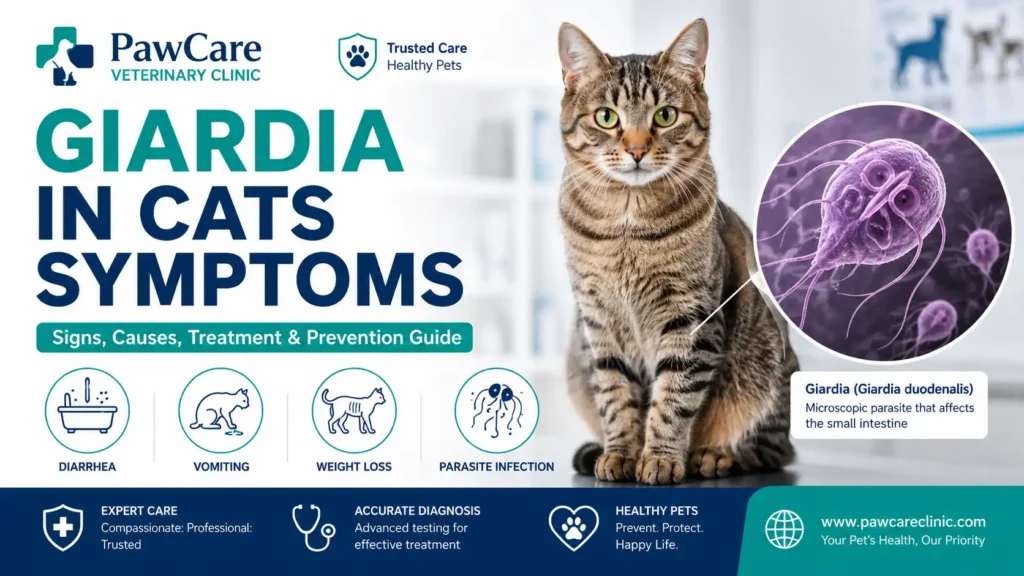
Giardia is a microscopic intestinal parasite that affects cats worldwide. Understanding giardia in cats symptoms is important because early detection can help prevent complications and reduce the risk of spreading the parasite to other animals. Giardia infection, known as giardiasis, occurs when cats ingest infectious cysts from contaminated water, soil, surfaces, or feces. While some infected cats remain symptom-free, others develop digestive problems ranging from mild diarrhea to significant weight loss and dehydration. This article explains the signs, causes, diagnosis, treatment options, and prevention strategies for giardia in cats using current veterinary guidance and accepted animal welfare practices.
For a broader understanding of feline health, nutrition, preventive care, and common illnesses, explore our comprehensive Cat Care Guide.
Quick Summary
- Giardia is a single-celled intestinal parasite that can infect cats of all ages.
- The most common symptoms include diarrhea, vomiting, weight loss, and greasy or foul-smelling stool.
- Cats typically contract giardia through contaminated water, soil, or contact with infected feces.
- Giardia in cats is treatable with veterinary-prescribed medications, but reinfection is possible without proper environmental decontamination.
What Is Giardia in Cats?
Understanding the Giardia Parasite
Giardia (Giardia duodenalis) is a protozoan parasite that infects the small intestine of cats. Unlike worms, bacteria, or viruses, giardia is a single-celled organism that survives by attaching itself to the intestinal lining and absorbing nutrients from the host.
Giardia is classified as a protozoan parasite belonging to the genus Giardia, which infects the intestinal tract of many mammals worldwide.
The parasite has two primary life stages:
- Trophozoite: The active stage that lives and reproduces in the intestines.
- Cyst: The hardy infectious stage shed in feces and capable of surviving in the environment.
It is important to distinguish between infection and disease. A cat may carry giardia without appearing sick. The term
giardiasis refers to the disease that develops when the parasite causes clinical symptoms.
Many pet owners use terms such as giardia in cats, giardia cat, and giardiasis in cats interchangeably, but technically giardiasis refers to symptomatic infection.
How Common Is Giardia in Cats?
Giardia is one of the most commonly diagnosed intestinal protozoal parasites in cats. It is especially prevalent in:
- Kittens
- Animal shelters
- Rescue facilities
- Multi-cat households
- Breeding catteries
Many infected cats never develop obvious symptoms. These asymptomatic carriers can still shed infectious cysts into the environment and contribute to transmission.If you wonder, “Do cats get giardia?” or “Can cats get giardia?” the answer is yes. Cats of all ages can become infected, although younger and immunocompromised animals are typically more susceptible to illness.
Giardia in Cats Symptoms — Full Breakdown
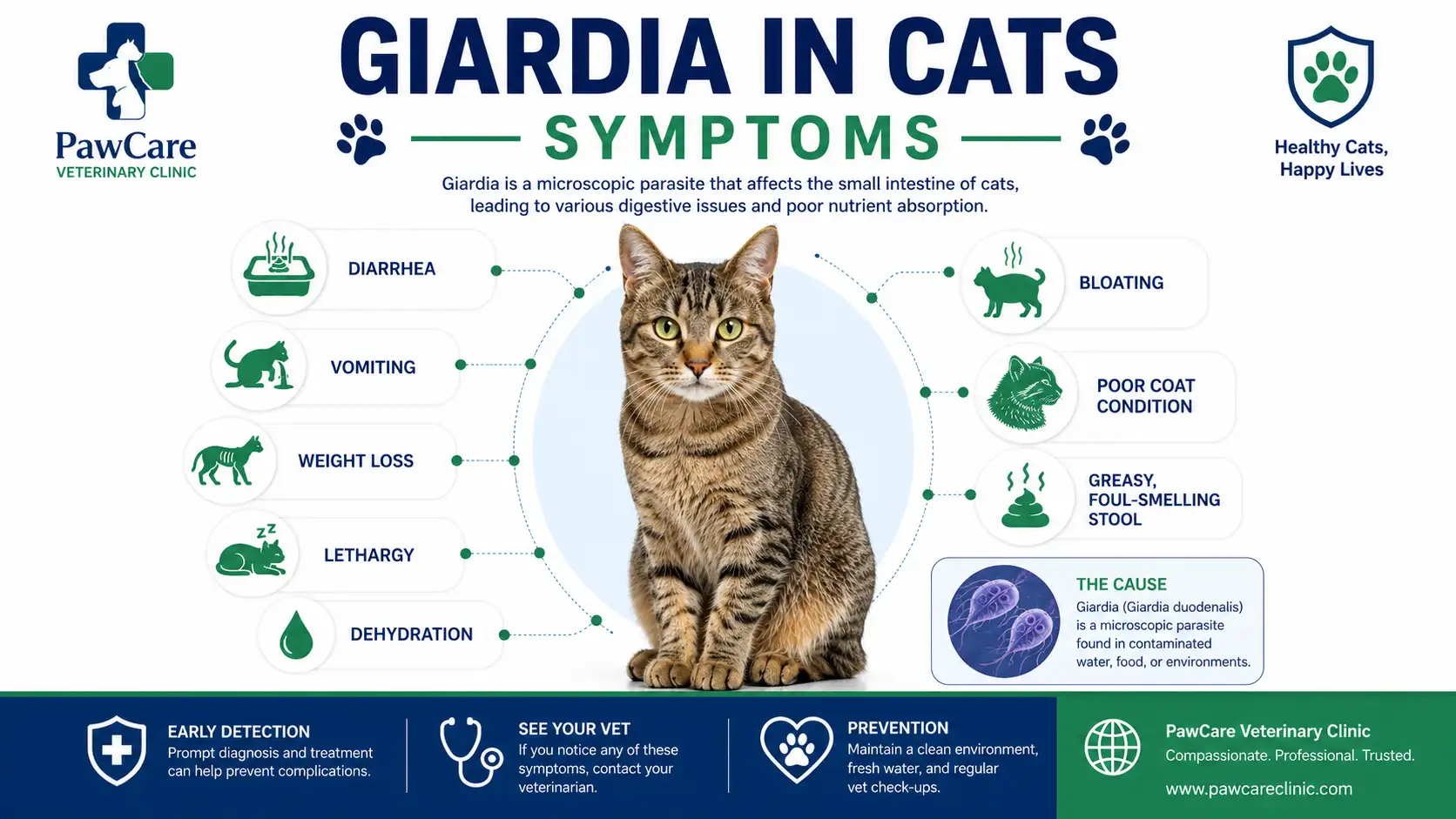 Giardia in cats symptoms primarily affect the digestive system. Clinical signs can range from mild and intermittent to severe and persistent, depending on the cat’s age, immune status, and parasite burden.
Because digestive illnesses can share similar symptoms, it’s important to distinguish giardiasis from other conditions that may cause vomiting and gastrointestinal upset, such as cat sneezing and vomiting.
Most Common Symptoms of Giardia in Cats
Common symptoms include:
- Sudden or chronic diarrhea (watery, soft, or mucus-streaked)
- Greasy, pale, or foul-smelling stool
- Vomiting ranging from occasional to frequent episodes
- Weight loss despite normal or increased appetite
- Lethargy and reduced activity levels
- Dehydration in moderate to severe cases
- Bloating or abdominal discomfort
- Poor coat condition, including dull or unkempt fur
Many pet owners notice diarrhea first. In our experience, a common mistake is assuming the issue is caused by a temporary dietary upset when symptoms persist for several days.
What Does Giardia Cat Poop Look Like?
Giardia cat poop often has a distinctive appearance. Stool may be:
- Soft or watery
- Pale or light-colored
- Greasy or oily in texture
- Extremely foul-smelling
- Mixed with mucus
The greasy appearance occurs because giardia damages intestinal villi, reducing the body’s ability to absorb fats properly. This malabsorption contributes to the characteristic stool appearance.Blood in the stool is relatively uncommon but can occur in some cases, especially when intestinal irritation is severe or another gastrointestinal condition is present.
Symptoms in Kittens vs. Adult Cats
Kittens are generally affected more severely than adult cats.
Young kittens are often more vulnerable to infections, and owners should also watch for respiratory concerns such as kitten eye watering and sneezing during early development.
Kittens may experience:
- Rapid dehydration
- Severe diarrhea
- Slower growth
- Weight loss
- Reduced energy
Adult cats may experience:
- Mild digestive upset
- Intermittent diarrhea
- No symptoms at all
Senior cats and cats with weakened immune systems are more vulnerable to complications and may require closer veterinary monitoring.
When Symptoms Become an Emergency
Immediate veterinary attention is recommended if a cat develops:
- Severe dehydration
- Blood in the stool
- Complete loss of appetite
- Persistent vomiting
- Extreme lethargy
- Signs of collapse or weakness
Severe dehydration and weakness should never be ignored, especially if your cat is having a hard time breathing or showing other signs of serious illness.
Delayed treatment can be especially dangerous for kittens because dehydration can develop quickly and become life-threatening.
How Do Cats Get Giardia?
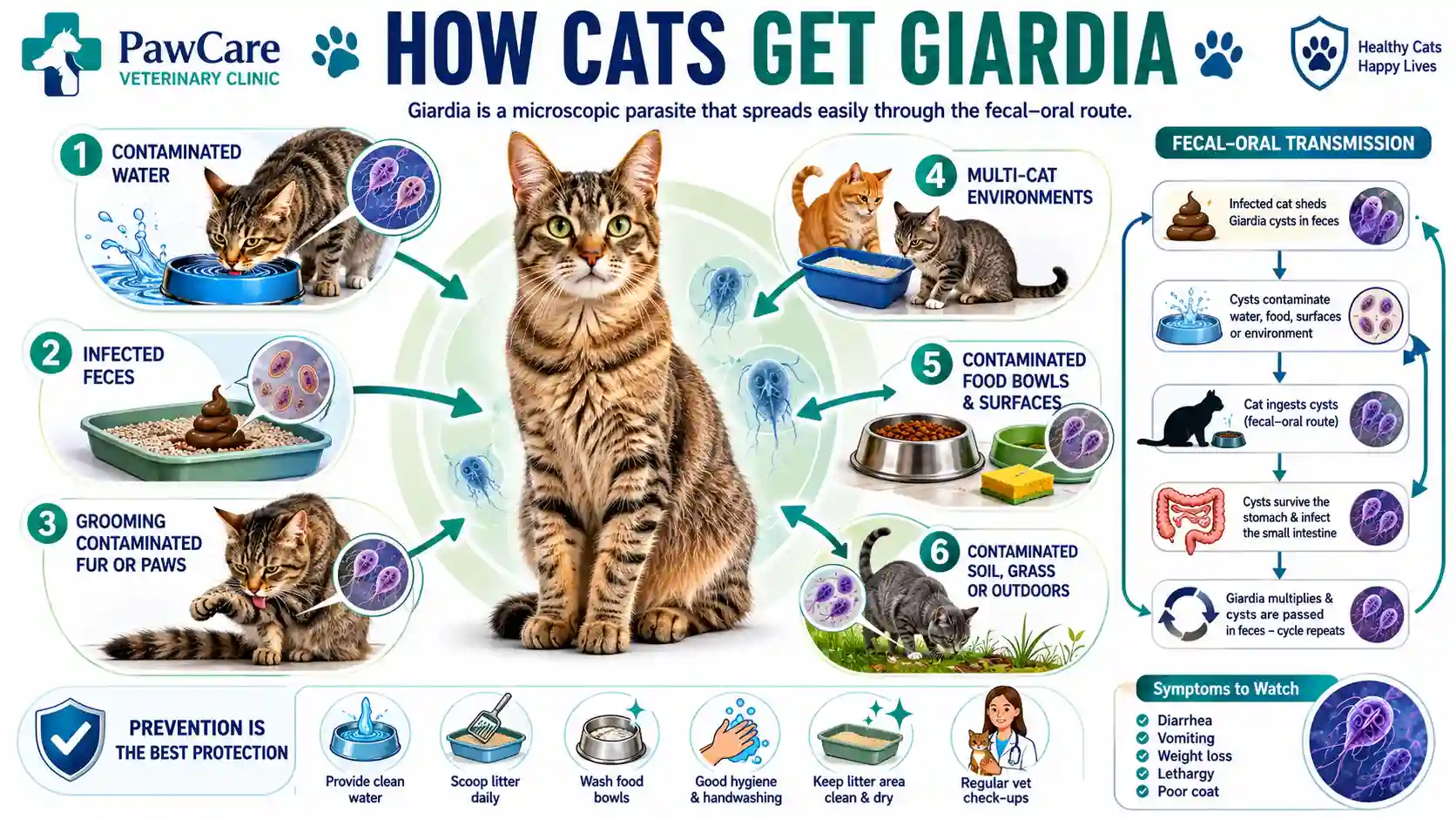 Giardia spreads through the fecal-oral route. Cats become infected when they swallow infectious cysts shed in the feces of infected animals.These cysts can survive in moist environments for extended periods, increasing the risk of exposure.
Common Sources of Giardia Infection in Cats
Common infection sources include:
- Drinking from contaminated puddles, ponds, or standing water
- Contact with infected feces in litter boxes, soil, or outdoor environments
- Grooming contaminated fur or paws
- Living in multi-cat environments such as shelters or catteries
- Contact with contaminated food dishes, bedding, or surfaces
Environmental Risk Factors
Several environmental factors increase infection risk.
Outdoor cats generally face greater exposure because they encounter contaminated soil, wildlife, and standing water.
Indoor cats are at lower risk but can still become infected through contaminated shoes, new pets, or shared litter boxes.
Seasonal conditions also matter. Wet and humid environments help giardia cysts survive longer, increasing transmission opportunities.
High-density living situations significantly increase the likelihood of parasite spread.
Diagnosing Giardia in Cats
Veterinarians use several diagnostic methods to identify giardia infections.Common tests include:
- Fecal flotation examination
- ELISA antigen testing
- PCR testing
Veterinarians often investigate multiple possible causes of digestive symptoms because conditions such as what are cats allergic to food can sometimes mimic gastrointestinal disease.
Because symptoms overlap with many gastrointestinal disorders, proper diagnosis is important before treatment begins.
Veterinarians may request multiple stool samples collected over several days to improve diagnostic accuracy.
Challenges in Diagnosing Giardia
Diagnosing giardia can be challenging because cysts are shed intermittently. A single negative test does not necessarily rule out infection.Symptoms may also resemble:
- Dietary intolerance
- Inflammatory bowel disease (IBD)
- Other intestinal parasites
- Bacterial gastrointestinal infections
Furry Care Hub recommends keeping detailed notes about symptom frequency, stool appearance, appetite changes, and duration to help your veterinarian reach an accurate diagnosis.
Giardia in Cats Treatment — What Vets Recommend
Veterinary treatment remains the most effective approach for eliminating giardia infections and preventing complications.
Medications Commonly Used
The most commonly prescribed medications include:Metronidazole
- Antiprotozoal and antimicrobial medication
- Helps reduce parasite numbers
- May also reduce intestinal inflammation
Fenbendazole
- Broad-spectrum antiparasitic medication
- Frequently used for giardia treatment
- Often well tolerated in cats
Treatment duration typically ranges from 5 to 10 days depending on severity and veterinary recommendations.
How Long Does It Take to Cure Giardia in Cats?
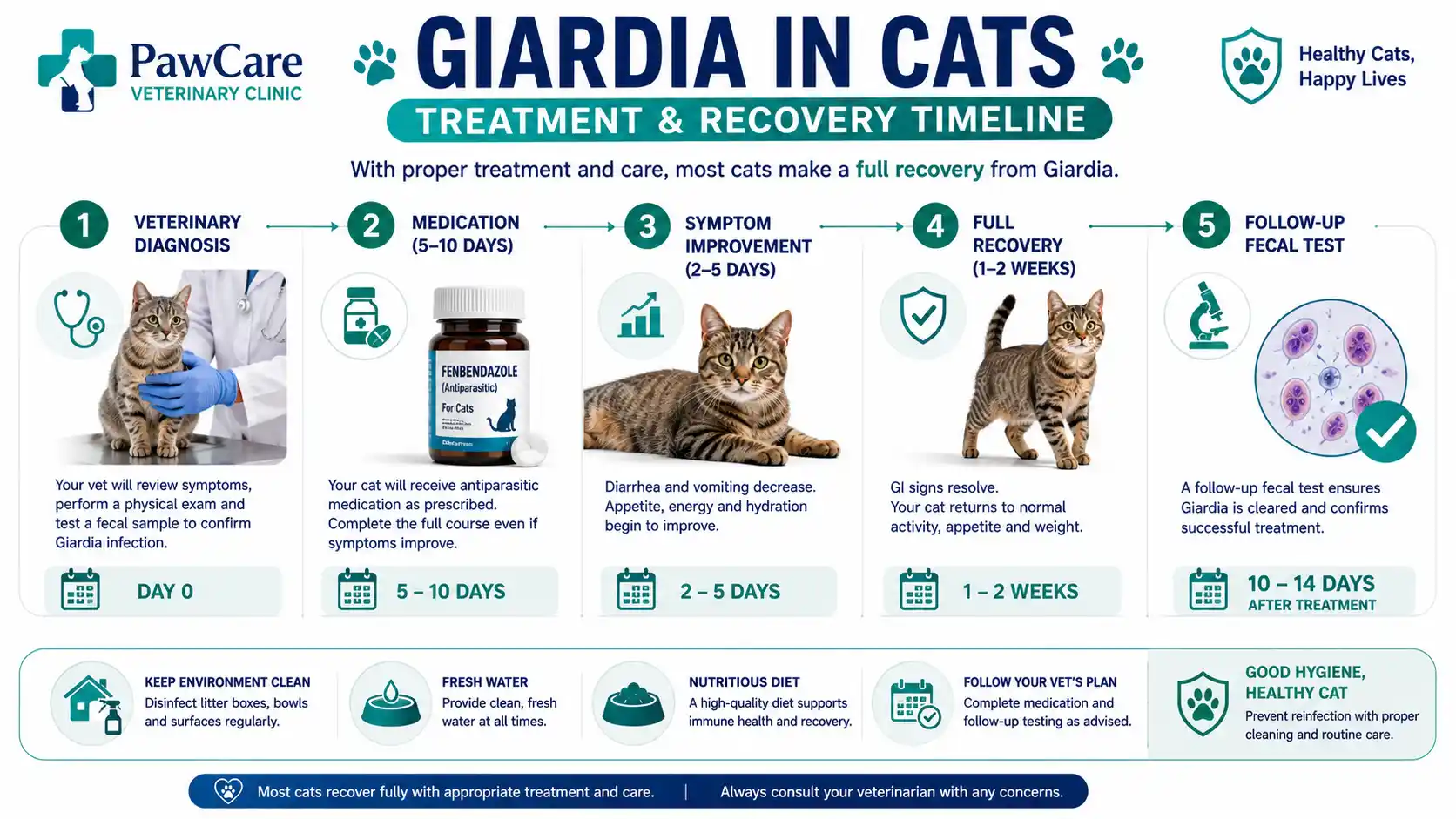 Many cats begin showing improvement within a few days of starting treatment.Typical recovery timeline:
| Stage | Typical Timeframe |
| Initial symptom improvement | 2–5 days |
| Completion of medication | 5–10 days |
| Full recovery in most cases | 1–2 weeks |
| Follow-up testing | Several weeks after treatment |
Reinfection remains possible if environmental cleaning is inadequate.Many veterinarians recommend follow-up fecal testing to confirm parasite clearance.
Does Giardia in Cats Go Away on Its Own?
Some healthy adult cats may eventually clear mild infections without treatment. However, spontaneous resolution is unpredictable and not guaranteed.Untreated infections can:
- Continue causing symptoms
- Lead to environmental contamination
- Result in reinfection
- Affect other household pets
Kittens, senior cats, and immunocompromised cats should always receive veterinary evaluation and treatment.
Natural Remedies — What the Evidence Says
There are currently no scientifically validated natural cures for giardia in cats.Supportive measures may include:
- Maintaining hydration
- Feeding a veterinarian-approved bland diet
- Using probiotics recommended by a veterinarian
These approaches may support recovery but should never replace prescribed treatment.A common mistake is delaying veterinary care while trying unproven home remedies. This can prolong illness and increase contamination within the home.
Can Cats Spread Giardia to Humans?
While giardia poses a low zoonotic risk, cat owners should also stay informed about infectious diseases and whether cats can get leptospirosis.
Many owners worry about giardia transmission between pets and people. The risk exists but is generally considered low.
Is Giardia from Cats Zoonotic?
Giardia consists of several genetic groups known as assemblages.Cats most commonly carry:
- Assemblage F
Humans are more commonly infected by:
- Assemblage A
- Assemblage B
Because these assemblages differ genetically, transmission from cats to humans is considered uncommon. However, it cannot be completely ruled out.Extra caution is recommended for:
- Children
- Elderly individuals
- Immunocompromised people
Hygiene Practices to Reduce Transmission Risk
Recommended hygiene measures include:
- Wash hands thoroughly after handling the litter box
- Clean and disinfect litter boxes daily during infection
- Avoid allowing infected cats to lick your face or hands
- Wear gloves when cleaning feces outdoors
How to Prevent Giardia in Cats
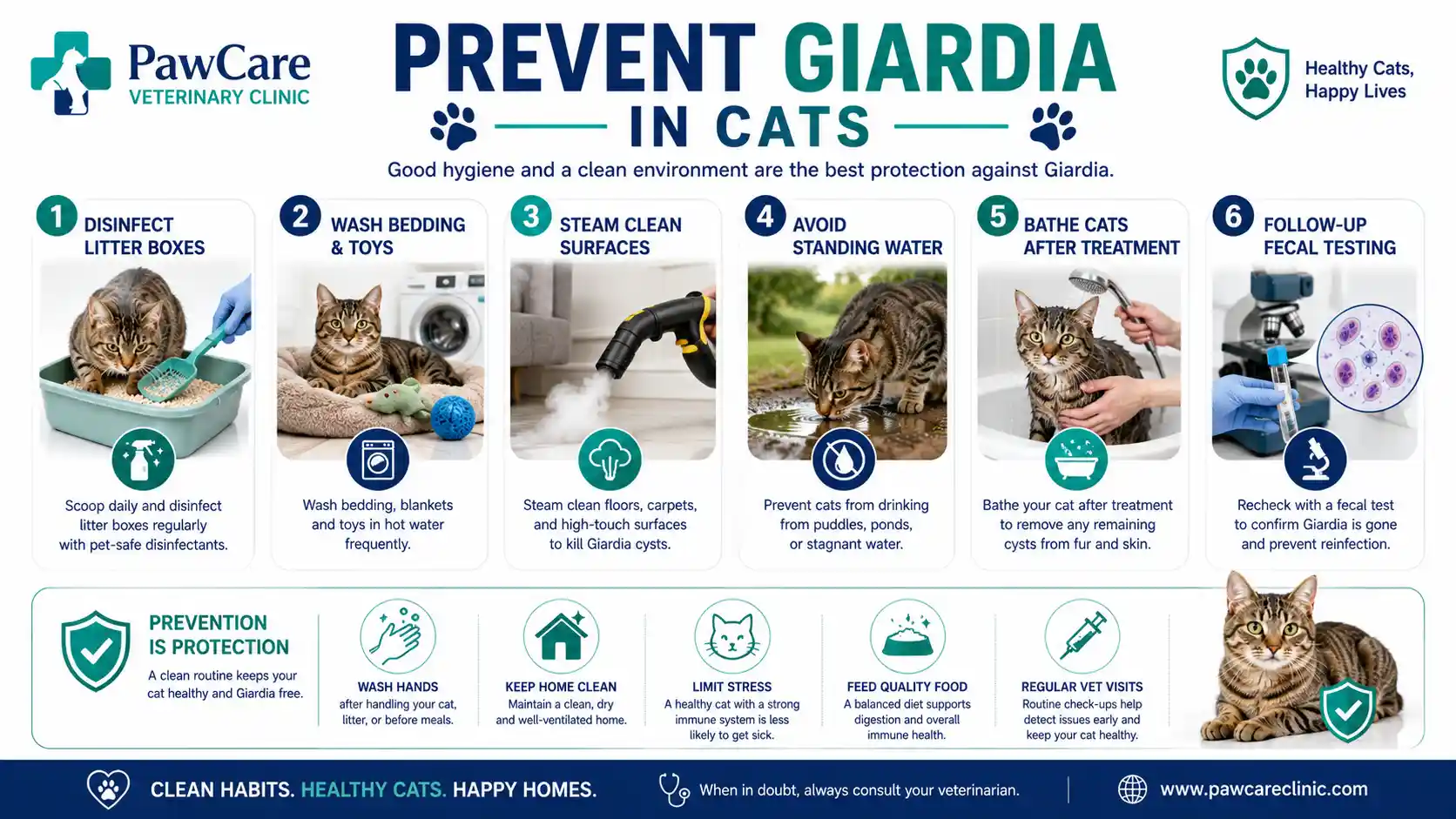
Maintaining good hygiene and parasite prevention is essential because intestinal infections are not the only contagious conditions cats may encounter, including how do cats get ear mites.
Preventing exposure and reinfection requires both environmental management and good hygiene practices.
Environmental Decontamination Tips
Effective decontamination strategies include:
- Disinfect litter boxes using a diluted bleach solution (1:32 ratio)
- Wash bedding, toys, and food bowls during and after treatment
- Use steam cleaning on surfaces when appropriate
- Prevent access to standing water, puddles, and contaminated outdoor areas
Preventing Reinfection After Treatment
Preventing reinfection is often just as important as treating the initial infection.Veterinarians commonly recommend:
- Bathing cats at the end of treatment to remove cysts from fur
- Treating all cats in the household when appropriate
- Performing follow-up fecal testing
- Continuing environmental cleaning after symptoms resolve
Many pet owners notice recurring infections when environmental decontamination is incomplete.
Giardia in Cats vs. Giardia in Dogs — Key Differences
| Feature | Cats | Dogs |
| Common assemblage | Assemblage F | Assemblage C & D |
| Zoonotic risk | Low | Low |
| Typical symptoms | Diarrhea, weight loss | Diarrhea, vomiting |
| Treatment | Metronidazole / Fenbendazole | Metronidazole / Fenbendazole |
| Reinfection risk | High without decontamination | High without decontamination |
Although canine giardia and feline giardia involve different genetic variants, cross-species exposure within households may occasionally occur. However, true cross-infection is generally considered uncommon.
Common Mistakes Cat Owners Make With Giardia
Common mistakes include:
- Waiting too long to seek veterinary care after diarrhea develops
- Stopping medication as soon as symptoms improve
- Neglecting environmental cleaning and disinfection
- Treating only the visibly affected cat
- Relying on unproven natural remedies
- Skipping follow-up fecal testing after treatment
Avoiding these mistakes significantly improves treatment success and reduces reinfection risk.
Care Tips for Cats Recovering From Giardia
Recovery support focuses on restoring digestive health and preventing recurrence.Helpful care measures include:
- Providing easily digestible veterinarian-approved foods
- Ensuring constant access to fresh, clean water
- Monitoring for dehydration
- Using probiotics if recommended by a veterinarian
- Keeping litter boxes exceptionally clean
- Watching for recurring diarrhea or weight loss
Supporting overall health during recovery includes monitoring hydration, nutrition, and protection from other infectious diseases such as do cats get parvo.
As of 2026, current veterinary recommendations continue to emphasize hydration support and environmental hygiene as key components of successful recovery.
Kittens should be monitored especially closely because they can deteriorate more rapidly than healthy adult cats.
Conclusion — What Every Cat Owner Should Know About Giardia
Giardia is a common but treatable intestinal parasite that affects cats around the world. Recognizing giardia in cats symptoms early can help prevent dehydration, weight loss, and ongoing gastrointestinal problems. The most common signs include diarrhea, foul-smelling greasy stool, vomiting, lethargy, and weight loss. Prompt veterinary diagnosis, appropriate medication, thorough environmental cleaning, and follow-up testing provide the best chance of complete recovery. With proper treatment and prevention measures, most cats recover successfully and return to normal health.
FAQs
- What are the most common symptoms of giardia in cats?
The most common symptoms include diarrhea, greasy or foul-smelling stool, vomiting, weight loss, lethargy, dehydration, and poor coat condition. Some infected cats may show no symptoms at all.
- How do cats get giardia?
Cats become infected through the fecal-oral route by ingesting giardia cysts from contaminated water, soil, litter boxes, surfaces, or grooming contaminated fur and paws.
Cats exposed to contaminated environments may also be at increased risk of developing secondary health concerns, including cat eye infection treatment needs if hygiene is poor.
- Can giardia in cats spread to humans?
The risk is considered low because cats usually carry a different giardia assemblage than humans. However, proper hygiene practices are still recommended to minimize any potential risk.
- How long does it take to treat giardia in cats?
Most treatment protocols last 5 to 10 days. Clinical improvement often occurs within a few days, while complete recovery generally takes 1 to 2 weeks. Environmental cleaning is necessary to prevent reinfection.
- Does giardia in cats go away without treatment?
Some mild infections may resolve in healthy adult cats, but this is unpredictable. Veterinary treatment is recommended, especially for kittens, senior cats, and immunocompromised animals.
- What does giardia poop look like in cats?
Giardia stool is commonly soft, watery, pale, greasy, foul-smelling, and may contain mucus. Blood is uncommon but can occasionally occur.
- Can cats get giardia more than once?
Yes. Reinfection is common if infectious cysts remain in the environment. Thorough cleaning, disinfection, and follow-up testing help reduce the risk of recurring infections.